Blog navigation

Latest posts

Mescaline Effects and Action: The San Pedro and Peyote Experience

Mescaline works differently from psilocybin or LSD: visually rich, embodied and grounding, with a long duration of...

Read More
San Pedro and Peyote: A Botanical Guide to the Mescaline Cacti

Two plant groups together form the world of the mescaline cacti: the columnar San Pedros from the Andes and the...

Read More
6 Magic Mushroom Myths Debunked: Fact or Fiction?

Magic mushrooms have a way of attracting wild stories. Jesus as a psychedelic cult figure, Santa as an...

Read More
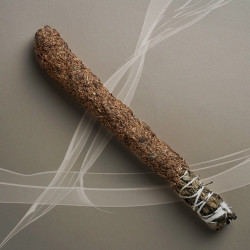
Smudging & Energetic Cleansing: The Complete Ritual Guide

Smudging is an ancient ritual of energetic cleansing with the smoke of sacred plants. This complete guide covers...

Read More

Cacao Powder vs Cacao Paste: Differences, Use & Which to Pick


Paste or powder? Anyone buying ceremonial raw cacao for the first time runs straight into that decision. Both come from the same bean, both are raw-processed, and both do roughly the same thing. Yet there are practical differences that decide which form fits your ritual or daily routine. This guide explains the difference without mysticism or marketing.

Last updated: April 2026
This guide is regularly updated with the latest insights on cacao, nutritional value and ceremonial use.

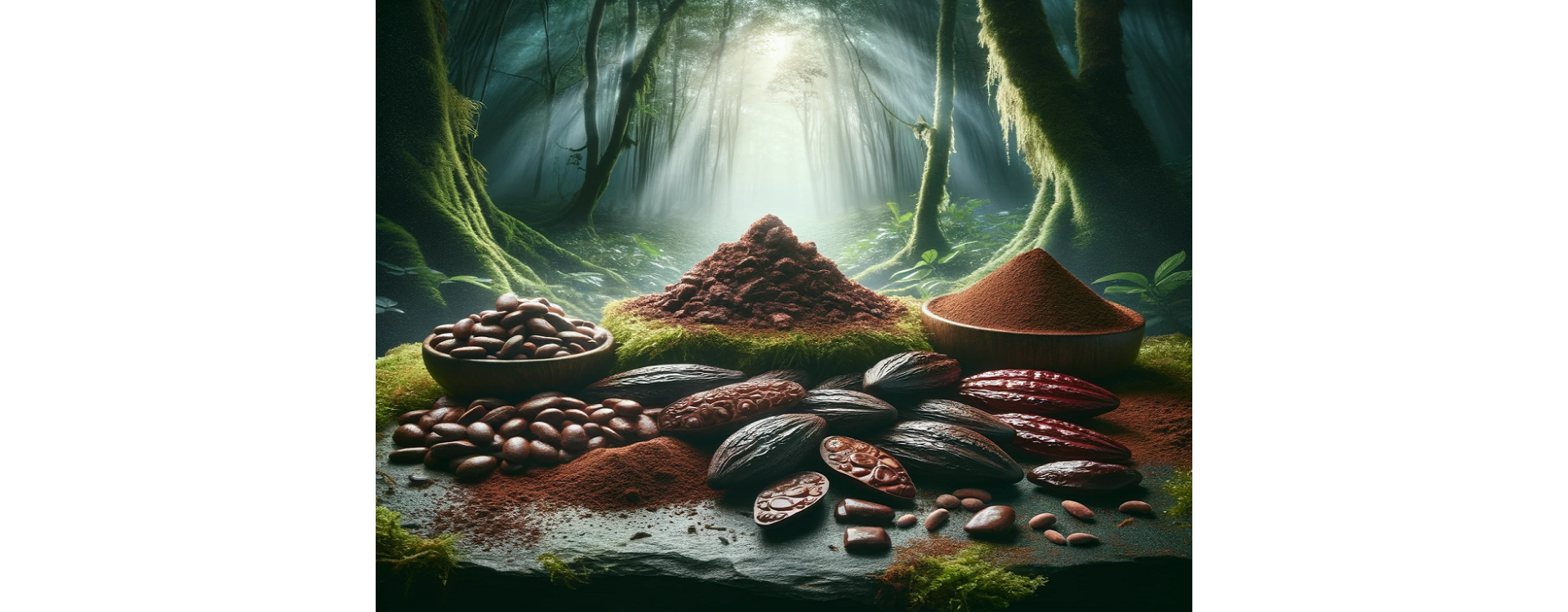
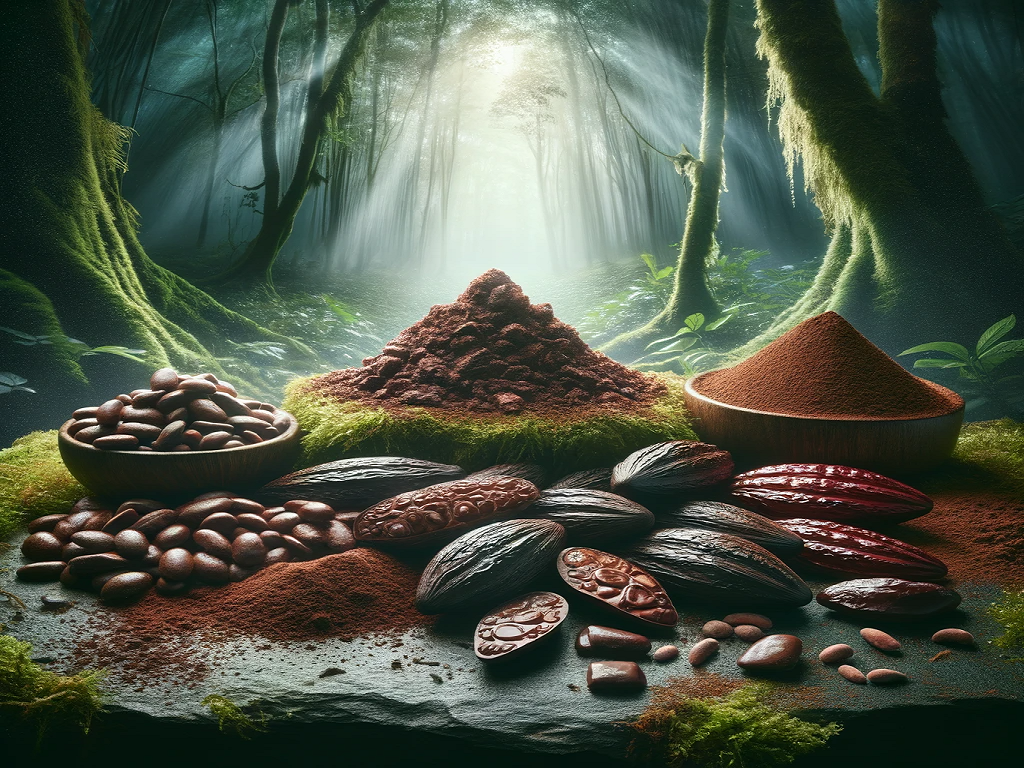
raw cacao beans paste powder jungle

Quick answer: which one should I pick?

Important: For a traditional ceremony with a thick, intense drink: pick paste or drops. For everyday smoothies, baking, or a quick ritual drink: pick powder. Unsure? Our Easy Instant Mix combines the best of both: powder with extra cacao butter, ready to dissolve in hot water.

Same starting point, different processing

Both paste and powder come from the same fermented, low-temperature dried raw cacao beans. The difference appears in the final step. Paste is the entire bean material, milled into a dense mass of roughly 50 percent cacao butter and 50 percent cacao solids. Powder is the same mass, partially defatted under pressure; most of the cacao butter is pressed out, after which the dry residue is finely ground. The result is a lighter product with 10 to 25 percent fat that dissolves more easily in liquid.

For anyone who wants to understand the history and the production chain: read our blog on how raw cacao is made, with a detailed 6-step process.

Cacao paste: thick, rich, ceremonial

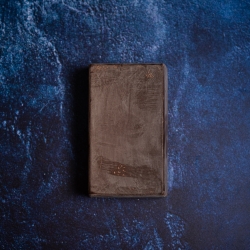
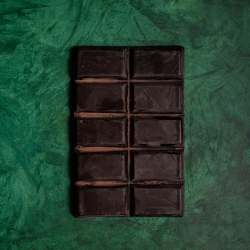
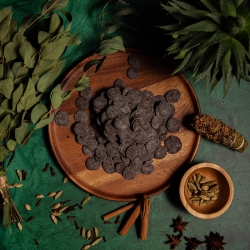
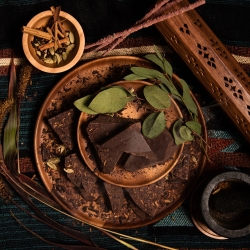
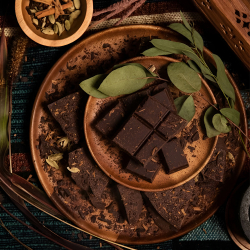
Paste feels like a block of pure chocolate: solid at room temperature, melts around 35 °C. Shave off curls before preparation, or use ready-portioned drops that give you the right amount each time. Whisked into water or plant-based milk, it produces a thick, fatty drink with a creamy body. That full texture is exactly why paste remains the first choice for ceremonies in Central and South America: it stays warm longer, leaves you feeling sated, and the cacao butter carries fat-soluble compounds like theobromine efficiently.

Our paste collection covers several origins, each with its own flavour profile:

What the three varieties mean for taste and ceremony, you can read in our deep-dive on cacao varieties Criollo, Trinitario and Arriba.

Cacao powder: light, fast, versatile

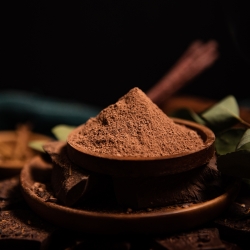
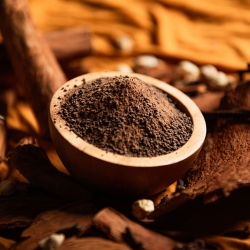
Powder dissolves in seconds in hot water or plant-based milk; no melting required. That makes it the practical choice for weekday rituals, smoothies, energy bars and baking. It tastes a touch less round than paste, simply because the cacao butter is missing; for ceremonies where texture matters, some users add a tablespoon of coconut oil or a few drops of butter. Nutrients stay largely intact: fibre, minerals and flavanols sit in the dry portion, not in the fat.

Drops: the best of both

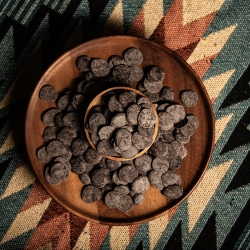
Cacao drops are paste in pre-portioned, weight-ready discs. No grater, no mess, no kitchen scale needed. For anyone who wants the ceremonial drink of paste with the convenience of powder, drops are a logical middle path. Several origins are available, including Ecuador Arriba, Bolivia Beniano and Peru Criollo.

The practical comparison

Property Cacao paste Cacao drops Cacao powder
Fat content ~50% ~50% 10-25%
Prep time 5-10 min melt 3-5 min Dissolves directly
Drink texture Thick, creamy Thick, creamy Lighter, thinner
Ceremonial use First choice First choice Solid second
Suited for baking Mediocre Mediocre Excellent
Shelf life (sealed) 12-18 mo 12-18 mo 12-24 mo
Ceremony dose 30-42 g 30-42 g 25-35 g + butter

What do the active compounds actually do?

The two main active components in raw cacao are theobromine and flavanols. Theobromine is a mild, slow-acting stimulant in the same family as caffeine, but with a much calmer curve: no peaks, no crashes. It dilates blood vessels and produces that warm, open-hearted feeling ceremonies are known for. Flavanols, especially epicatechin, are the antioxidants behind cacao's cardiovascular reputation; the COSMOS trial in NEJM (2022) showed that 500 mg of cacao flavanols daily measurably reduces cardiovascular risk.

Paste delivers slightly more theobromine per gram because the cacao butter is intact and theobromine is fat-soluble. Powder, however, contains a higher concentration of flavanols per 100 grams, simply because the defatted dry portion makes up more of the weight. At a normal ceremony dose, the difference barely matters. For more background on what cacao does in your body, see our complete raw cacao guide and the recent research described in this blog on cacao and ageing.

When do you choose what? Three scenarios

Scenario 1: monthly cacao ceremony

Paste or drops. The thick, creamy texture is an experiential quality of its own; the first sip feels like a complete meal. For a step-by-step plan to your own ceremony, read our guide on hosting a sacred cacao ceremony in 7 steps.

Scenario 2: daily morning cacao

Powder or the Easy Instant Mix. Quick to prepare, easy to clean up, no melting step. A tablespoon of powder, hot water or oat milk, a touch of honey or date. Ready for the day.

Scenario 3: baking and cooking

Powder. Paste distributes unevenly through dough; powder mixes cleanly. The same applies to smoothies. Cacao butter (sold separately as part of our ceremonial cacao collection) is a useful addition if you want extra creaminess without the ceremonial profile.

Common mistakes

  • Adding paste to cold water. It will not melt, it will clump. Heat the liquid to 60-70 °C first, then add the paste and whisk gently.
  • Drinking powder without fat. Theobromine and flavanols are partly fat-soluble; a tablespoon of coconut oil or plant-based milk measurably improves absorption.
  • Too high a ceremony dose for first-timers. 30 grams is plenty for your first time. Do not jump straight to 42 grams. Excess theobromine can cause palpitations, nausea or sleep disturbance.
  • Storing opened packs for years. Once opened: keep cool, dark and airtight. Cacao butter goes rancid; it then tastes soapy.
  • Combining with SSRIs or MAO inhibitors. Theobromine and serotonin-boosting medication do not always mix well. Speak to a professional first if you are on medication.

Shelf life and storage

Sealed in original packaging, both paste and powder keep for roughly 12 to 24 months. Store cool, dry and away from sunlight. Once opened: paste and drops in an airtight container in the fridge (4 to 8 weeks without flavour loss). Powder can stay at room temperature in a sealed jar, provided it stays dry. Avoid moisture: cacao powder clumps and flavanols degrade more quickly when damp.

Origin and careful processing

Our cacao comes from small cooperatives in Peru, Bolivia, Ecuador and Haiti. Beans are wild-harvested or sustainably grown, traditionally fermented on banana leaves, sun-dried at low temperature and cold-processed. No roasting, no alkalising, no industrial bleaching. Read more about origin and market dynamics in our blog on why cacao is becoming more expensive.
What users report

Experienced ceremony-goers often report that paste produces a deeper, more grounded sensation that lingers; powder users instead value its lightness and the way they can fold cacao into their daily routine without ceremonial overhead. A common pattern: paste for ritual, powder for the weekday.
Why Next Level Smart for your cacao?

Why Next Level Smart?

  • Cacao from Peru, Bolivia, Ecuador and Haiti — multiple origins, each with its own flavour profile
  • Paste, drops, powder and extract — four forms in stock, so you pick what fits the occasion
  • From small-scale growers — no bulk cacao, sourced through responsible suppliers
  • 100% raw processing — no roasting, no alkalising, one ingredient

Frequently asked questions on powder vs paste

Does paste taste stronger than powder?

Paste feels fuller in the mouth because the cacao butter is intact, but flavour intensity is comparable at the same dose. Powder tastes slightly drier; add a pinch of cacao butter or plant-based milk for a rounder experience.

How much theobromine is in one serving?

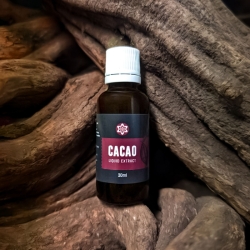
A ceremony dose of 35 grams of pure raw cacao contains roughly 700 to 1,400 mg theobromine, depending on origin and processing. Paste has slightly more per gram than powder, but the gap is small. For finer dosing, a concentrated cacao extract is a good option.
Can I swap paste and powder in a recipe?

Yes, but adjust the fat content. If you replace 30 grams of paste with powder, add about 15 grams of cacao butter or a tablespoon of coconut oil to approximate the texture. The other way around: when swapping powder for paste, you can halve any extra oil in the recipe.

Which has more flavanols?
Per 100 grams, powder is slightly higher because the defatted dry portion weighs more in the composition. Per ceremony dose (where paste is used in larger amounts) the total intake is comparable. Both deliver well above the 500 mg flavanols identified as effective in the COSMOS trial.
Is raw cacao suitable during pregnancy?

Small amounts like a scoop of powder in a smoothie are usually fine; ceremony doses of 30 to 42 grams contain enough theobromine to cause palpitations or sleep issues during pregnancy. In all cases, ask your midwife for advice.

What is the difference with supermarket cacao?

Supermarket cacao is usually cocoa: roasted at high temperature and often alkalised (Dutch process). That reduces flavanol content by 60 to 90 percent and changes the taste. For a detailed comparison, read our blog on raw cacao versus chocolate.

How do I store cacao properly?
Sealed: cool, dark and dry at room temperature, 12 to 24 months shelf life. Open paste and drops belong in an airtight container in the fridge. Powder can stay at room temperature in a sealed jar as long as it stays dry.
Which combination do you recommend for beginners?

Start with the Easy Instant Mix for weekday convenience and a pack of drops for your first weekend ceremony. That way you learn both textures without a big investment. Read our step-by-step plan for your first ceremony.
Last updated: April 2026 | Next Level Smart Shop

 
Lex Johnson is a self-taught herbalist, language freak, musician and one of the writers behind the Next Level blog. His curiosity runs wide — from the differences between Criollo and Trinitario cacao to the latest psilocybin research. That same curiosity shows in the range of his writing. Lex covers everything from ceremonial cacao and kanna to magic mushrooms, salvia divinorum, kambo, party pills, healing herbs and product deep dives. In addition to a journalism foundation certificate, he holds a Bachelor of Fine Arts.
Loading...