Last updated: February 2026 This guide is regularly updated with the latest insights about rapé.
What is Rapé?
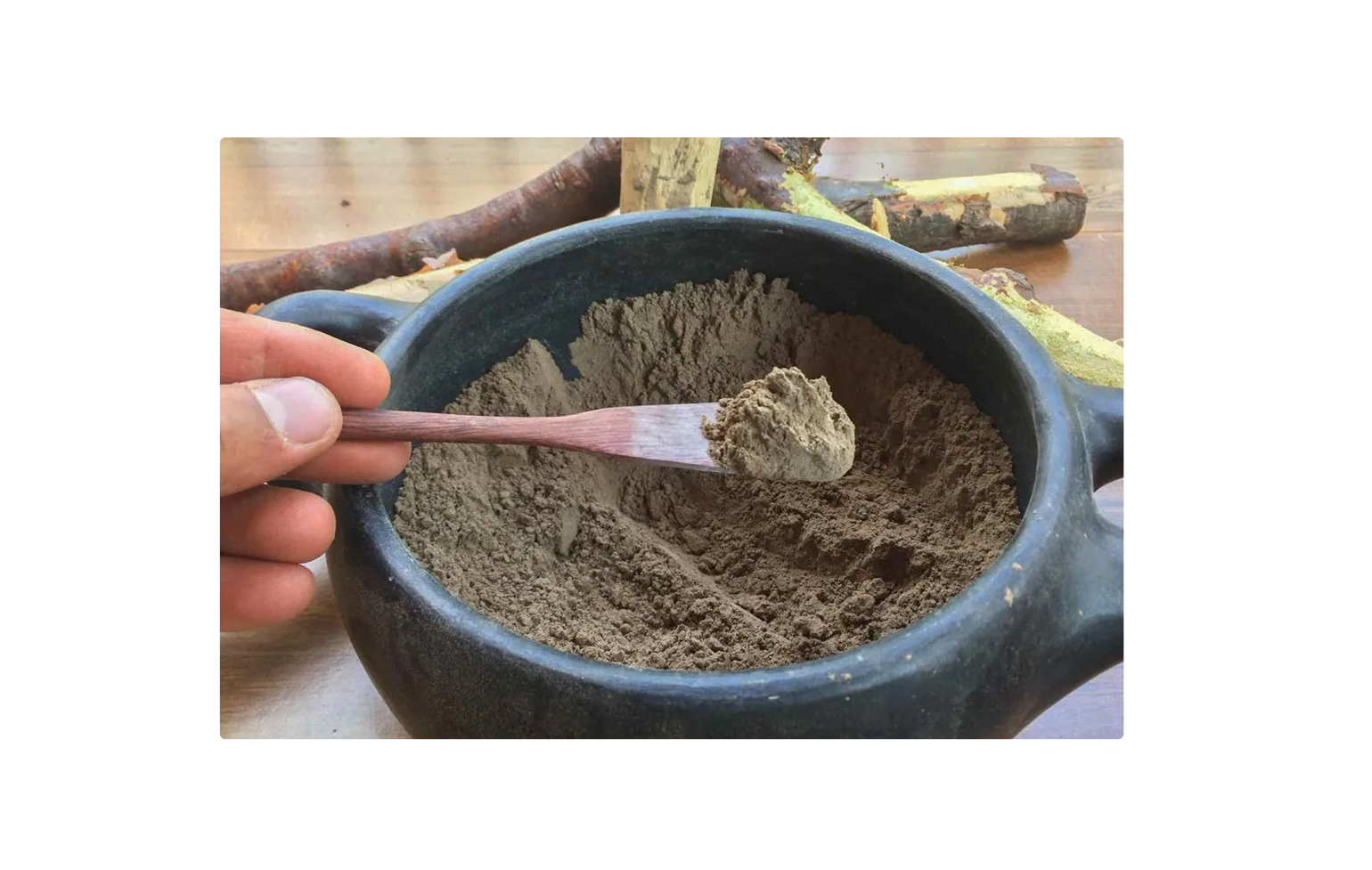
Rapé — pronounced 'ha-peh' — is a finely ground herbal blend used for centuries by indigenous tribes across the Brazilian and Peruvian Amazon. The name derives from the Spanish word raspar, meaning 'to scrape' or 'to grate', referring to the production method where plants and ashes are ground into an extremely fine powder.
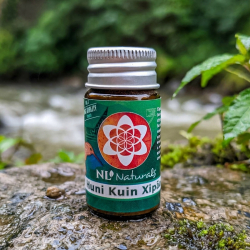
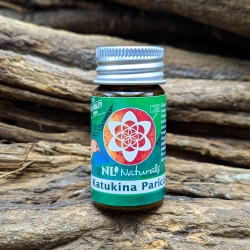
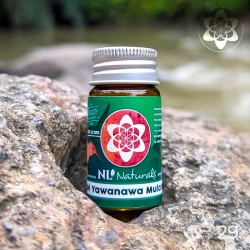
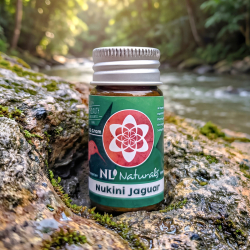
There is no single rapé. Each tribe guards its own recipes, techniques, and ceremonial songs sung during preparation. The result is dozens of unique blends, each with a distinct character and energetic profile. At Next Level Smart Shop, we work directly with tribes including the Huni Kuin, Yawanawa, Katukina, Nukini, Kuntanawa, and Apurina to bring their authentic rapé to Europe.
Good to know: Rapé is not smoked or ingested. It is administered through the nose using a special pipe — a kuripe (self-application) or tepi (administered by another person). This makes it fundamentally different from other herbal preparations.
How is Rapé Made?
Rapé production is a ritual process passed down through generations. Every step — from harvesting to blending — is carried out with intention and focus. The medicine man (pajé) determines the exact composition.
The Ingredients
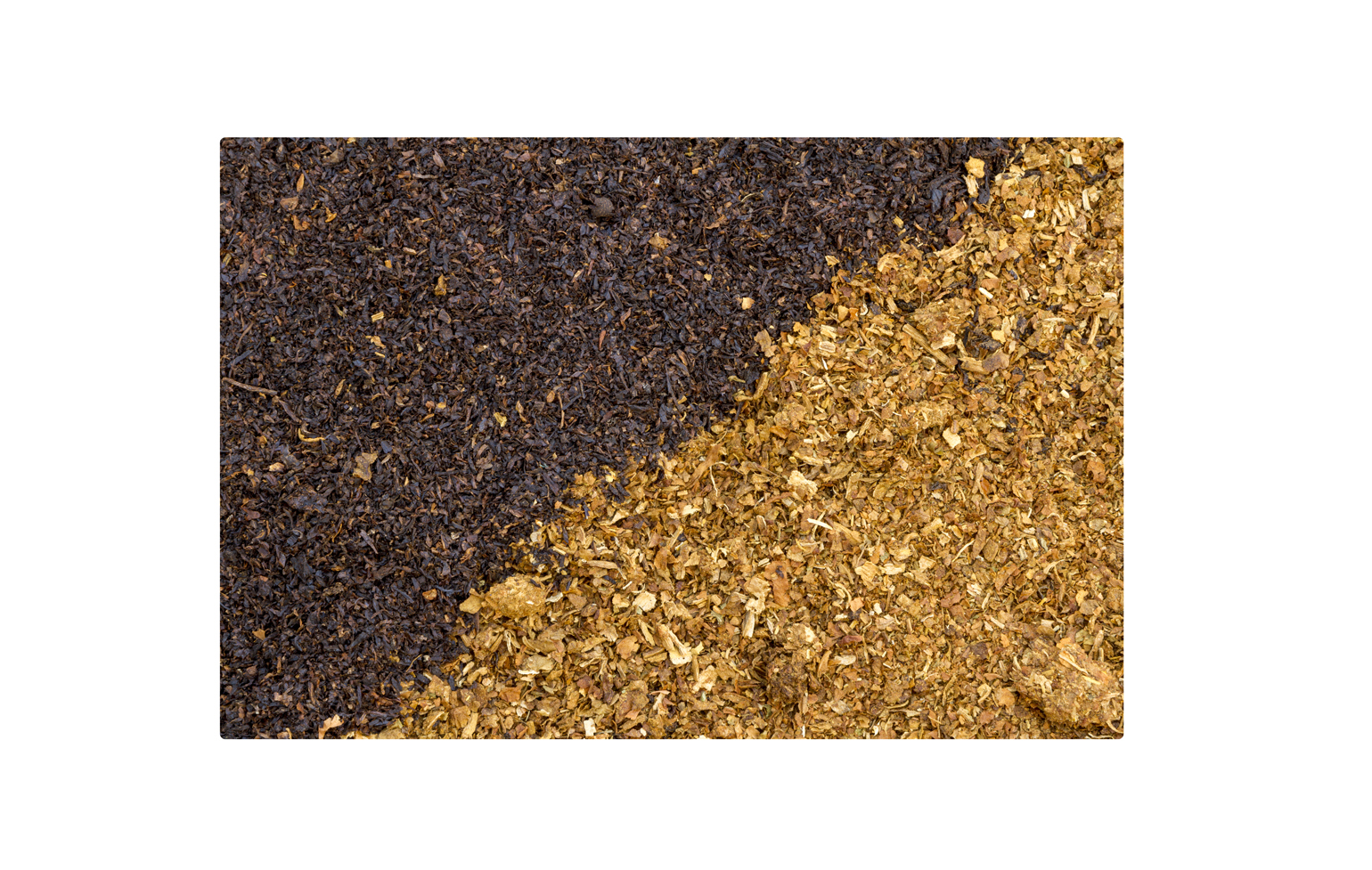
The base ingredient of most rapé blends is Nicotiana rustica, commonly known as mapacho. This is a potent species cultivated in South America for thousands of years — vastly different from the commercial tobacco known in the West. The leaves are slowly dried and ground into an extremely fine powder.
Tree bark ashes are then added from specific trees. Commonly used ashes include:
Tsunu — light and cleansing, popular among beginners
Murici — earthy, warming quality
Parica — powerful and deep, traditional with the Katukina
Cumaru — aromatic and heart-warming, a favourite among the Huni Kuin
Cacao — soft and heart-opening
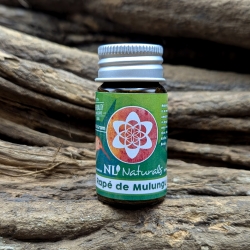
Mulateiro — renewing, associated with the bark of the 'tree of life'
Canela de Velho — warming, with a spicy profile
The ash symbolises the fire element, merging with the earth element of the plants. This combination is central to the energetic qualities of rapé.
The Production Process
After drying and grinding, the medicine man blends all components. This is always done in silence, with complete concentration. Some tribes sing prayers during the grinding — the maker's intention is literally woven into the powder.
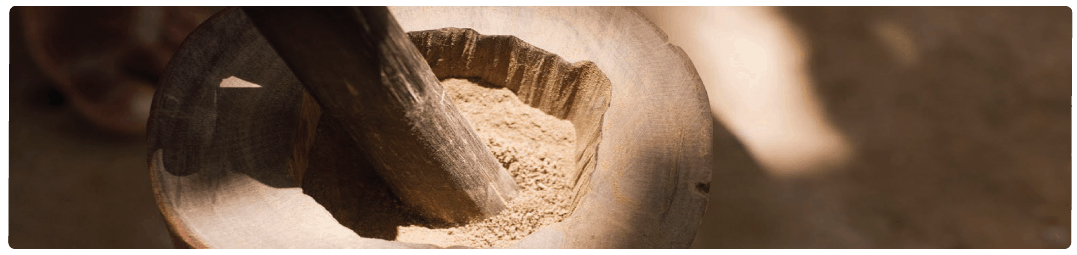
The end result is an ultra-fine, dry powder. The finer the grinding process, the smoother the rapé feels during use. Authentic tribal rapé has a noticeably different texture compared to machine-produced variants. According to researchers published in the Journal of Ethnopharmacology (2024), Nicotiana rustica contains up to 9 times more nicotine than commercial tobacco species, which partly explains the potent effects of rapé.
Working with Rapé: Intention and Space
Rapé is not something you use casually. It asks for intention, a calm environment, and respect for the tradition behind it. That may sound solemn, but it need not be complicated.
Preparation
Find a space where you will not be disturbed. This could be a quiet corner in your living room, a garden, or a dedicated altar space — as long as it is peaceful. Put your phone on silent. Take a moment to settle before you begin.
Set an intention. This could be something specific ("clarity on a decision") or something general ("being open to what comes"). The intention gives direction to the experience.
Application
Rapé is administered using a pipe, not by hand:
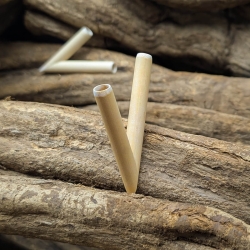
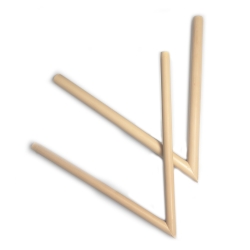
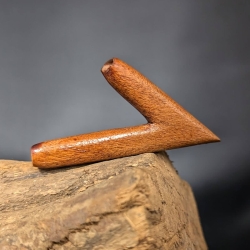
Kuripe — a V-shaped pipe for self-administration. You place one end in your mouth and the other in your nostril, then blow. Ideal for personal sessions. Browse our kuripes.
Tepi — a longer, straight pipe through which another person administers the rapé. Traditionally the preferred method in ceremonial settings. The giver and receiver share a moment of connection.
Tip for beginners: Start with a small amount — half a kuripe load is enough. The first time can be intense: watery eyes, a burning sensation in the nose, or a brief moment of dizziness. This is normal and passes quickly.
What Can You Experience?
The experience varies by person and by blend, but many people describe:
An immediate stillness in the mind — racing thoughts settle
A feeling of grounding and presence
Emotional release — sometimes tears, sometimes a deep sigh
Heightened alertness and focus after the initial minutes
A sense of purification, as though space is being created
Research published in Frontiers in Pharmacology (2025) confirms that the combination of alkaloids in Nicotiana rustica can trigger a rapid neurological response, consistent with traditional descriptions of mental clarity.
The Tribes Behind Our Rapé
We do not work through middlemen. Our rapé comes directly from the tribes who have been making it for generations. This is not a marketing story — it is how we have operated since 2010. Each tribe brings its own style, recipes, and energetic signature. Read more about the tribes behind our rapé.
Tribe
Region
Signature Style
Katukina
Acre, Brazil
Known for potent, medicinal blends with strong cleansing properties
Yawanawa
Acre, Brazil
Refined, layered blends often incorporating aromatic plants
Huni Kuin (Kaxinawa)
Acre, Brazil
Deep ceremonial tradition where rapé plays a central daily role
Nukini
Acre, Brazil
Creative with botanicals, known for blends with 7+ ingredients
Kuntanawa
Acre, Brazil
Innovative, combining traditional recipes with unique local plants
Apurina
Amazonas, Brazil
Rare recipes using unique plants from their specific territory
Shanenawa
Acre, Brazil
New to our range, known for pure and focused blends
Each tribe brings its own perspective. The Huni Kuin see rapé as an inseparable part of their daily spiritual life. The Yawanawa use it more in specific ceremonial contexts. And the Katukina are renowned for their deep knowledge of medicinal plants. You can feel that difference — quite literally.
How to Choose the Right Rapé
With over 40 blends in our range, the choice can feel overwhelming. Here are some starting points:
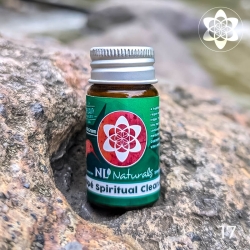
First time? Start with a milder tsunu-based blend, such as our Ruma Tsunu or Spiritual Cleanse rapé
Ceremonial use? The Authentic Rapé line is specifically crafted for deeper ceremonial sessions
Exploring?Our selection guide helps you find the right blend based on your intention
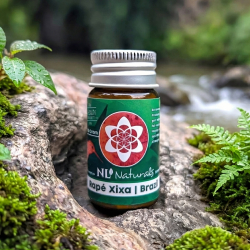
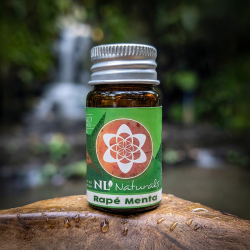
Popular choices: Our bestsellers are Cumaru (aromatic, heart-warming), Menta (refreshing, energising), and Spiritual Cleanse (purifying, balancing). All three are excellent entry-level blends.
Storing and Caring for Rapé
Rapé is a natural product and deserves proper storage:
Keep it dry — moisture is the greatest enemy. Use an airtight glass container
Away from direct sunlight — UV degrades the active compounds
Room temperature — not in the fridge, not next to a radiator
Separate by blend — never mix two blends in the same container, as the scents and energies influence each other
Properly stored rapé remains potent for months. Our rapé containers made from glass and handcrafted ceramics are designed specifically for optimal preservation.
Common Mistakes Beginners Make
After 15 years of working with rapé, we see the same mistakes recurring:
Blowing too hard — the rapé shoots through to your throat instead of staying in the nasal cavity. Blow gently and controlled
Using too much — more is not better. A small amount can already be very powerful
No intention set — without direction, the experience becomes unstructured
Right after eating — a full stomach can amplify nausea. Wait at least an hour
Blowing your nose straight away — give the rapé at least 5-10 minutes to work before clearing your nose
A study from the University of Campinas (2024) analysed 30+ rapé samples and found significant differences in alkaloid profiles between authentic tribal rapé and commercially produced variants — confirming that the production process fundamentally affects quality.
Why Next Level Smart?
15+ years of experience in ethnobotanical products
Direct sourcing — partnerships with the tribes themselves, no middlemen
40+ rapé blends from 7 different Amazonian tribes
Lab-tested products — quality control on every batch
Discreet shipping across the Netherlands and Europe
User experience: "I have been using rapé for two years now and it has completely transformed my meditation practice. Started with the Tsunu, now mainly the Cumaru. It is a moment of stillness in my day that I would not want to be without." — Thomas, 31, Utrecht (January 2026)
How to Use Rapé with a Kuripe: Step by Step
Prepare your space
Find a quiet spot, silence your phone, and take a moment to settle. Keep tissues within reach.
Set your intention
Take a moment to reflect on why you want to work with rapé. This could be a specific question or simply openness to the experience.
Load the kuripe
Place a small amount of rapé into the V-end of the kuripe. For beginners, half a load is sufficient.
Position the kuripe
Place the longer end into one nostril and the shorter end in your mouth. Exhale through your mouth first to avoid accidentally inhaling the powder.
Blow the rapé in
Blow with a short, controlled puff. Not too hard — the rapé should remain in the nasal cavity, not shoot through to the throat.
Repeat on the other side
Reload the kuripe and repeat the process for the other nostril. Treating both sides ensures balance.
Sit quietly and feel
Close your eyes and let the rapé do its work. Breathe calmly through your mouth. Wait at least 5-10 minutes before clearing your nose.
Frequently Asked Questions About Rapé
What exactly is rapé?
Rapé (pronounced 'ha-peh') is a finely ground herbal blend from the Amazon, traditionally crafted by indigenous tribes. It consists of Nicotiana rustica (mapacho), tree bark ashes, and medicinal plants, administered through the nose using a kuripe or tepi pipe.
How do you use rapé?
Rapé is administered using a pipe: a kuripe for self-application or a tepi administered by another person. A small amount of powder is blown into each nostril. Always start with a small dose in a calm environment.
Is rapé addictive?
Rapé contains Nicotiana rustica, which contains nicotine. When used respectfully in a ceremonial context — not daily, but with intention — most users report no addictive patterns. It is important to use it consciously and in moderation.
What is the difference between a kuripe and a tepi?
A kuripe is a V-shaped pipe for self-administration: you blow the rapé into your own nose. A tepi is a longer straight pipe through which another person administers the rapé to you. Traditional ceremonies typically use the tepi.
Which rapé is best for beginners?
For beginners, we recommend milder blends based on tsunu ash, such as the Ruma Tsunu or Spiritual Cleanse rapé. These have a gentler profile and make a good introduction. Read our selection guide for personalised advice.
How should you store rapé?
Store rapé in an airtight glass container at room temperature, away from direct sunlight. Moisture and UV light are the main threats to quality. Properly stored rapé remains potent for months.
How much rapé do you use per session?
Half to one full kuripe load per nostril is a standard dose. Beginners should start with less. The right amount depends on the blend (some are stronger than others) and your personal experience level.
Which tribes produce the rapé at Next Level?
We work with the Katukina, Yawanawa, Huni Kuin, Nukini, Kuntanawa, Apurina, and Shanenawa. Each tribe produces rapé using their own recipes and techniques.
Rey is the creative force behind our webshop, blending practical experience with a deep interest in natural products, ritual, and conscious living. His work is rooted in quality, authenticity, and respect for traditional knowledge. Through his writing, he aims to bridge traditional wisdom with modern, conscious use, helping customers make informed and meaningful choices.
By maintaining close relationships with many of the producers behind the products, he creates a bridge between their world and Western society. He shares their knowledge, vision, and methods with care, honoring both traditional practices and their place in a modern context. His favourite products are rapé, kratom, and magic mushrooms.