Blog navigation

Latest posts

Mescaline Effects and Action: The San Pedro and Peyote Experience

Mescaline works differently from psilocybin or LSD: visually rich, embodied and grounding, with a long duration of...

Read More
San Pedro and Peyote: A Botanical Guide to the Mescaline Cacti

Two plant groups together form the world of the mescaline cacti: the columnar San Pedros from the Andes and the...

Read More
6 Magic Mushroom Myths Debunked: Fact or Fiction?

Magic mushrooms have a way of attracting wild stories. Jesus as a psychedelic cult figure, Santa as an...

Read More
Smudging & Energetic Cleansing: The Complete Ritual Guide

Smudging is an ancient ritual of energetic cleansing with the smoke of sacred plants. This complete guide covers...

Read More

Copaiba Oil vs CBD: What is the Difference?


Copaiba oil is sometimes called 'the new CBD'. Both are linked to relaxation, discomfort and a feeling of calm. Yet they are fundamentally different substances: a tropical tree resin and a hemp extract, communicating with your body through different mechanisms. This guide explains the difference honestly, what they do and do not do, and when to pick which.

Last updated: April 2026
This guide is regularly updated with the latest insights on legislation, research and use.

Copaiba oil versus CBD comparison

Quick summary

Important: Copaiba and CBD are not interchangeable alternatives. Copaiba contains beta-caryophyllene (BCP), which selectively acts on CB2 receptors. CBD acts on a broader spectrum of the endocannabinoid system, also engaging CB1 receptors. For topical use on muscles and joints, both work; for stress, sleep or systemic support most people choose CBD; for aromatic and cosmetic applications copaiba offers more.

What is Copaiba oil?

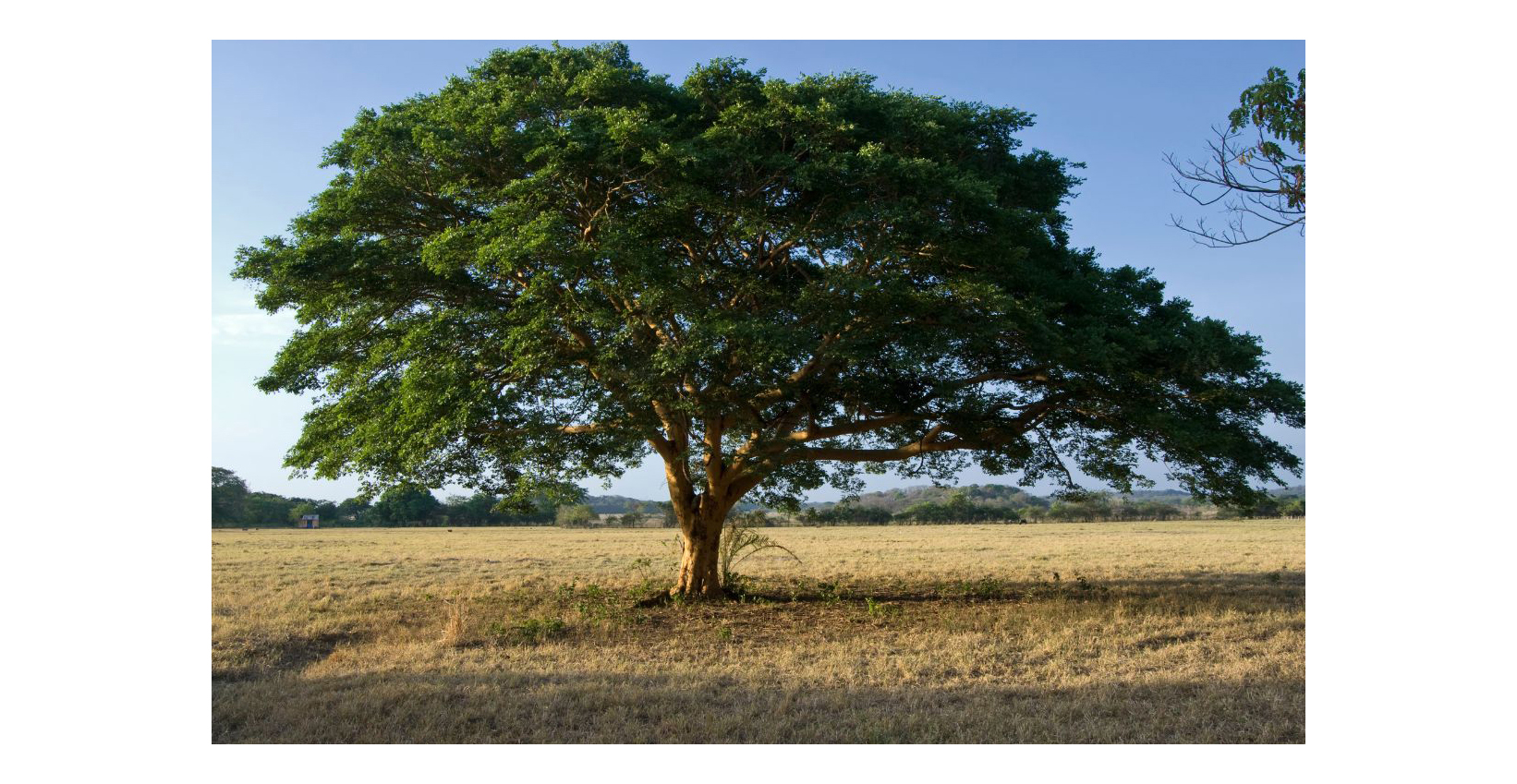
copaiba oil resin from tree

Copaiba is not strictly an essential oil but a resin oil: a slightly viscous liquid that flows from the trunk of Copaifera trees in the Amazon basin. Indigenous communities tap the tree by drilling a hole into the trunk, inserting a tube and collecting the resin. A mature tree can deliver oil for decades without being damaged.

The active compound that gets the most research attention is beta-caryophyllene (BCP), a sesquiterpene present in copaiba at 50 to 70 percent concentration. For comparison: black pepper contains 5 to 15 percent BCP, clove around 10 percent. The FDA lists BCP as a safe food additive.

What is CBD?

CBD (cannabidiol) is one of more than a hundred cannabinoids found in the hemp plant (Cannabis sativa L.). Unlike THC, CBD is non-psychoactive: it does not produce a high. CBD oil is usually an extract from industrial hemp dissolved in a carrier oil such as olive, hemp or MCT oil. In the Netherlands and most of the EU, CBD is legal as long as the THC content stays below 0.2 percent.
CBD acts indirectly on the endocannabinoid system (ECS), an extensive receptor network that regulates mood, sleep, inflammatory response and pain perception, among other things. For practical CBD oil applications and which product fits whom, read our blog on CBD products.

The fundamental differences

Property Copaiba CBD
Source Copaifera tree resin Hemp plant extract
Active compound Beta-caryophyllene (BCP, 50-70%) Cannabidiol (CBD)
Action on ECS Selective CB2 agonist Indirect on CB1+CB2
Psychoactive? No No
Legal (NL/EU) Fully legal Legal if <0.2% THC
International travel No issues globally Region-dependent
Taste/scent Woody, balsamic Earthy, herbal
Best for Topical, aromatherapy, skin Internal, broad systemic support

Where copaiba excels

  • Aromatherapy and scent. The warm, balsamic aroma is for many people more pleasant than that of CBD oil. In a diffuser or as part of a calming massage oil, copaiba plays its strongest hand.
  • Topical on skin. Diluted in a carrier oil, copaiba is traditionally used on skin for its soothing properties. Add a few drops to your facial oil or moisturiser.
  • Travelling. Copaiba is legal worldwide. CBD legislation differs per country; in some Asian and Middle Eastern countries even low-THC CBD oil can cause customs problems. If you travel a lot, copaiba is more practical.
  • People who want to avoid hemp. Some employers test for THC metabolites. Quality CBD oil should not trigger that test, but if you want zero risk, copaiba is a safe pick.

Where CBD excels
  • Internal use and broader systemic action. CBD has a more substantial research base for effects on sleep, stress and general calm. It engages more receptors than BCP alone.
  • Easy to dose via drops. Sublingual CBD oil drops give reliable absorption within 15-30 minutes. For copaiba, sublingual is not the standard route.
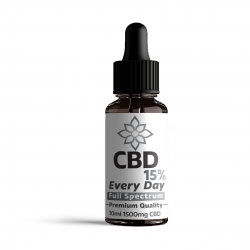
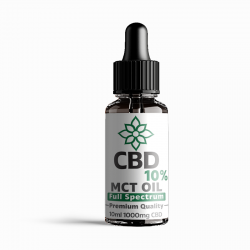
  • Available strengths. Our CBD collection ranges from 5% to 15% full spectrum, so you can adjust dosing to your needs.
  • Full spectrum versus isolate. Full-spectrum CBD contains other cannabinoids and terpenes that reinforce each other (entourage effect). Copaiba is essentially a single-component product.

Three scenarios: when to pick which

Scenario 1: muscle feel after the gym

Both work topically. For anyone who finds the smell and taste of CBD unpleasant, a mixed massage oil with copaiba is a solid alternative. For deeper systemic support after heavy training, add a few drops of CBD sublingually.

Scenario 2: stress and sleep

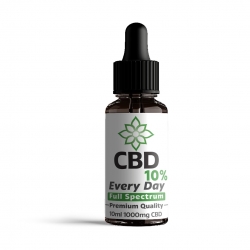
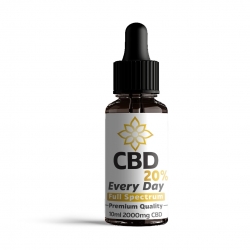
CBD has a clearer practical track record here. Start with 2-3 drops of a 5% or 10% full-spectrum oil an hour before bed and slowly build up to find your effect. Our CBD Oil Every Day 10% is a popular starting point.
Scenario 3: skincare and aromatherapy
Copaiba. The woody scent is pleasant in a diffuser or homemade facial oil. Add 1-3 drops to a tablespoon of jojoba or argan oil and use in the evening.
How do you use copaiba oil?

Important: copaiba in pure concentrated form does not belong undiluted on skin or in the mouth. Always dilute:

  • Topical: 1-3 drops in a tablespoon of carrier oil (jojoba, coconut, sweet almond). Test a small patch first.
  • Aromatherapy: 4-6 drops in a diffuser with water. Not longer than 30-60 minutes per session.
  • Internal: only in very small amounts (1-2 drops a day), preferably after consultation with an aromatherapist. Not for prolonged daily use without guidance.

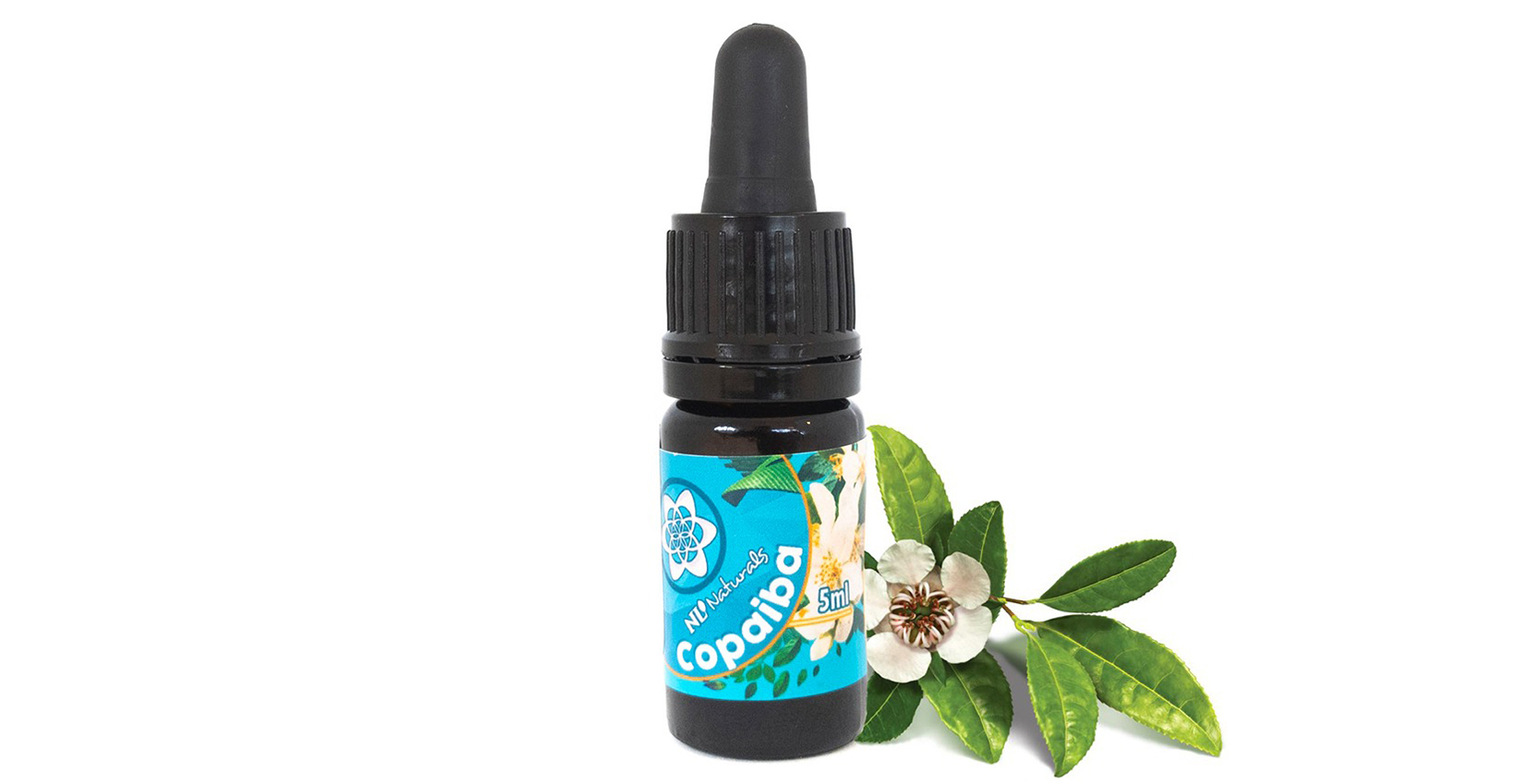
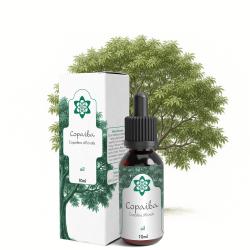
Browse our Copaiba Oil for product details and origin.

How do you use CBD oil?

The standard method is sublingual: drops under the tongue, hold 60 seconds, then swallow. Start low (2-3 drops of a 5% or 10% oil) and build up over several days until you notice your effect. For broad support, 1-2 times a day works best.

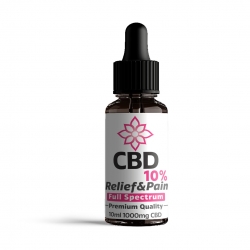
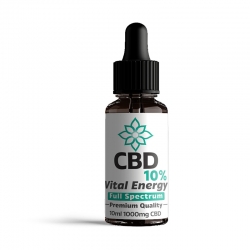
Our CBD collection includes:

Common mistakes

  • Treating copaiba and CBD as interchangeable. They act on different receptors. What works for one does not necessarily work for the other.
  • Skipping dilution. Both oils in concentrated form are not meant for undiluted use. Always follow the dosing directions on the label.
  • Starting at a high dose. Start low and build up, not the other way round. A more-is-more approach wastes product and can cause unnecessary side effects.
  • Not checking for interactions. CBD can interact with blood thinners and certain antidepressants. Ask your doctor if in doubt. Copaiba is less studied for interactions; the same caution applies if you are on medication.
  • Buying low-quality stock. The CBD market has plenty of junk. Lab reports (COA) are standard from reliable suppliers. Copaiba that smells of turpentine instead of balsamic is likely diluted or adulterated.

Disclaimer: the information in this article is intended as educational background, not medical advice. For chronic complaints, pregnancy or medication use, consult your doctor. Neither copaiba nor CBD is a substitute for prescribed treatment.

What users report

Users often report that they end up using both oils for different reasons: copaiba in an evening massage ritual or diffuser, CBD for stress-related sleep or after intense training days. A common pattern: people who arrive asking 'which is better?' end up choosing both, for different purposes, after a few weeks of testing.

Why Next Level Smart for CBD and Copaiba?

Why Next Level Smart?

  • Four CBD oil strengths — 5%, 10% (Every Day, Relief, Vital Energy) and 15%, a fitting strength for every stage
  • Full-spectrum CO2 extracts — no isolates, so the entourage effect of other cannabinoids and terpenes stays intact
  • Pure Copaiba oil — Copaifera resin, suitable for topical use and aromatherapy
  • Active since 2010 as a Dutch smart shop — fifteen years of experience with natural and ethnobotanical products

Frequently asked questions on Copaiba and CBD

Is Copaiba really 'the new CBD'?

Not exactly. Both engage the endocannabinoid system, but through different receptors and with different chemical profiles. Copaiba mostly targets CB2 (immune and peripheral); CBD acts indirectly on both CB1 and CB2 plus other receptors. They complement each other rather than substitute.

Can I use Copaiba and CBD together?

Yes. Because they act on different receptors, they do not exclude one another. Many users combine a sublingual CBD routine for systemic effects with topical copaiba for local applications or aromatherapy.

Will Copaiba show on a drug test?

No. Copaiba contains no cannabinoids like THC or CBD. Drug tests screening for cannabis look for THC metabolites (THC-COOH); BCP does not register as positive.

Can I take CBD oil on holiday?

Within the EU, generally no issues as long as the THC content stays below 0.2%. Outside the EU it varies widely: in countries like Singapore, Japan, China and Saudi Arabia, even low-THC CBD can cause problems. Check the legislation of your destination beforehand. Copaiba is permitted everywhere.

How much CBD oil should I take?

Start low: 2-3 drops of a 5% or 10% oil sublingually, once a day. After three to five days, add a drop if you notice no effect. For most people, 15-30 mg CBD per day (split over one or two doses) works.

Does Copaiba have side effects?

In normal doses, rarely. Used topically undiluted it can irritate the skin; always dilute in a carrier oil. Internal use at too high a dose has been linked to stomach upset. Avoid during pregnancy or consult an aromatherapist.

What is the difference between full-spectrum and isolate CBD?

Full-spectrum contains all naturally occurring cannabinoids, terpenes and flavonoids from the hemp plant (including trace THC under 0.2%). Isolate is pure CBD without companion compounds. Full-spectrum tends to feel rounder thanks to the entourage effect; isolate suits those who want absolutely no THC at all.

Can I use Copaiba instead of CBD for stress?

It is not a direct substitute. CBD has a stronger research base and a wider mechanism of action for stress regulation. Copaiba can support an aromatherapeutic setting (scent in a diffuser, calming massage), but if you are after internal support, CBD is generally the first choice.

Last updated: April 2026 | Next Level Smart Shop

 
Rey is the creative force behind our webshop, blending practical experience with a deep interest in natural products, ritual, and conscious living. His work is rooted in quality, authenticity, and respect for traditional knowledge. Through his writing, he aims to bridge traditional wisdom with modern, conscious use, helping customers make informed and meaningful choices. By maintaining close relationships with many of the producers behind the products, he creates a bridge between their world and Western society. He shares their knowledge, vision, and methods with care, honoring both traditional practices and their place in a modern context. His favourite products are rapé, kratom, and magic mushrooms.
Loading...