We've already written about kanna's fascinating effects and answered your questions in our Kanna FAQ. But have you ever wondered what actually goes into making a quality kanna extract? The story starts with a tiny seed in the South African desert and ends with a process that takes months to complete.
Last updated: April 2026
This guide is regularly updated with the latest insights.
Here's the thing - kanna isn't your average plant. Most herbs you can grow and process pretty easily, but kanna basically does whatever it wants. From its weird growing patterns to traditional fermentation methods and complex extraction - every step brings its own challenges.
Let's take a look at why that little jar of extract is actually pretty remarkable.
Growing kanna: a story of patience
Kanna (Sceletium tortuosum) is one of the quirkiest crops you'll ever come across. The plant has a growth cycle that works completely backwards: nine months of dormancy followed by a short burst of rapid growth. Kanna just does its own thing.
In South Africa, kanna sprouts new leaves during winter, while in summer the plant drops all its leaves leaving behind nothing but twigs. That's actually why it's called Sceletium - from the Latin word for skeleton. Because of this trait, you never really know exactly when to harvest.
The challenge starts with the seed
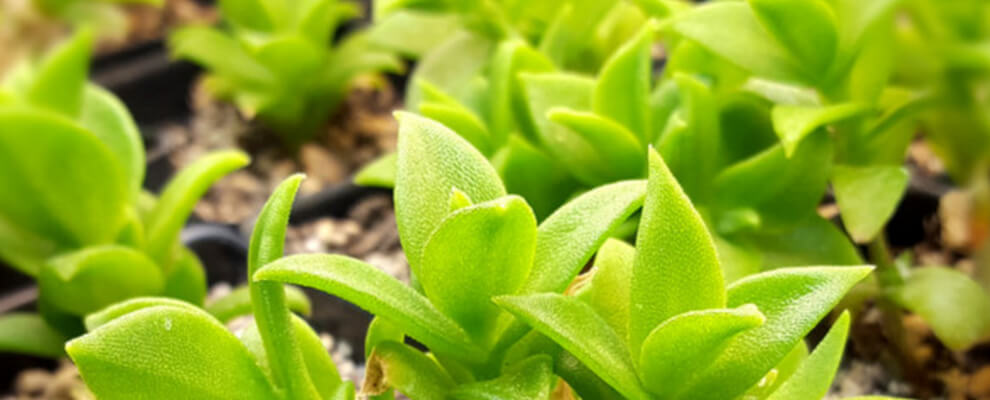
Growing kanna gets tricky right from the start. The seeds contain natural compounds that prevent them from all sprouting at once. In nature this helps with survival, but for growers it means seeds can take weeks or even months before they germinate.
Growers first soak the seeds for days in water to wash away these germination inhibitors. But even then you never know when they'll sprout. Some seeds start growing after two weeks, others make you wait for months. Planning becomes nearly impossible.
Grower tip: Kanna seeds germinate best in spring and early fall. Winter months often fail completely, which delays production even more.
A plant that plays by its own rules
Once the seeds have sprouted, kanna immediately shows how sensitive it is. The plant can't handle too much water (the roots will rot), but too little water causes growth to stop completely. Finding the right balance takes experience you only get through years of trial and error.
Kanna also can't tolerate any frost whatsoever. Even a brief overnight frost can wipe out an entire crop. In northern climates this means bringing plants indoors for winter, which costs extra space, heating, and artificial lighting.
Harvesting: it's all about timing
When do you harvest kanna? This question sparks debates even among scientists. Growers say the plant is strongest at the end of the growing season when most leaves die off. But recent research also shows a peak during fruit development.
The problem is these two moments are months apart. Harvest too early and you might miss the highest concentration of active compounds. Wait too long and the plant might go dormant again, causing active compounds to decline.
The biggest threat: kanna virus
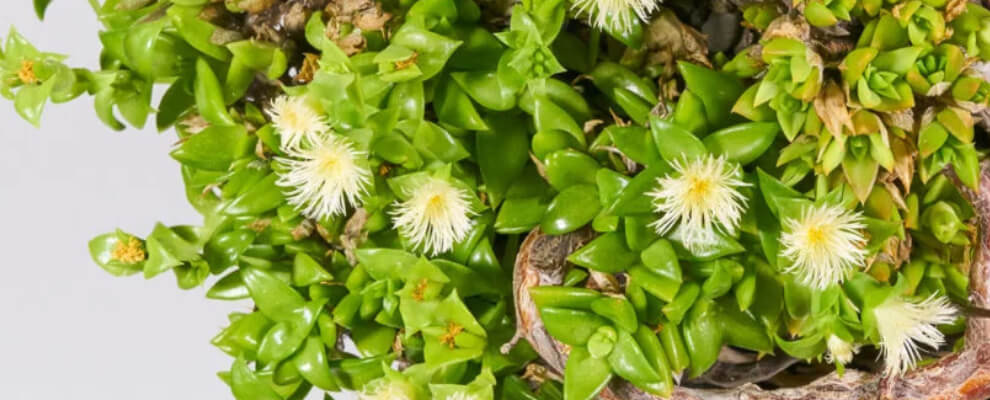
As if growing wasn't challenging enough, kanna plants can get infected with Sceletium tortuosum virus. This virus is fatal to the plant and there's no cure. Once infected, the plant almost always dies.
The virus can spread rapidly through a growing facility. Growers must watch carefully for symptoms like yellow spots, stunted growth, and deformed leaves. A single infected plant can ruin an entire harvest.
Fermentation: the alchemy of kanna
After a successful harvest comes the next crucial step. Fresh kanna is bitter, hard to digest, and contains relatively few active compounds. Only after traditional fermentation do you get the kanna we know - packed with active substances. This process literally determines whether your product works or not.
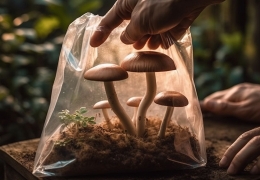
Traditionally, kanna was fermented in animal skins or canvas bags. The plant gets crushed first (to break cell walls) then placed in a sealed bag. During the day the bag sits in the sun to make the plant "sweat," and at night it cools down while the liquids get reabsorbed.
The science behind fermentation
What happens during fermentation is fascinating chemistry. Mesembrine content shoots up dramatically from almost zero to 7-20 micrograms per milliliter. At the same time, mesembrenone content drops from 8-33 to 1-33 micrograms per milliliter.
This change matters because mesembrine provides kanna's calming effects, while mesembrenone has more stimulating properties. Fermentation literally transforms the plant's character.
Why fermentation matters so much: Raw kanna contains 3.6-5.1% oxalic acid, a substance that can cause irritation. Fermentation breaks down this oxalic acid and also makes the active compounds more bioavailable.
Modern fermentation: faster but not always better
Today some producers use faster methods, like heating to 80-100 degrees. This saves time, but research shows sunlight plays an important role in certain chemical conversions. The traditional sun-fermentation method often produces a much better alkaloid profile.
The tradeoff is that traditional fermentation takes eight days and depends heavily on weather. For commercial products this is often too unpredictable, forcing some producers to choose between quality and speed. At Next Level this fortunately isn't the case: our extracts are produced professionally and with patience, so you always get a high-quality and effective extract.
From plant to extract: the complicated part
After fermentation and drying comes the real work: creating a concentrated extract. This is quite a time-consuming and complex job. The process requires not only professional equipment, but also extensive knowledge of chemistry and experience with kanna.

The challenge of unstable compounds
Kanna's active compounds are extremely sensitive. Mesembrine and mesembrenone break down from light, oxygen, and heat. During extraction you have to find a balance between achieving high concentrations and preserving these delicate substances.
Professional extracts need specialized equipment like rotary evaporators, vacuum systems, and chromatography columns. These devices are expensive and you need trained technicians to operate them.
How extracts get made: the three main methods
The entire extraction process starts with fermented and dried kanna that gets ground into powder. This powder then goes into a solvent, depending on which compounds you want to extract. The mixture gets stirred for hours to pull as many active compounds as possible from the plant material.
There are three main methods, and each produces a different type of extract:
Alcohol extraction is the most common method. Ethanol pulls both alkaloids and other compounds from the plant, creating a "full spectrum" extract. These extracts are often dark brown with a resinous consistency.
Water extraction mainly pulls out water-soluble compounds. This often creates a milder extract with fewer alkaloids, but retains other beneficial plant compounds. Water extracts are usually lighter in color.
CO2 extraction is the newest and purest method. Supercritical carbon dioxide selectively extracts alkaloids without unwanted substances. This produces the purest extracts, but the equipment is extremely expensive.
Why the entourage effect complicates extraction
Kanna doesn't just contain mesembrine - it has at least 32 different compounds that work together. This entourage effect means individual compounds often work less effectively than whole-plant extracts.
But preserving this synergy during extraction is quite tricky. Different compounds dissolve differently and remain stable under different conditions. What's good for one compound can be harmful to another.
After extraction
After extraction, the mixture gets filtered to remove all solid materials. What remains is a liquid full of dissolved active compounds. This liquid then goes into the rotary evaporator, where the solvent gets carefully evaporated under reduced pressure. This happens at low temperatures to avoid destroying the sensitive alkaloids.
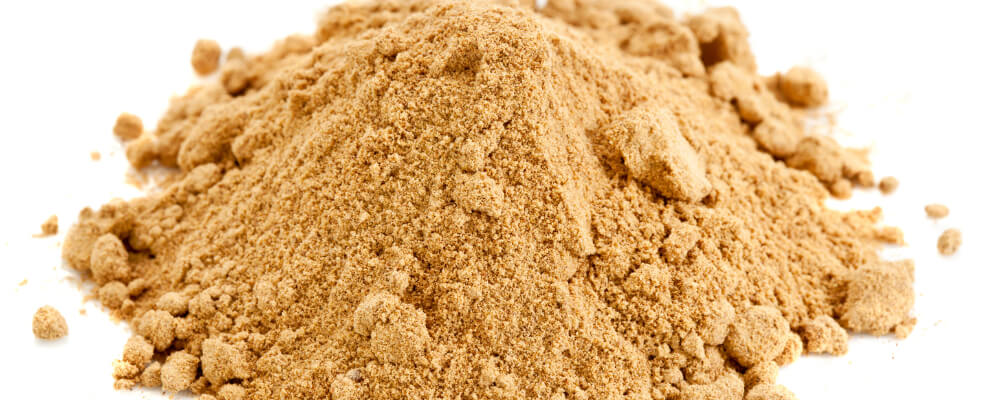
Ever wondered why one kanna extract is a dry powder while another is a sticky resin? This relates to the extraction method and how far the purification process goes. A crude extract still contains lots of plant materials and often has a resinous consistency. A refined extract gets processed further and is often a fine powder. The higher the concentration of active compounds, the drier and more powdery the extract usually becomes.
Concentration, quality and standardization
You often see numbers like 5:1, 10:1 or 50:1 on extracts. This tells you how much plant material was used. A 10:1 extract means 10 kilos of plant material were needed for 1 kilo of extract. The higher the number, the more concentrated the extract.
But be careful: a 50:1 extract isn't automatically five times stronger than a 10:1 extract. It also depends on the quality of the starting material and extraction method. That's why good producers look at actual alkaloid concentration, not just the extraction ratio.
Professional extracts often get "standardized" to a specific alkaloid content. For example 0.5% mesembrine or 1% total alkaloids. This means every batch has exactly the same active compound content, regardless of variations in starting material. Standardization happens by blending different batches or supplementing extracts with isolated alkaloids.
For the highest quality extracts, chromatography gets used. This is a technique where different compounds get separated based on how they move through special materials. This way producers can isolate specific alkaloids or filter out unwanted substances. There are different types of chromatography, from simple column chromatography to advanced HPLC (High Performance Liquid Chromatography). This process can take weeks and requires expensive equipment and expertise, but produces the purest extracts.
Quality control: the most expensive part
A professional kanna extract gets extensively tested. Every batch gets examined for:
Active compounds
HPLC analysis to determine precise concentrations of mesembrine, mesembrenone and other substances.
Contamination and safety
Checking for pesticides, heavy metals, bacteria and solvent residues.
Many cheap "kanna extracts" on the market skip these tests, or even use other plants that look like kanna. Proper quality control can account for 20-30% of total production costs.
The varying quality of starting material
Not all kanna is the same. Active compound concentration varies enormously due to genetics, growing conditions, harvest timing and processing method. Quality extracts need quality starting material.
Some growers have spent years developing kanna genetics with higher concentrations of active compounds. This genetics can contain seven times more active compounds than wild plants, but costs significantly more.
Storage and shelf life: why extracts deteriorate
A quality kanna extract can stay effective for years, but only if stored properly. Light, heat and oxygen are the biggest enemies of kanna alkaloids. That's why extracts work best when packaged in dark, airtight containers.
Extracts that change color or lose their smell are often degrading. The alkaloids then break down into inactive substances.
Why not everyone can make kanna
Kanna extraction isn't a hobby project. It requires knowledge of botany, fermentation, biochemistry and analytical chemistry. Many amateurs underestimate how complex it is and produce extracts of inconsistent or poor quality.
Professional producers often invest years perfecting their process. They build relationships with growers, invest in expensive equipment and develop proprietary techniques.
New techniques like controlled environment agriculture and biotechnology could transform kanna production. Some companies are already experimenting with LED grow lights and automated fermentation to reduce costs.
Why the whole process takes months
From fermentation to final product, the complete process often takes 2-4 months. Fermentation takes 8 days, drying can take weeks (depending on weather), extraction takes several days to weeks, and testing and standardization can add weeks more.
With CO2 extraction, you often need multiple extraction cycles to get all desired compounds out, adding even more time. Each cycle takes days, and between cycles the equipment must be cleaned and calibrated.
Bottom line
Now that you know what goes into making a kanna extract, you can probably understand why it's quite a remarkable product. From seed to final product, there are months of work, knowledge and experience involved. Behind every extract lies craftsmanship and patience. Check out our carefully selected kanna products here and discover the difference that quality makes.
Why Next Level Smart?
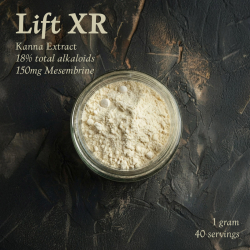
- Standardised alkaloid percentages stated per product (LIFT XR 18%, others around 4-5%)
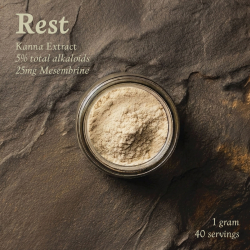
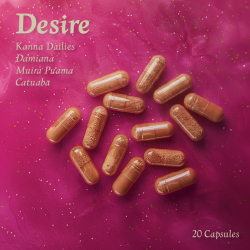
- Own-label line — BLISS, REST, LIFT and DESIRE extracts for consistent quality
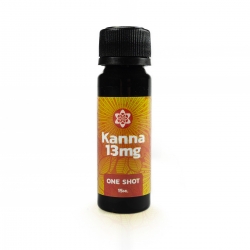
- Multiple extraction methods in the range — liquid extracts, powders and shots, each with its own pros and cons
- Active since 2010 as a Dutch smart shop — fifteen years of experience with ethnobotanical products and shipping from the Netherlands
Frequently asked questions about kanna production
How many months does the whole kanna production process take?
Between cultivation and finished product is typically six months to over a year: several months for the plant to build up enough alkaloids, two to eight weeks for traditional fermentation, plus drying and extraction. Faster processes generally yield a thinner aroma profile and a less complete alkaloid spectrum.
Why is fermentation so important for kanna?
Fermentation shifts the chemical composition: mesembrine content falls while mesembrenone increases. This conversion has been used by the Khoisan for centuries to make consumption more pleasant. Non-fermented kanna has a different effect profile and has traditionally been seen as less suitable.
What is the difference between water and alcohol extraction?
Water draws primarily water-soluble components like some alkaloids and sugars. Alcohol (ethanol) extracts a broader spectrum, including fat-soluble compounds. For kanna a combination or multi-stage approach is often used to preserve the full alkaloid profile. CO₂ extraction is gaining ground but costs more.
What do producers mean by 'total alkaloids'?
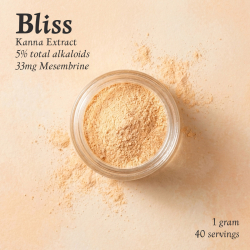
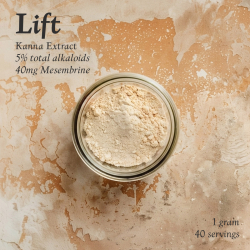
A total alkaloid percentage states the combined weight of all alkaloids (mesembrine, mesembrenone, mesembrenol, tortuosamine and smaller components) relative to the whole extract. A product at 5% total alkaloids therefore contains 50 mg of alkaloids per gram. LIFT XR at 18% is nearly four times as concentrated.
Can you ferment kanna at home?
Technically yes: leaving the plant in plastic packaging for several weeks at room temperature approximates the traditional method. In practice a consistent outcome is hard without control over temperature, moisture and microorganisms. For reliable effects, industrially fermented extracts are more practical.
How do you recognise a well-fermented kanna extract?
Three signs: a declared alkaloid percentage on the label, a mention of fermentation or traditional preparation, and an aroma that leans slightly tobacco-like or sauerkraut-like rather than green or grassy (the latter points to unfermented material).
Last updated: April 2026 | Next Level Smart Shop