On 1 April 2024 Germany's cannabis law came into force — officially the Cannabisgesetz, abbreviated KCanG in German legal jargon. Since then, weed is legal in Germany under a clear set of conditions. For the first time in German federal history, adults can legally possess cannabis, grow a few plants at home, and join non-commercial cannabis social clubs. For Dutch observers it was a strange role reversal: suddenly our eastern neighbour was, on paper, more liberal than the Dutch tolerance model.
Two years on, it is time to take stock. The optimism of April 2024 has largely faded and given way to a mix of modest successes, persistent problems and political turbulence. Since early 2025 a CDU/CSU-led government under Friedrich Merz has been in office, openly hostile to the German cannabis legalisation and willing to roll parts of it back. At the same time, the first hundreds of Anbauvereinigungen — the official cannabis growing associations — are operational, and possession of small amounts of weed has simply become legal.
This guide lays out what has actually changed in two years of Germany's cannabis law, what the legality of cannabis in Germany looks like in 2026, how the German model compares to Dutch tolerance policy, and what it all means for Dutch readers — whether you buy cannabis seeds yourself, or simply follow the European cannabis landscape with interest.
Is cannabis legal in Germany? The law in sixty seconds
Since 1 April 2024 weed has been conditionally legal in Germany. What the Cannabisgesetz regulates at its core, with the numbers that matter:
- Possession for adults (18+): up to 25 grams in public, up to 50 grams at home
- Home cultivation: up to 3 female plants per household (not per person)
- Cannabis social clubs: non-commercial associations, maximum 500 members, distribution to members only
- Monthly distribution: up to 25 grams per month per member, 50 grams for members aged 25 and over
- No commercial shops: a coffeeshop-style model is not permitted in phase 1
- Driving: blood-THC limit raised to 3.5 ng/ml (from the previous zero tolerance)
- Restricted zones: no smoking near schools, sports grounds, playgrounds and pedestrian zones between 7:00 and 20:00
The full law text is at gesetze-im-internet.de. With this cannabis legislation, Germany shifted from a purely criminal regime to a partially legalised model — but with a distinctly German twist: regulated, not commercial.
What works: two years of cannabis legalisation in Germany
The optimistic half of the balance sheet. A number of things have worked as intended.
Decriminalisation of possession
The most tangible effect of the German cannabis legalisation: small amounts of weed no longer lead to a criminal record. Bundeskriminalamt figures show a clear drop in cannabis-related arrests since April 2024. For hundreds of thousands of Germans who previously risked their clean record over personal-use amounts, that is a real change.
Home cultivation works in practice
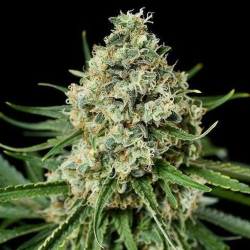
The three-plant rule has put many people into experimentation mode. Online forums are full of growing questions, and the market for seeds — freely available within the EU — has clearly grown. For people who want to grow only for themselves, this has proven to be the easiest route. Our blog has detailed guides on indoor cannabis growing and outdoor cannabis growing that apply equally to German conditions.
First social clubs operational
The Anbauvereinigungen system had a slow start, but by spring 2026 several hundred are licensed and running. The clubs themselves generally function tidily: members pay a fee, receive their allotted monthly amount, and the cannabis is lab-tested. That is a genuine difference from black-market cannabis, where you do not know the quality.
Traffic rules normalised
Raising the blood-THC limit to 3.5 ng/ml means occasional users no longer lose their driving licence days after consumption. The previous zero tolerance was poorly grounded in science; the new limit aligns better with international standards.
What has disappointed
The other half of the story. Not everything has gone as promised.
Bureaucratic slowness
Applications to set up a social club run through the federal states, and they have applied wildly different priorities and processing times. In North Rhine-Westphalia and Berlin applications move relatively quickly; in Bavaria the bureaucratic resistance has been visible. Many founders are still waiting — sometimes for eighteen months or longer — for definitive licences.
The black market is still strong
The core aim of the German cannabis law was to push back the black market. That has not been achieved — or at least, not yet. The legal supply via social clubs is too limited to cover actual demand, and non-members have no access at all. The result: a large share of German cannabis consumption still runs through informal channels, with all the familiar risks (unknown potency, possible contamination, no age control).
No commercial route
The original law foresaw a "phase 2" — commercial pilot projects in selected cities, comparable to the Dutch Wietexperiment. Those pilots were meant to start in 2025 or 2026. They have effectively been frozen. The new government does not see them as a priority.
Inconsistency between federal states
The law is federal but implementation lies with the states. That has produced a patchwork: in some cities a social club is a ten-minute walk away, in other regions the nearest option is an hour's drive. For people in rural areas, the legal route remains largely theoretical.
The political wind: Merz, the CDU and future cannabis policy
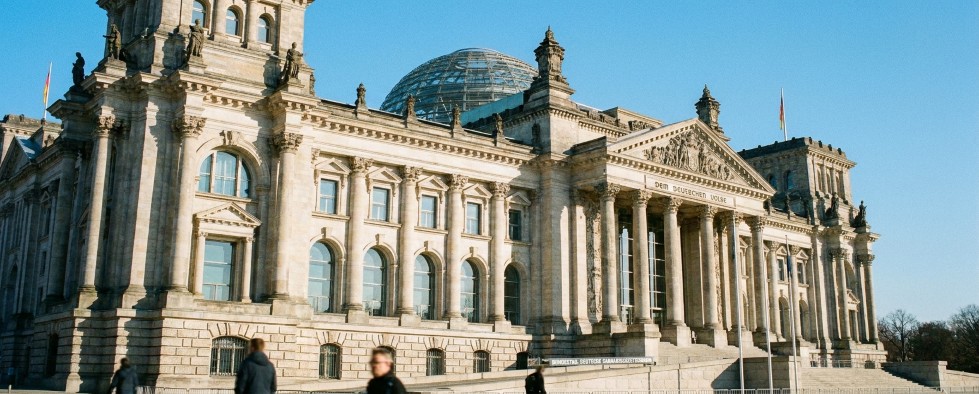
Germany's cannabis law was passed in 2024 under Olaf Scholz's SPD/Greens/FDP coalition. In early 2025 the CDU/CSU won the federal election, and Friedrich Merz became Bundeskanzler. The CDU was against the law from the start — some CDU politicians have called the cannabis legalisation an outright mistake.
A full rollback is legally and politically awkward — re-criminalising what was decriminalised runs into constitutional problems — but partial tightening is on the table. The points most discussed:
- Stricter oversight of social clubs (extra audits, smaller membership caps)
- Possibly lower possession limits in public
- Pausing or scrapping the phase-2 commercial pilots
- Tightening of home-cultivation rules (e.g. mandatory registration)
Whether those plans actually become law depends on coalition dynamics and the opposition position of the Greens and the FDP remnants. For now the Cannabisgesetz stays as it is, but the political climate has clearly shifted.
Cannabis in Germany vs the Netherlands: a comparison
The German and Dutch cannabis models differ fundamentally — legally and culturally. A direct comparison:
| Aspect |
Germany (Cannabisgesetz) |
Netherlands (Opium Act + tolerance) |
| Legal status |
Fully legalised within limits |
Prohibited but tolerated under conditions |
| Consumer sales |
Social clubs only (non-commercial) |
Coffeeshops (commercial, tolerated) |
| Home cultivation |
3 plants per household, legal |
Up to 5 plants tolerated, no industrial lighting |
| Possession in public |
Up to 25 grams |
Up to 5 grams tolerated |
| Tourist access |
Residents only (club membership required) |
Open to adult visitors (Amsterdam and major cities) |
| Quality control |
Lab-tested within club system |
No mandatory testing (except Wietexperiment coffeeshops) |
| Traffic THC limit |
3.5 ng/ml in blood |
3 ng/ml in blood |
The German model is legally cleaner and offers more legal certainty for the individual user — if you follow the rules, you are doing nothing wrong. The Dutch model has practical advantages — direct access via coffeeshops, no membership requirement — but has lived for fifty years in a grey zone where the supply side remains illegal.
The irony is that both countries are essentially trying to solve the same problem — pushing back the black market via legal access — from opposite starting points, and both struggle to legalise the second leg fully (the production chain, the logistics, the scale).
What does German cannabis legalisation mean for Dutch readers?
Four practical consequences worth knowing.
1. German tourists keep coming to the Netherlands
The prediction that German coffeeshop visitors would stay home now that weed is legal in Germany has largely not come true. Access in Germany is too cumbersome (club membership, waiting period, geographic limit) for occasional use. For a German tourist in Maastricht or Roermond, a coffeeshop is still the faster route.
2. Cross-border cannabis movement is punishable
The Dutch 5-gram norm applies in the Netherlands. Once you cross the border into Germany, German rules apply — and the 25-gram public limit is only for adults staying in Germany. Importing cannabis from the Netherlands into Germany is also punishable under German customs law. Enforcement at the border continues.
3. Seeds are legal to buy and ship
Cannabis seeds are EU-wide legal as a commercial product. Our cannabis seeds collection can therefore ship to Germany without issues. What a German buyer does at home — germinate and grow within the 3-plant limit of the German cannabis legislation — is legal.
4. The Dutch Wietexperiment is watching closely
The Wietexperiment — the regulated closed cannabis chain in ten Dutch municipalities — has been running since 2024 and is paying close attention to German experiences. The German phase-2 standstill effectively makes the Wietexperiment the only European experiment with regulated commercial sales at meaningful scale.
Growing cannabis in Germany: what is legal in practice?
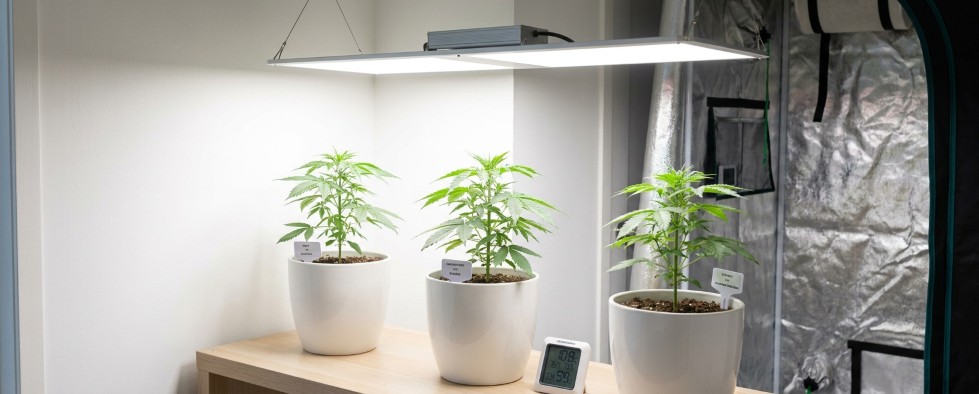
For the growing group of Germans who plan to cultivate, a few practical rules and tips:
- Maximum 3 female plants per household — not per person. Two residents together may not have 6.
- Out of public sight — not visible from the street or public space. Balconies are allowed, provided they are screened.
- Not accessible to children — a locked room or secured grow cabinet is mandatory.
- No selling — what you grow is for personal use, not for resale, inside or outside the Anbauvereinigung.
- Seeds are legal to buy and ship within the EU — Dutch seed banks may deliver to Germany.
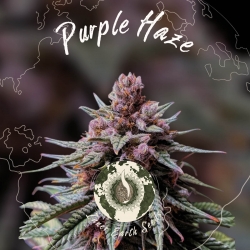
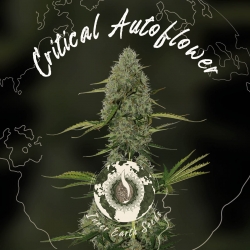
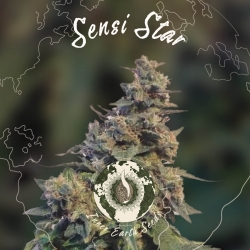
Our Inner Earth Seeds range covers different needs: fast autoflowers like Critical Auto for quick results, CBD varieties such as Swiss Chocolate CBD for lower THC, and classics like Gorilla Glue and Sensi Star. The German climate is comparable to the Dutch climate — what works outdoors in the Netherlands works outdoors in most parts of Germany. For indoor growing, climate is irrelevant.
Cannabis Social Clubs explained
The Anbauvereinigung is the German invention to avoid commercial sales while still creating a legal supply chain. The core rules:
- Non-commercial — a not-for-profit association, no external investors
- Maximum 500 members — limits scale, prevents "industrial" clubs
- Minimum age 18 — members aged 18-21 receive cannabis with THC up to 10%; older members may have stronger varieties
- In-house cultivation — the club grows itself, no external sourcing
- Mandatory lab testing — every batch must be tested for THC and CBD content, mould, pesticides
- Geographically local — members must live in the region where the club is registered
- No mixing — a member may belong to only one club at a time
The thinking behind the model is to make weed legal without producing a "Coca-Cola effect" — no large corporations, no advertising, no saturated market. The critics' counter: it is bureaucratic, small in scale, and precisely for that reason it fails to displace the black market.
Timeline 2024-2026: what happened when
| Date |
Event |
| 1 April 2024 |
Cannabisgesetz comes into force — cannabis is now legal in Germany for adults |
| 1 July 2024 |
Social-club provisions activate; applications can be submitted |
| Autumn 2024 |
First Anbauvereinigungen licensed — pioneers in North Rhine-Westphalia and Berlin |
| Early 2025 |
CDU/CSU wins federal election, Friedrich Merz becomes Bundeskanzler |
| Mid 2025 |
Phase-2 commercial pilots formally delayed |
| 1 April 2026 |
Two-year anniversary of the German cannabis legalisation; hundreds of clubs operational, black market still strong |
| May 2026 |
Discussions about partial tightening in preparation; the law remains in its current form for now |
Why Next Level Smart?
- More than 10 years of experience in cannabis genetics and growing know-how for Dutch and European customers
- Inner Earth Seeds range — our own curated varieties across feminized, autoflower, CBD and hybrid
- EU-wide shipping — seeds ship legally within the EU, including to Germany
- Extensive growing guides — our indoor and outdoor cultivation blogs work equally well for German conditions
- Discreet shipping across the Netherlands and throughout Europe
Frequently asked questions about cannabis in Germany
Is weed legal in Germany?
Yes, under conditions. Since 1 April 2024 cannabis has been legal for adults in Germany: up to 25 grams possession in public, up to 50 grams at home, and a maximum of 3 home-grown plants per household. Commercial sales remain banned — you can only obtain weed legally through membership of an Anbauvereinigung (cannabis social club). That is the core of the Cannabisgesetz.
What exactly is Germany's cannabis law?
Germany's cannabis law — officially the Cannabisgesetz (KCanG) — is the German law that came into force on 1 April 2024 and partially legalised cannabis for adults. Possession up to 25 grams in public and 50 grams at home is permitted, as is home cultivation of up to three plants per household and membership of a cannabis social club. Commercial sales remain banned — which means the model is not comparable to the Dutch coffeeshop.
How is the legality of cannabis in Germany regulated?
The legality of cannabis in Germany shifted on 1 April 2024 from "criminal possession" to "legal under conditions". Possession, home cultivation and club consumption fall within the legal framework; commercial sales, resale and non-medical import remain criminal offences. The cannabis legislation is federal, but implementation lies with the sixteen federal states — which is why practical availability varies by region.
Has the German cannabis legalisation been a success?
It depends on what you look at. The possession-decriminalisation part works as intended: substantially fewer arrests, no criminal record for personal-use amounts. Home cultivation works in practice. Social clubs are operational, but more slowly than expected. The original goal — pushing back the black market — has largely not been met, because the legal supply is too limited.
Can I as a Dutch person use German social clubs?
In principle no. Anbauvereinigungen are restricted to members living in the club's region, and membership usually requires a German address. The law was deliberately designed to prevent cannabis tourism, in contrast to the open character of Dutch coffeeshops.
Can I ship cannabis seeds to Germany?
Yes. Cannabis seeds are EU-wide legal as a commercial product, not falling under narcotics legislation as long as they have not germinated. Our cannabis seeds can therefore ship freely within the EU, including to Germany. What the buyer does at home — growing within the 3-plant limit of the German cannabis law — is legal.
How much cannabis can a German legally keep at home?
The law permits up to 50 grams of cannabis at home for adults, plus the harvest from a maximum of three personal plants. In public the limit is 25 grams. The limits apply per person. Possession above those amounts remains a violation.
Can I smoke cannabis on the street in Germany?
In principle yes, but with exceptions. Smoking is prohibited within 100 metres of schools, sports grounds, playgrounds and youth facilities, and in pedestrian zones between 7:00 and 20:00. In most public spaces — parks outside those zones, on the street — it is allowed. Enforcement is up to local authorities.
What is changing under the Merz government?
For now the law remains in its current form. A full rollback is legally difficult, but partial tightening is being discussed: stricter oversight of social clubs, possibly lower possession limits, and scrapping the phase-2 commercial pilots. Whether those plans become law depends on coalition dynamics. Watch reliable German news sources (Tagesschau, Spiegel) for concrete changes.
How does cannabis in Germany compare to Dutch tolerance policy?
Both models try to deregulate cannabis consumption but via opposite routes. The Netherlands tolerates sales (coffeeshops) but leaves production in the tolerated grey zone; Germany legalises possession and home cultivation but bans commercial sales. The German model offers more legal certainty for the individual user; the Dutch model offers easier and broader access. Neither fully resolves the black-market problem.
What is the difference between the Cannabisgesetz and the Dutch Wietexperiment?
The Wietexperiment is a Dutch pilot project in ten municipalities where coffeeshops may only sell cannabis from regulated production. It is smaller in scale but does allow commercial sales. The Cannabisgesetz is a general legal change across Germany without commercial sales. Both try to legalise the supply chain, at different scales and with different design choices.
Which cannabis seeds suit the German climate?
The German climate is, in most regions, comparable to the Dutch climate: temperate, with short summers in the north and a bit more sun in Bavaria and Baden-Württemberg. For outdoor growing, fast outdoor strains and autoflowers work best. For indoor growing, climate makes no difference. Concrete tips are in our outdoor growing guide and indoor growing guide.
Last update: May 2026 | Next Level Smart