Blog navigation

Latest posts

Party Pills Comparison: Happy Caps vs DNX Pills

Twenty party pills in the shop and no idea which to pick? This comparison puts Happy Caps, DNX and the new Party-E...

Read More
Liquid Spore Cultures vs Spore Prints: Which Should You Choose?

Liquid spore cultures and spore prints are the two main ways to start a mushroom cultivation project. This guide...

Read More
Incense Guide: Which Type of Incense Is Right for You?

With over 60 types of incense in our collection, choosing the right one takes a bit of knowledge. This guide compares...

Read More
Kuripe vs Tepi: Which Rapé Applicator Suits You?

Kuripe or tepi? These are the two tools used to administer rapé, and choosing between them changes the experience...

Read More

Kanna (Sceletium Tortuosum): Everything You Need to Know


Last updated: March 2026
This guide is regularly updated with the latest insights about Kanna.

What Is Kanna?

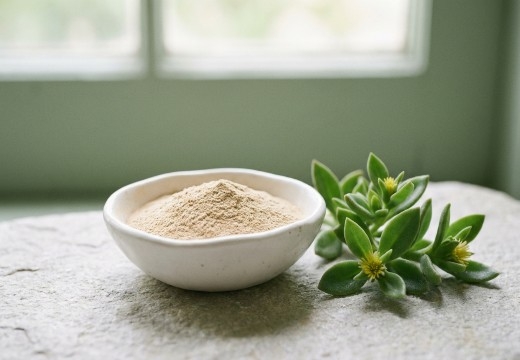
Kanna (Sceletium tortuosum) is a succulent plant native to South Africa that the San and Khoikhoi peoples have used for generations for its mood-enhancing properties. The plant contains mesembrine and related alkaloids that function as natural serotonin reuptake inhibitors (SRIs). This makes Kanna one of the few plants in the world with a scientifically substantiated mechanism of action on mood regulation.

The name 'Kanna' or 'Channa' originates from the Khoikhoi language. Historically, warriors and hunters chewed the fermented plant to reduce stress and anxiety following intense experiences. Today, Kanna is available in various forms: powder, extract, tincture, capsules and even chocolate.

The History of Kanna

The earliest written records of Kanna date back to 1662, when Dutch VOC trader Jan van Riebeeck noted that the Khoikhoi used a plant known as 'kougoed' (chewing stuff). The San communities in the Cape region had been using Kanna for generations for both ceremonial and daily purposes.

Warriors took Kanna after battles to process the mental aftermath of conflict. It helped them release tension and find calm again. This application is remarkable, as Western science only began unravelling the mechanism of mesembrine in the 21st century.

According to research published in the Journal of Ethnopharmacology (Gericke et al., 2024), the use of Sceletium tortuosum by the San represents one of the oldest documented examples of a plant specifically employed for mood enhancement.

Effects of Kanna

The effects of Kanna vary depending on dosage, method of use and individual sensitivity. In general, users describe the following experiences:

  • Low dosage: Subtle mood enhancement, greater social ease, mild euphoria
  • Medium dosage: Noticeable relaxation, reduced tension, increased openness
  • High dosage: Stronger sedation, emotional detachment, muscle relaxation

It is worth knowing that some people only experience the full effects after several days of regular use. This phenomenon is called 'priming' and is specific to Kanna.

Methods of Use and Dosage

Kanna is remarkably versatile in its applications. Each method has a different absorption profile and consequently a different effect. Below is an overview of the most common methods.

  1. Kanna as tea
    Use 200-500 mg of Kanna per cup of tea. Allow it to steep for 10-15 minutes in hot (not boiling) water. Absorption is better on an empty stomach. The effect comes on gradually after approximately 60-90 minutes and lasts several hours. Ideal for beginners.
  2. Kanna sublingually (under the tongue)
    Place 50-150 mg of Kanna extract under the tongue and allow it to absorb for 15-20 minutes. This method produces a faster and stronger effect than tea. Effects are noticeable within 15-30 minutes.
  3. Smoking Kanna
    The typical dosage for smoking ranges between 50-250 mg. The effect comes on rapidly, within minutes. Optionally combine with herbs such as damiana or blue lotus for a richer experience.
  4. Chewing Kanna
    Use 50-150 mg for a mild effect or 200-400 mg for a medium effect. Chew the Kanna slowly and allow the saliva to absorb the extract. You can optionally wrap it in a piece of chewing gum.
  5. Kanna insufflation (powder)
    Use 20-150 mg of Kanna in powdered form. This method produces the fastest and most intense effect: within minutes you feel a euphoric sensation that can last over an hour. Only use finely ground powder, never coarse material.

Comparison: Kanna Methods of Use

Method Dosage Onset Duration Intensity
Tea 200-500 mg 60-90 min 3-5 hours Mild
Sublingual 50-150 mg 15-30 min 2-4 hours Medium
Smoking 50-250 mg 2-5 min 1-2 hours Strong
Chewing 50-400 mg 30-60 min 2-4 hours Mild-Medium
Insufflation 20-150 mg 1-3 min 1-2 hours Strong

Important: Do not combine Kanna with SSRIs, MAO inhibitors or other antidepressants. Kanna acts on the same serotonin system and combining them may cause unwanted interactions. Always consult your doctor if you are taking medication.

Priming: Why You May Not Feel Kanna Straight Away

A common experience among first-time Kanna users is that the effects are absent or very subtle initially. This is normal and is known as 'priming'. Your body essentially needs to calibrate itself to the active compounds in Kanna. By using it for several consecutive days, the effect builds up gradually.

After the priming period, most users notice a clear difference. Be patient if you feel little the first time. Give it at least three to five sessions before forming a judgement about its efficacy.

Kanna Extracts and Product Variants

At Next Level Smart Shop, you will find Kanna in various forms and strengths. From raw plant material to concentrated extracts, there is a suitable option for every experience level.

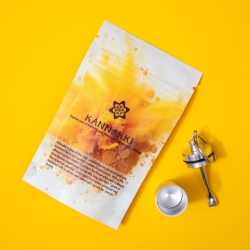
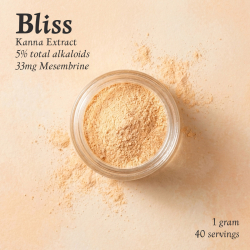
  • Kanna Powder - The base product, suitable for tea, sublingual use and smoking
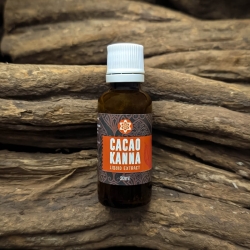
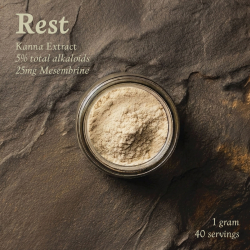
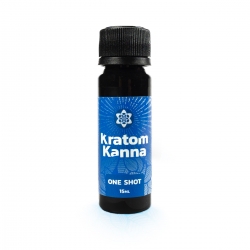
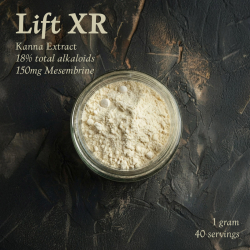
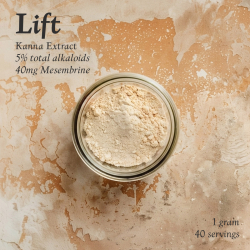
  • Kanna Extract (various strengths) - Concentrated versions with higher alkaloid content for experienced users
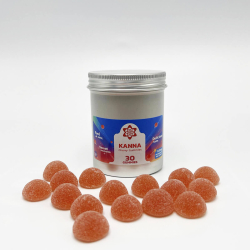
  • Kanna Gummies - Flavourful gummies with a measured dose, ideal for on-the-go
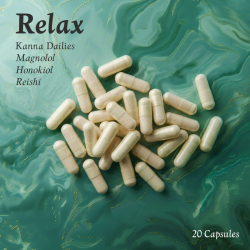
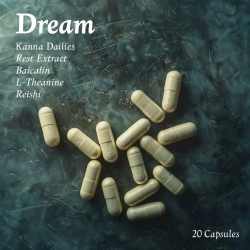
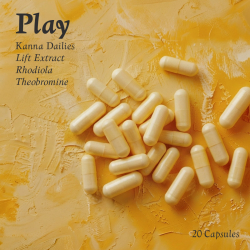
  • Kanna Capsules - Pre-dosed capsules for consistent use

Also explore our tinctures and extracts for other interesting plant extracts.

Recent Research on Kanna (2024-2026)

Scientific interest in Sceletium tortuosum continues to grow. Below is an overview of recent findings:

  • A study from the University of Cape Town (2024) confirmed that mesembrine acts selectively as a serotonin reuptake inhibitor, with a different side-effect profile compared to synthetic SSRIs
  • Research published in Phytomedicine (2025) suggested that Kanna extracts also possess PDE4 inhibitory properties, which may be relevant for cognitive function
  • A clinical pilot from 2025 (Stellenbosch University) investigated the effect of standardised Sceletium extract on stress-related complaints in 60 participants, with promising initial results

Also read our in-depth article on how Kanna is taking the West by storm for more on the growing popularity of this plant.

Why Next Level Smart?

  • Kanna in multiple formats — powder, extract, tincture and capsules for every preference
  • Sourced from South Africa through partnerships with experienced Sceletium tortuosum growers
  • Dosage guidance per product so beginners can start safely
  • Fast, discreet shipping across the Netherlands and Europe

Combining Kanna with Other Herbs

Kanna pairs well with various other herbs and plants. Popular combinations include:

  • Kanna + Blue Lotus - A synergistic combination that promotes relaxation and mild euphoria
  • Kanna + Damiana - Enhances the social and open-hearted aspects of both herbs
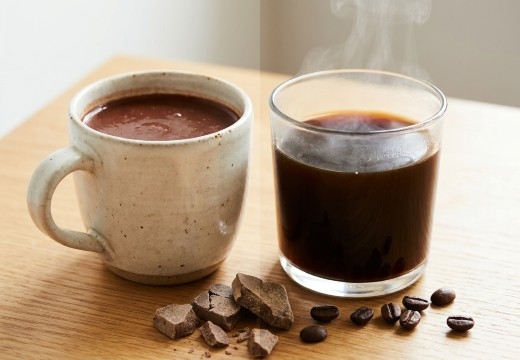
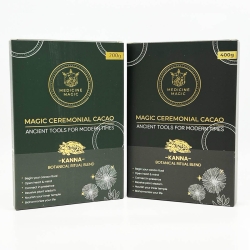
  • Kanna + Cacao - The theobromine in ceremonial cacao may enhance Kanna's effects

Important: Never combine Kanna with alcohol in high doses. Kanna may intensify the effects of alcohol. Exercise caution with this combination.

Frequently Asked Questions About Kanna

Which Kanna consumption method is best for me?

It depends on your experience and what you are looking for. New to Kanna? Start with tea: the effect comes on slowly and is mild. Looking for a faster, stronger effect? Try sublingual use (under the tongue). The comparison table above shows exactly the difference in dosage, onset and duration per method.

What is the difference between Kanna powder and extract?

Kanna powder is ground plant material with a mild effect, suitable for tea or chewing. Extracts are concentrated versions where the active compounds (especially mesembrine) are enhanced. An extract can be 5x to 50x stronger than raw powder. At Next Level Smart Shop you will find both variants.

Can I use Kanna daily?

Many users take Kanna daily in low doses, for example as tea or sublingually. It is wise to take occasional breaks (for example one week per month) to prevent tolerance build-up. Listen to your body and build up usage gradually.

Why do some people not feel Kanna the first time?

This is called 'priming' and is completely normal with Kanna. Your body needs to adjust to the active compounds. Most users feel the full effect only after three to five sessions of regular use. So do not give up if the first time does not seem to do much.

Can I combine Kanna with Blue Lotus or other herbs?

Yes, Kanna combines well with various herbs. Blue Lotus and Kanna enhance each other's relaxing effects. Combinations with damiana or ceremonial cacao are also popular. However, never combine Kanna with SSRIs, MAO inhibitors or other substances that affect the serotonin system.

What do I notice from a low vs. high Kanna dosage?

At a low dosage you feel subtle mood improvement, more social ease and a slightly more energetic feeling. At a medium dosage the relaxation becomes more noticeable and tension decreases. At a high dosage the effect can be more sedating, with muscle relaxation and emotional distance. Always start low and work your way up.

Is Kanna suitable as an alternative to coffee?

Some people do use Kanna as a natural alternative to coffee. In low doses it provides a mild energy boost and increased focus, but without the jitters or crash that coffee can cause. Kanna tea is particularly popular for this purpose. The effect is subtler than coffee but lasts longer.

How should I store Kanna?

Store Kanna in a cool, dry and dark place. The active compounds (particularly mesembrine) are sensitive to light, heat and moisture. A sealed container in a kitchen cupboard is ideal. When properly stored, Kanna remains effective for months to years. Store extracts preferably in the refrigerator after opening.

Disclaimer: Kanna is a natural supplement and not a registered medicine. The described effects are based on traditional use, user experiences and scientific research. Always consult a medical professional for health concerns. Do not combine Kanna with SSRIs or MAO inhibitors.

Last updated: March 2026 | Next Level Smart

 
Posted in: All posts, New Products
Rey is the creative force behind our webshop, blending practical experience with a deep interest in natural products, ritual, and conscious living. His work is rooted in quality, authenticity, and respect for traditional knowledge. Through his writing, he aims to bridge traditional wisdom with modern, conscious use, helping customers make informed and meaningful choices. By maintaining close relationships with many of the producers behind the products, he creates a bridge between their world and Western society. He shares their knowledge, vision, and methods with care, honoring both traditional practices and their place in a modern context. His favourite products are rapé, kratom, and magic mushrooms.
Loading...