In the European debate on cannabis policy, the Netherlands has been the outlier since 1976: the gedoogbeleid, or tolerance policy. Coffeeshops are allowed to sell small amounts of cannabis, but their supply chain has remained illegal — the famous "back door problem". For fifty years this paradox was debated, criticised and left in place, until the Wietexperiment.
Since late 2023, ten Dutch municipalities have been trying to solve the back door problem through the Experiment Gesloten Coffeeshopketen — informally known as the Wietexperiment. For the first time in Dutch history, complete cannabis supply chains — from cultivation to retail — are being made legal, albeit within the boundaries of a time-limited experiment.
Two years after the first regulated cannabis appeared in coffeeshops in Breda and Tilburg, it is time for a status update. What works? What disappoints? And how does this Dutch model compare to the German Cannabisgesetz we covered in an earlier piece? This blog lays out the current state of affairs.

The Wietexperiment in sixty seconds
The official name is Experiment Gesloten Coffeeshopketen (EGC), or Closed Coffeeshop Chain Experiment. The core:
- Ten participating municipalities: Almere, Arnhem, Breda, Groningen, Heerlen, Maastricht, Nijmegen, Tilburg, Voorne aan Zee and Zaanstad
- Ten licensed cultivators producing regulated cannabis under supervision
- Full supply chain legal within the experiment: cultivation, transport and sale all formally permitted
- Mandatory quality requirements: lab testing for pesticides, mould, heavy metals and cannabinoid content
- Track-and-trace system: every package traceable from plant to point of sale
- Limited duration: an experimental phase of four years, with evaluation by the WODC
- Goal: to assess whether a closed regulated cannabis supply chain is workable, and to measure effects on public health, crime and public order
The legal basis is the Wet experiment gesloten coffeeshopketen (Act on the Closed Coffeeshop Chain Experiment), in force since 2020. The full legal framework is on Rijksoverheid.nl. Independent research runs through the Trimbos Institute and the Research and Documentation Centre (WODC).
What is the back door problem?
To understand what the Wietexperiment is trying to fix, it helps to understand the problem first.
Since the introduction of the tolerance policy in 1976, the Dutch situation has been paradoxical: selling small amounts of cannabis in a tolerated coffeeshop is legally permitted, but cultivating, transporting and supplying the same cannabis remains fully criminal. The "front door" is tolerated, the "back door" is not.
Practically this means that coffeeshop owners have been sourcing from the informal market for fifty years — from illegal cultivators, with all the associated risks: no quality control, no track-and-trace, no liability, and a structure that facilitates organised crime. The policy has kept the street safe for consumers but left the supply chain in the grey zone.
The Wietexperiment is the first serious attempt to legalise that back door — not permanently, but for four years, to see whether it works.
How the experiment works: the closed chain
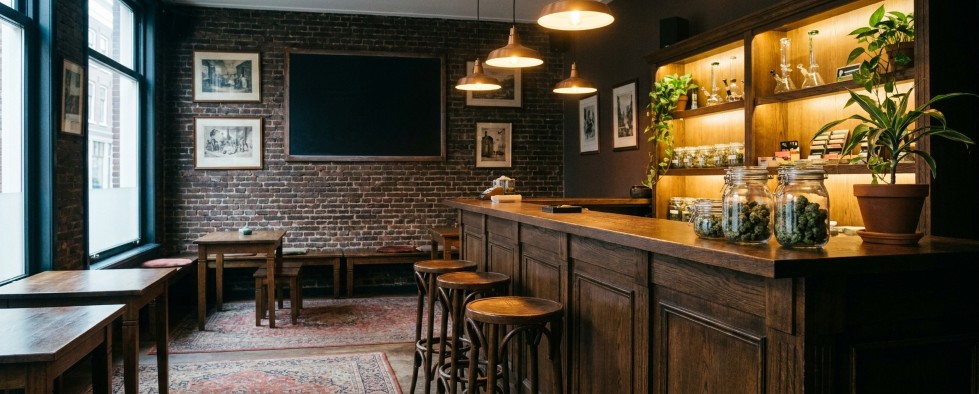
The core idea is a closed production chain in which every step is regulated:
- Licensed cultivators grow cannabis under strict conditions — site requirements, security, plant registration
- Quality testing per batch for pesticides, mould, heavy metals, microbiological contamination and THC/CBD content
- Track-and-trace via digital registration: every plant, every batch, every package has a unique number
- Transport by a limited number of carriers with security requirements
- Sale exclusively in participating coffeeshops in the ten municipalities, to adults, within the standard 5-gram limit
For the consumer in a participating coffeeshop, this means that products are labelled with origin and quality information, and the source is fully traceable. A significant difference from the traditional tolerated supply.
The ten municipalities: who is participating?
The participating municipalities were selected in 2019 to form a representative cross-section of the country — larger and smaller cities, spread across the regions:
| Municipality |
Province |
| Almere |
Flevoland |
| Arnhem |
Gelderland |
| Breda |
North Brabant |
| Groningen |
Groningen |
| Heerlen |
Limburg |
| Maastricht |
Limburg |
| Nijmegen |
Gelderland |
| Tilburg |
North Brabant |
| Voorne aan Zee |
South Holland |
| Zaanstad |
North Holland |
One notable absence: Amsterdam. The capital was deliberately excluded. The scale and international visibility of the Amsterdam coffeeshop landscape made it politically and logistically too complex to include in an experimental setup. The same applies to Rotterdam, The Hague and Utrecht.
Timeline: from coalition agreement to operational experiment
| Date |
Event |
| October 2017 |
The Wietexperiment is included in the coalition agreement of the Rutte III cabinet (VVD, CDA, D66, ChristenUnie) |
| November 2019 |
The Wet experiment gesloten coffeeshopketen is adopted by the Dutch Senate |
| July 2020 |
The law enters into force; cultivator tender opens |
| 2021-2022 |
Ten cultivators are selected and begin preparations — security requirements, site permits, cultivation protocols |
| December 2023 |
Start of the transition phase in Breda and Tilburg: first regulated cannabis available in coffeeshops |
| 2024 |
Gradual rollout to the other municipalities; coffeeshops may temporarily sell both tolerated and regulated cannabis |
| 2025 |
Further rollout; coffeeshops in participating municipalities gradually sell a larger share of regulated product. Schoof cabinet falls; snap elections lead to a new government |
| 2026 |
Two-year status check; ongoing monitoring by Trimbos and WODC |
| 2027-2028 |
Expected end date of the experiment; final evaluation and political decision on continuation or policy reform |
What works: two years of progress

A status update starts with the positive side. A number of objectives have been delivered.
The closed chain is operational
The most fundamental result: the chain technically works. Cannabis is being cultivated, tested, transported, sold and registered legally within a single regulatory framework — something that has not existed in fifty years of Dutch cannabis policy. The infrastructure is in place, track-and-trace is functioning, and the first batches have moved successfully through the entire chain.
Quality is measurable
For the first time, coffeeshop visitors in participating municipalities know exactly where their cannabis comes from, what is in it and how it was grown. Pesticides, mould and heavy metals are tested per batch. That is a meaningful improvement over the traditional supply, where quality and origin remained unknown to the end user.
First data are coming in
Monitoring by Trimbos and the WODC is beginning to produce results. Early data look at changes in consumer behaviour, black-market dynamics and public order in the participating municipalities — input that will feed into the final evaluation in 2027-2028 and any policy decisions.
Political and legal stability
The experiment has survived three cabinets and multiple coalition changes without being scrapped. That is an achievement in itself: in a politically charged dossier like cannabis policy, institutional continuity is not a given.
What has disappointed
The other half of the story. Not everything has gone as planned.
Delay after delay
The experiment was originally meant to start in 2021. It was 2023 before the first cannabis reached the counter. Cultivators were delayed by security requirements, site permits and cultivation protocols that turned out to be more complex than expected. That is nearly three years of delay on a four-year experiment — a significant share of the runtime.
Product range remains limited
In the early phase the assortment of regulated cannabis was considerably narrower than the traditional supply. Coffeeshops could blend during the transition phase, but consumers complained about less choice and higher prices for the experimental product. Variety is growing slowly, but has not yet caught up with the breadth of the tolerated market.
Cultivators drop out or struggle
Not all licensed cultivators have made it far. Some surrendered their licence, others faced production or funding issues. The composition of the cultivator pool has also shifted over the course of the experiment as licences moved between parties. Practice has turned out to be harder than the original tender setup suggested.
The black market keeps running
One of the central aims — pushing back the black market — has had limited impact in the current setup. With only ten municipalities and limited production scale, the effect on the national informal cannabis market is small. Coffeeshops in the other cities (including Amsterdam, Rotterdam, The Hague, Utrecht) still source informally.
Tourists and border effects
A municipality like Maastricht has a high share of Belgian and German coffeeshop visitors. The question of whether the experiment should also be accessible to them, and how that relates to residency criteria, has not been answered consistently in two years.
The political wind: future policy
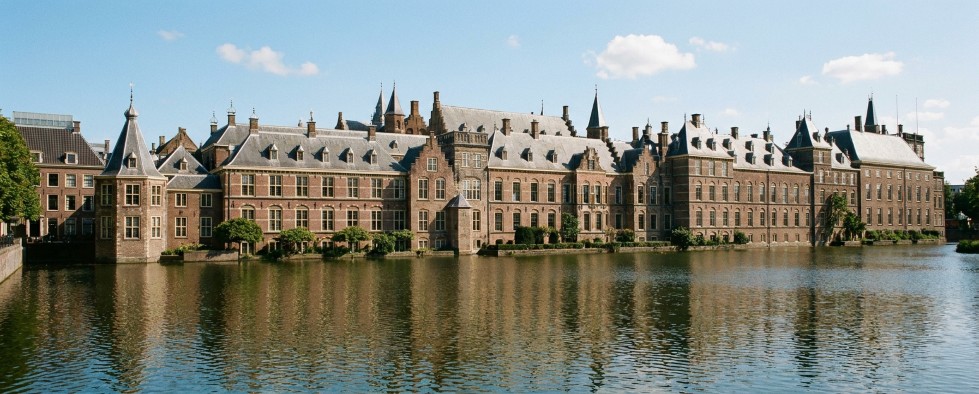
The Wietexperiment was placed on the political agenda by Rutte III in 2017 and legally anchored in 2019. Four different cabinets have carried the dossier since: Rutte III, Rutte IV, Schoof and its successor. The Schoof cabinet took office in 2024 and fell in June 2025 when the PVV withdrew from the coalition; after the snap elections of October 2025 a new cabinet took office. Through every change the administrative line has remained the same: neither rollback nor active expansion, waiting for the evaluation.
Key political questions that will land on the table in 2027-2028:
- Will the experiment be extended, expanded or ended?
- Will the remaining Dutch municipalities be added to the model?
- Will there be a permanent legal framework for the closed coffeeshop chain?
- How will tourist municipalities and cross-border issues be handled?
Dutch political parties have historically differed sharply on cannabis policy: progressive parties tend to favour expanding the model, conservative parties tend toward restraint. The final evaluation in 2027-2028 will reopen the debate.
Wietexperiment vs German Cannabisgesetz: a comparison
Two countries, two opposite approaches to the same problem. We covered the German Cannabisgesetz that came into force in April 2024 in an earlier piece. A direct comparison:
| Aspect |
Netherlands (Wietexperiment) |
Germany (Cannabisgesetz) |
| Approach |
Closed regulated chain as experiment |
Legal legalisation with social clubs |
| Consumer sales |
Via tolerated coffeeshops in 10 municipalities |
Only via Anbauvereinigungen (non-commercial) |
| Scale |
Limited to 10 participating municipalities |
Nationwide in force |
| Home cultivation |
Unchanged: up to 5 plants tolerated |
3 plants per household, legally allowed |
| Commercial sales |
Yes, via coffeeshops |
No, only via clubs |
| Time horizon |
Temporary experiment, evaluation 2027-2028 |
Permanent law |
| Tourist access |
Varies by municipality (residency criterion) |
Not accessible (club membership required) |
The role reversal is striking. For decades the Netherlands was seen as the most liberal cannabis nation in Europe; since April 2024 that is formally no longer the case. Germany has legalised possession and home cultivation outright, while the Netherlands still operates a time-limited experiment in just ten municipalities. The German approach is legally cleaner; the Dutch approach is practically more accessible to the average consumer.
The irony: both countries are essentially trying to achieve the same goal — pushing back the black market through legal access — from opposite starting points, and both encounter comparable obstacles in implementation.
What does this mean for consumers and home growers?
Four practical implications for anyone living in the Netherlands or following the European cannabis map.
1. Coffeeshop visitors in participating municipalities see more information
In Almere, Arnhem, Breda, Groningen, Heerlen, Maastricht, Nijmegen, Tilburg, Voorne aan Zee and Zaanstad, an increasing share of the cannabis on offer comes from the experiment. Packaging shows origin and quality information. For consumers, this is an improvement in transparency, even if the range is sometimes narrower than in other municipalities.
2. Nothing changes outside the ten municipalities
Amsterdam, Rotterdam, Utrecht, The Hague and all other municipalities still operate under the traditional tolerance regime. Coffeeshops there continue to source from the informal market as before. The experiment is geographically limited, and only permanent legislation could roll out the model nationally.
3. Home cultivation remains unchanged
Dutch rules for home cultivation have not been adjusted by the Wietexperiment. The tolerance policy still allows up to five plants for personal use, without industrial lighting. Cannabis seeds are freely available within the EU as a commercial product; our cannabis seeds collection serves both Dutch and European home growers. Anyone wanting to build up cultivation knowledge can turn to our guides for indoor cannabis growing and outdoor cannabis growing.
4. The 2027-2028 evaluation will matter
The outcome of the experiment will determine whether the Netherlands moves towards a permanent regime. That is not a small matter: it would mark the end of fifty years of the back door problem. Everyone with a stake in the Dutch cannabis landscape — coffeeshop owners, cultivators, consumers, policymakers and law enforcement — is watching.
Quality requirements under the microscope
One of the most tangible differences between experimentally-regulated and tolerated cannabis lies in what gets tested and how. The requirements that cultivators inside the experiment must meet:
- Pesticide residues — below European MRL thresholds for food products
- Heavy metals — lead, cadmium, arsenic, mercury below established maximum values
- Microbiological contamination — moulds, yeasts and bacteria below threshold values
- Cannabinoid content — THC and CBD measured per batch and listed on the packaging
- Moisture content — standardised to prevent quality loss and mould growth
- Packaging — child-resistant, traceable, with a label showing origin and quality
For the current tolerated supply, none of these obligations exist. Coffeeshop owners who want to guarantee quality must do so themselves, usually based on trust in the supplier. The experiment makes visible what used to be invisible.
Why Next Level Smart?
- More than 10 years of experience in cannabis genetics and growing know-how for Dutch and European customers
- Inner Earth Seeds range — our own curated varieties across feminized, autoflower, CBD and hybrid
- EU-wide shipping — seeds ship legally within the EU
- Extensive growing guides — our indoor and outdoor cultivation blogs apply to Dutch and European conditions
- Discreet shipping across the Netherlands and throughout Europe
Frequently asked questions about the Wietexperiment
What exactly is the Wietexperiment?
The Wietexperiment — officially the Experiment Gesloten Coffeeshopketen (EGC) — is a four-year Dutch policy experiment in which cannabis can be legally cultivated, transported and sold in coffeeshops in ten participating municipalities. The goal is to assess whether a closed regulated supply chain is workable and what effects it has on public health, crime and public order. The legal basis is the 2019 Wet experiment gesloten coffeeshopketen.
Which municipalities are participating?
Ten municipalities spread across the country: Almere, Arnhem, Breda, Groningen, Heerlen, Maastricht, Nijmegen, Tilburg, Voorne aan Zee and Zaanstad. Amsterdam, Rotterdam, The Hague and Utrecht are deliberately excluded — the scale and complexity of their coffeeshop landscapes were considered too large for an experimental setup.
When did the Wietexperiment begin?
The law took effect in July 2020, but the first actual sale of regulated cannabis took place in December 2023 in coffeeshops in Breda and Tilburg. Other municipalities followed in phases. The full experimental phase is expected to run until 2027 or 2028, followed by an evaluation.
What is the back door problem?
Since 1976, Dutch coffeeshops have been allowed to sell small amounts of cannabis under the tolerance policy (the "front door"), but cultivating, transporting and supplying that cannabis has always remained criminal (the "back door"). The result is the paradox that retail sale is tolerated while wholesale supply is not. The Wietexperiment is the first serious attempt to legalise the back door, on a temporary basis.
Is the experiment working so far?
Partly. The technical chain is functioning: cannabis is being cultivated, tested, transported and sold legally in participating municipalities. Quality testing and track-and-trace are operational. At the same time there have been obstacles: delays during the start, a narrower product range, cultivators dropping out or running into difficulty, and a limited impact on the national black market due to the geographic restriction.
Is Amsterdam taking part in the Wietexperiment?
No. Amsterdam was deliberately left out. The scale and international visibility of the Amsterdam coffeeshop landscape made it politically and logistically too complex to include in an experimental setup. The same applies to the three other large cities: Rotterdam, The Hague and Utrecht.
What quality requirements apply to the regulated cannabis?
Cannabis from the Wietexperiment is tested per batch for pesticide residues, heavy metals (lead, cadmium, arsenic, mercury), microbiological contamination (moulds, yeasts, bacteria), THC and CBD content, and moisture content. Packaging must be child-resistant and show origin and quality information. None of these requirements exist for traditionally tolerated cannabis.
Does anything change for home cultivation rules?
No. The Wietexperiment focuses exclusively on regulated production and sale through coffeeshops. The tolerance rules for home cultivation remain unchanged: up to five plants for personal use, without industrial lighting, not visible from the public road. Cannabis seeds remain freely available within the EU as a commercial product.
How does the Wietexperiment compare to German cannabis legalisation?
Both models attempt to push back the black market by providing legal access, but via opposite routes. Germany legalised possession and home cultivation outright on 1 April 2024 and set up sales through non-commercial social clubs. The Netherlands chose a time-limited experiment with commercial sales through tolerated coffeeshops in ten municipalities. The German model is legally cleaner; the Dutch model is practically more accessible. Both face comparable implementation challenges.
Can tourists buy cannabis in participating municipalities?
That varies by municipality. Some operate a residency criterion (sales only to Dutch residents), others are more open. The situation in Maastricht and other border municipalities is particularly complex due to the large flow of German and Belgian visitors. A consistent national line for tourists is missing within the experiment.
What happens after 2027-2028?
After the experiment ends, a final evaluation by the WODC and Trimbos Institute follows. Based on that, the Dutch government will decide whether the closed coffeeshop chain becomes permanent, is expanded to more municipalities, or is wound down. Political parties differ sharply in their positions, so the final policy will depend on coalition dynamics at that moment.
Which cannabis seeds suit the Dutch climate?
Disclaimer: This blog is purely informational and discusses the Dutch Wietexperiment and tolerance policy. Cannabis seeds are sold only as a collectable item or for use in jurisdictions where home cultivation is legally permitted. Consult local regulations before germinating seeds.
Last update: June 2026 | Next Level Smart