Blog navigation

Latest posts

Magic Truffles by Strength: From Gentle to Strongest

Not every magic truffle is equally strong: there is a world of difference between a gentle Mexicana and a hefty High...

Read More
Indica, Sativa and Ruderalis: The Real Difference Explained

Indica, sativa and ruderalis: the three names you will find on almost every pack of cannabis seeds. But what do they...

Read More
What is DMT? The Molecule, Its Sources, and What Science Says

A complete guide to DMT — what the molecule is, where it occurs in plants and animals, how the human body produces...

Read More
White Sage: The Smudging Herb From California, From Plant to Practice

A guide through white sage — how Salvia apiana smells and works, where it comes from, the difference between...

Read More

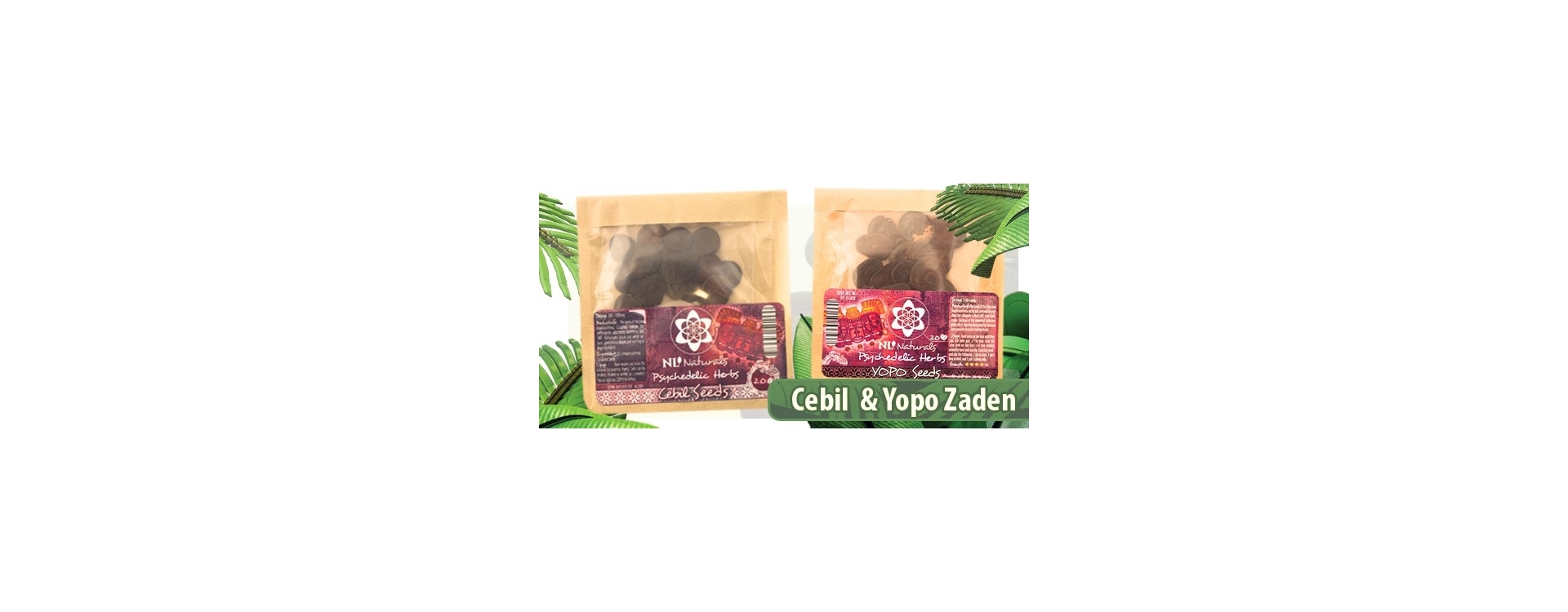
Cebil & Yopo Seeds: Effects, History and Use


Last updated: June 2026
This guide is regularly reviewed with new insights on Anadenanthera.

Little Seeds, Big Effect

Cebil and Yopo are among the most captivating seeds in ethnobotany. They come from trees of the genus Anadenanthera and are naturally packed with tryptamine alkaloids, including bufotenine, DMT and 5-MeO-DMT. That has given them a history of thousands of years in South America, and they remain popular with present-day psychonauts and plant lovers alike. In this guide you will read where the seeds come from, what sets the two species apart, how they were used of old and how to grow them yourself.

Cebil (Anadenanthera colubrina)

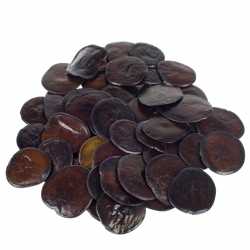
The seeds of Anadenanthera colubrina have been known for generations under names such as Cebil, Vilca, Huilca or Cohoba. The tree grows across South America, from Argentina and Bolivia to parts of Brazil and Peru. Archaeological finds show the seeds have played a ritual role there for thousands of years: snuff trays and pipes have been recovered from caves and ancient sites. Peoples such as the Wichí and, further north, the Yanomami and Waika used Anadenanthera species in their ceremonies. Among the Yanomami and Waika the snuff is called Epena, to which ash was sometimes added for a stronger effect. Besides ritual use, folk medicine traditionally applied the bark, for instance for respiratory complaints.

Effects. Cebil seeds naturally contain the psychoactive alkaloids 5-MeO-DMT and bufotenine. In the tradition the effect is known as strongly visual: users describe intense, often black-and-white colours and geometric patterns, not unlike the motifs on pre-Columbian art. The experience is often compared to that of DMT or LSD, but shorter and more abrupt in onset.

Yopo (Anadenanthera peregrina)

Yopo (Anadenanthera peregrina) is the close relative of Cebil and occurs mainly in the north of South America, in the Orinoco basin and parts of the Amazon. Yopo, too, has a long ceremonial history among the indigenous peoples of that region.

The main active compound in Yopo is bufotenine, a tryptamine related to serotonin. Bufotenine is found in the leaves and bark, but the highest concentration is in the seeds. The seeds also contain DMT and 5-MeO-DMT. Those last two act relatively briefly, while bufotenine can stay with the user for two to three hours. Traditionally Yopo is insufflated, because DMT is barely orally active without a MAO inhibitor. The effect has both a physical and a mental side: it often begins with a tingling through the body and a raised heart rate, followed by visual impressions. With a larger amount people also report nausea, a heavy head or dizziness; some describe feeling reborn afterwards.

Cebil or Yopo: What Is the Difference?

The two trees closely resemble each other; the distinction lies mostly in details of bark, distribution and sensitivity to cold.

Feature Cebil (A. colubrina) Yopo (A. peregrina)
Distribution Further south (Argentina, Bolivia) Further north (Orinoco, Amazon)
Bark Smooth and dark Rough, brown-greyish with bumps
Main alkaloid 5-MeO-DMT and bufotenine Bufotenine (with DMT and 5-MeO-DMT)
Frost sensitivity Fairly robust More sensitive to frost

How Was It Traditionally Prepared?

In the tradition, Cebil and Yopo seeds are turned into a fine snuff. The seeds are roasted until they pop, after which the shell comes off and the inner part is heated further and ground. The seed powder is then mixed with an alkaline substance, traditionally plant ash or lime (calcium hydroxide). That alkaline addition is no detail: it makes the active alkaloids more available. With a splash of water it is kneaded into a small dough, which is dried and ground fine again. Traditionally the amount is around a few seeds per person. Because insufflation is fierce, the powder is often blown into another person's nose with a pipe rather than self-sniffed.

Good to know: The seeds themselves are freely available in the Netherlands as a botanical product. The naturally present tryptamines (DMT, 5-MeO-DMT, bufotenine) do fall under the Opium Act once you process them into a ready-to-use preparation. Insufflation is also a fierce, sometimes painful experience, and combining with MAO inhibitors is outright dangerous. So inform yourself well before doing anything with these seeds.

A Long Cultural History

What makes Anadenanthera so fascinating is its deep entwinement with the culture of South America. Different peoples knew the seeds under their own names and gave them a fixed place in their ceremonies. The rich history of ethnobotanical plants like these shows how closely humans and plants have been connected through time. Want to dive deeper? Read our blogs on the world of ethnobotany and on three sacred plants from the Amazon.

Growing Cebil and Yopo Seeds Yourself

Besides their psychoactive tradition, these seeds are simply lovely growing projects. Raising an Anadenanthera tree from seed works well if you follow a few steps.

  1. Step 1: Pre-soak the seeds
    Soak the seeds for 12 to 24 hours in lukewarm water. This softens the seed coat and gets germination going. Seeds that swell up are ready for the next step.
  2. Step 2: Sow in well-draining soil
    Sow the seeds about half a centimetre deep in airy, well-draining potting soil, optionally mixed with some sand. Keep the soil moist but not soaking wet, as too much water makes seeds rot.
  3. Step 3: Keep warm and bright
    Anadenanthera germinates best at a warm soil temperature of around 25 to 30°C, in a bright spot or a propagator. Under those conditions the first seedlings usually appear within one to three weeks.
  4. Step 4: Grow on and protect
    Give the young trees plenty of light and water as needed. Keep in mind that Yopo in particular is frost-sensitive: bring the plant indoors in cold weather. With patience, a graceful, fine-leaved tree grows.

Tip: Sow a few seeds at once to increase your chance of germination. Fresh seeds usually germinate better than seeds stored for a long time in the warmth.

Enthusiasts often describe Anadenanthera as a plant with two faces: a rich, sometimes fierce ceremonial tradition and a rewarding growing project. A frequently heard experience is that it is precisely that mix of history and fine, feathery leaves that makes the seeds so worthwhile.

Frequently Asked Questions About Cebil and Yopo Seeds

What is the difference between Cebil and Yopo?

They are two closely related Anadenanthera species. Cebil (A. colubrina) grows further south and has smooth, dark bark; Yopo (A. peregrina) occurs further north, has rougher bark with bumps and is more frost-sensitive. Both naturally contain tryptamines.

What compounds are in the seeds?

The seeds naturally contain the tryptamines bufotenine, DMT and 5-MeO-DMT. In Yopo bufotenine is the main component; in Cebil 5-MeO-DMT and bufotenine play the leading role. These are the same compounds that gave traditional snuffs their effect.

Are Cebil and Yopo seeds legal in the Netherlands?

The seeds are freely available as a botanical product. The naturally present tryptamines fall under the Opium Act once you process them into a ready-to-use preparation. So always inform yourself about the applicable rules.

Are Cebil and Yopo seeds easy to germinate?

Yes, with pre-soaking and a warm, bright spot they germinate fairly easily, often within one to three weeks. Well-draining soil and not too much water improve your chance of success.

Why is ash or lime added?

The alkaline addition of plant ash or lime makes the active alkaloids more available. It is an age-old technique you also see in other traditional plant preparations from South America.

What other ethnobotanical seeds are there?

Besides Anadenanthera there are more remarkable seeds for enthusiasts. Read for instance about LSA seeds or browse the whole ethnobotanicals category.

Why Next Level Smart?

  • Under our own label (NLNaturals) — Cebil and Yopo seeds, fresh and carefully selected
  • Broad ethnobotanical range — from Anadenanthera to LSA seeds and more
  • Background and growing info — we tell the story, the effects and the botany
  • Active since 2010 as a Dutch smart shop, shipping from the Netherlands

Curious about these remarkable seeds? Browse our Yopo & Cebil seeds and the wider ethnobotanicals category. Interested in Amazon culture? Read also about the Huni Kuin of the Amazon.

Last updated: June 2026 | Next Level Smart

 
Rey is the creative force behind our webshop, blending practical experience with a deep interest in natural products, ritual, and conscious living. His work is rooted in quality, authenticity, and respect for traditional knowledge. Through his writing, he aims to bridge traditional wisdom with modern, conscious use, helping customers make informed and meaningful choices. By maintaining close relationships with many of the producers behind the products, he creates a bridge between their world and Western society. He shares their knowledge, vision, and methods with care, honoring both traditional practices and their place in a modern context. His favourite products are rapé, kratom, and magic mushrooms.
Loading...