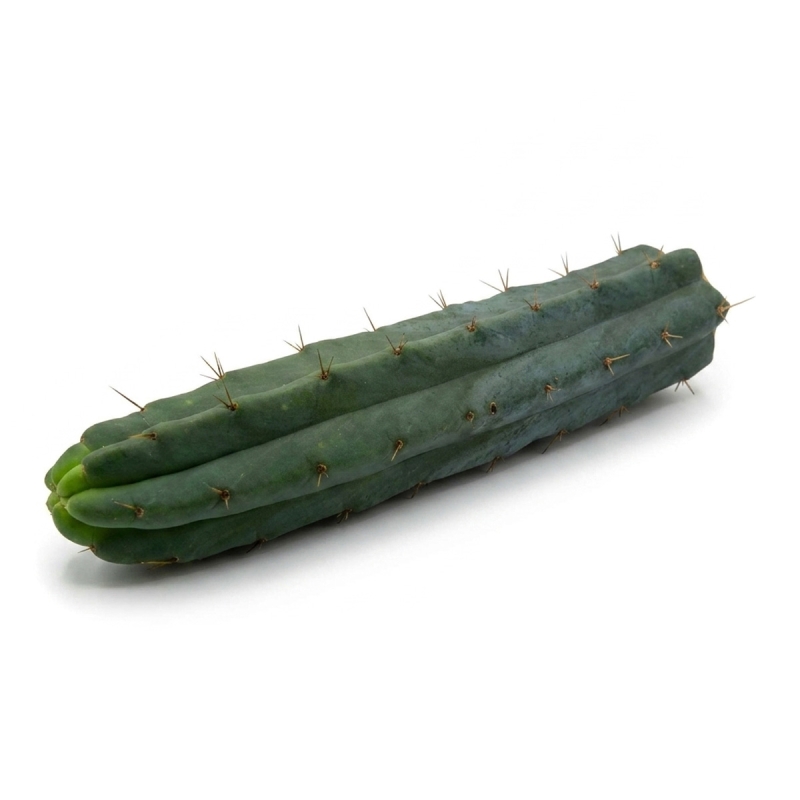
San Pedro Bridgesii (Trichocereus bridgesii) 25-29 cm — Bolivian Achuma with a Powerful Mescaline Profile
A fast-growing San Pedro variant with a high mescaline content, prominent spines and a centuries-old role in the Aymara tradition of the Bolivian highlands.
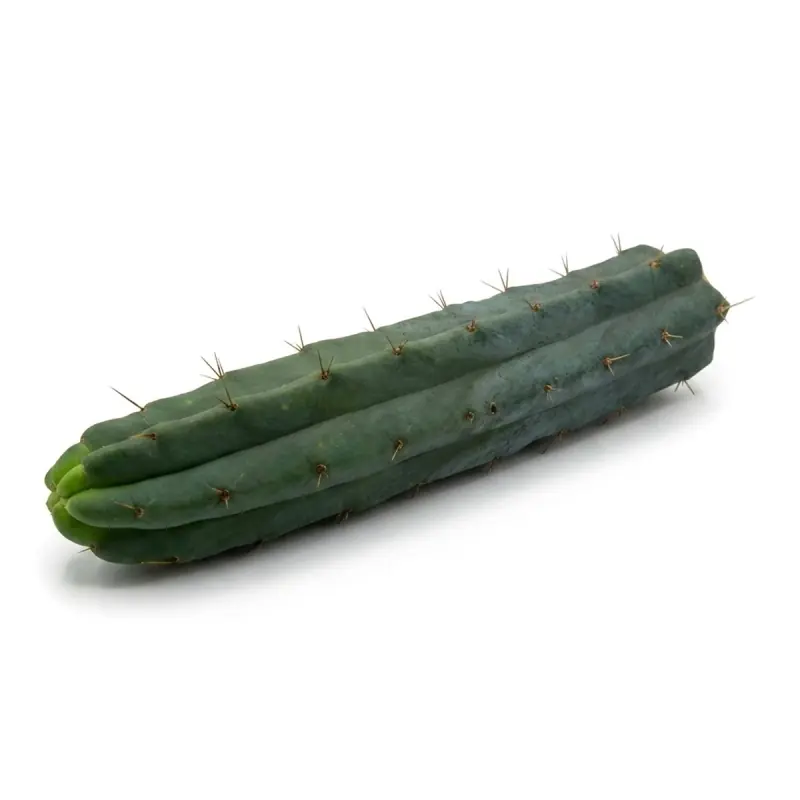
The San Pedro Bridgesii — botanically also known as Trichocereus bridgesii or Echinopsis lageniformis — is recognised among collectors as one of the most powerful representatives of the mescaline cactus family. This 25 to 29 cm cutting carries the original Aymara name Achuma and belongs to the same botanical group as the Pachanoi and Macrogona, but with a notably higher mescaline concentration and a markedly faster growth rate. Internationally it is also known as the Bolivian Torch, named after its Bolivian highland origin.
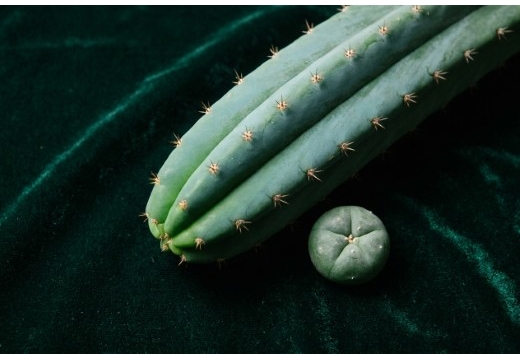
Visually the Bridgesii distinguishes itself from the better-known Pachanoi through longer and stronger spines of two to seven centimetres, a deeper blue-green colour that sometimes shifts toward purple, and a faster development that under optimal conditions can reach thirty centimetres per year. This cutting is taken from a mature mother plant and is ready to be rooted or grafted onto a fast-growing rootstock immediately on arrival.
High Mescaline Content and Famous Clones: Within the Trichocereus family, the Bridgesii is known for a mescaline concentration on the higher side of the range, typically between 0.5 and 2 percent by dry weight. Famous clones such as the Bridgesii Penis Plant (BPP) and the Eileen clone are sought after worldwide by collectors for their characteristic waxy skin and geometric forms.
Psychedelic Effects
★ Powerful Mescaline Experience with Long Duration
Thanks to its relatively high mescaline content, the Bridgesii produces a pronounced psychedelic experience with visual colour enhancement, geometric patterns and a sense of clarity and inner spaciousness. Effects begin after one to two hours and can last eight to fifteen hours.
|
★ Body Awareness and Grounding Quality
In the Andean tradition Achuma is known for a strongly embodied, grounding character. Users describe a tingling warmth spreading through the body and a deepened awareness of the physical world, rather than a dissociative or floating quality.
|
Botanical Characteristics
The Bridgesii is a woody columnar cactus from the Cactaceae family that in its natural habitat on Bolivian slopes can grow over five metres tall. It typically has four to eight prominent ribs, a stem diameter of six to fifteen centimetres, and areoles carrying yellow-brown to grey spines. The blue-green to sometimes purplish tint of the epidermis intensifies the more sun the plant receives. Under optimal conditions the plant produces lateral pups already in its second growing season.
Care Tips for Optimal Growth
★ Rooting the Cutting
First allow the cutting to dry for seven to ten days in a shaded place until the cut surface has fully callused. Then plant it in a well-draining cactus mix with fifty percent pumice or perlite. Hold off on watering until the first signs of growth appear, usually after three to six weeks.
|
★ Light, Water and Winter Rest
Bridgesii grows fastest with plenty of morning sun and light shade around midday. In summer water generously once the soil is fully dry. In winter, place the plant cool at five to twelve degrees and stop watering almost entirely to prevent root rot.
|
Ethnobotanical Background
Achuma in the Aymara Tradition
In Aymara, one of the indigenous languages of the Andean region, the Bridgesii is known as Achuma. The plant plays a central role in ceremonial practices that go back to the Tiwanaku culture of around 500 BCE. Archaeological finds on the Bolivian altiplano show ceremonial vessels and stone reliefs on which artists have depicted the cactus alongside figures of priests and shamans.
The Aymara saw the plant as a connection between the three worlds of their cosmology: the upper world, the earthly world, and the underworld. Curanderos in the tradition still work with Achuma as a living being with a character of its own, not as a chemical preparation.
Modern Botanical Classification
Although this cactus was originally described as Trichocereus bridgesii by the German botanist Karl Schumann in 1897, the genus Trichocereus has now largely been merged into Echinopsis. The modern scientific name is therefore Echinopsis lageniformis. In trade and among collectors the older name remains widely used.
Responsible Use
Because of its powerful character the Bridgesii calls for proper preparation. Set aside a full day in a familiar environment with no obligations. Thanks to the grounding quality of the Andean tradition, a natural setting such as a garden, a forest, or a quiet room with personal meaning often works well. Mescaline builds up over one to two hours and remains active for eight to fifteen hours afterwards.
The living plant is legal in the Netherlands as an ornamental. Mescaline as a concentrated substance falls under Schedule I of the Opium Act. We supply this cutting for botanical, ceremonial and ornamental purposes in line with Dutch regulations on mescaline-containing cacti.
- Effects begin after 1-2 hours and can last 8-15 hours
- An empty stomach intensifies the action of the bioactive components
- Not suitable in case of heart conditions, blood-pressure issues, diabetes, mental-health conditions or pregnancy
- Avoid combinations with other substances, alcohol or medication
- Arrange a sober, experienced trip-sitter, especially for a first experience
- Store in a cool place protected from direct sunlight
Build your Bolivian Cactus Collection with the San Pedro Bridgesii
The San Pedro Bridgesii is an excellent choice for those wanting to expand their collection with a fast-growing, powerful and historically significant mescaline cactus. This 25 to 29 cm cutting gives you a flying start: large enough to root quickly, long enough to show clear growth within a single season. Whether you are starting out with cacti or have built collections for years, the Bridgesii adds character, history and visual presence to any growing space. For broader context, read our complete guide to San Pedro and Peyote.
What is the difference between Trichocereus Bridgesii and San Pedro Pachanoi?
The Bridgesii originates in Bolivia, while the Pachanoi comes from Peru and Ecuador. Bridgesii has longer and more prominent spines, a deeper blue-green colour, and typically four to eight ribs versus the six to eight ribs of the Pachanoi. The Bridgesii also grows noticeably faster and on average has a higher mescaline concentration. Both species belong to the same botanical group and share a comparable alkaloid profile, but the Bridgesii is known among collectors as the more potent variant.
What does the Aymara name Achuma mean?
Achuma is the original Aymara name for the Bridgesii and has been used for centuries in the Bolivian highlands. The term refers both to the plant itself and to the ceremonial context in which it traditionally plays a role. Related names include Wachuma (Quechua, used for both Bridgesii and Pachanoi) and Huachuma. These names reflect the subtle cultural distinctions between the Aymara and Quechua peoples who share this cactus.
How long does it take for a Bridgesii cutting to root?
Under normal conditions a Bridgesii cutting forms its first roots within three to six weeks after potting. The condition is that you allow the cutting to callus sufficiently first (seven to ten days of drying) so that the wound has fully closed. Then pot it up in a well-draining cactus mix and only water once you see the first signs of growth. Using a heating mat under the pot can significantly speed up the rooting process.
Is the Bridgesii legal in the Netherlands?
Yes. The living cactus, including cuttings, falls outside the Dutch Opium Act and may be freely bought, kept, cultivated and traded. Mescaline as a concentrated substance does fall under Schedule I. The same applies to all Trichocereus species we supply, including the San Pedro Macrogona and the San Pedro Monstrosus.
Which other mescaline cacti pair well with a Bridgesii?
The Bridgesii pairs visually very well with species from the same family but with different characteristics. The San Pedro Macrogona brings a thicker stem and cold tolerance, the San Pedro Monstrosus surprises with an irregular monstrose growth form, and the smooth Scopulicola is the visual opposite of the rugged Bridgesii. To complete the family a Peyote belongs in any serious collection.