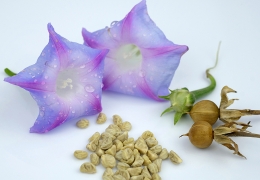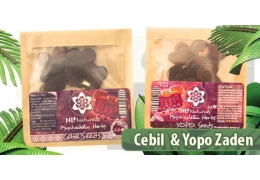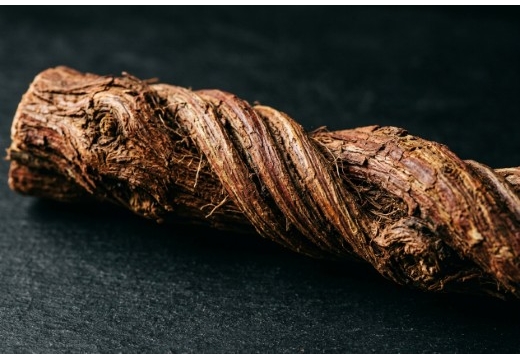
Three South American plants turn up in almost every book on ethnobotany: Banisteriopsis caapi, chacruna (Psychotria...

Banisteriopsis Caapi Red - Peru | Red Vine
Banisteriopsis Caapi
€70.25





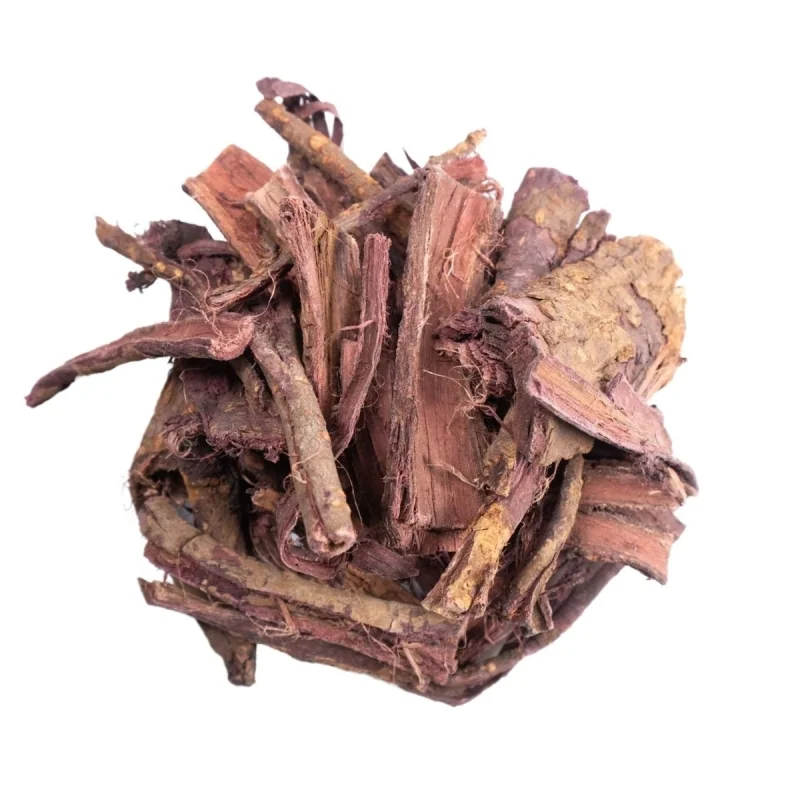

Root bark flakes of Mimosa hostilis from Brazil, locally known as Jurema Preta. These coarse bark flakes retain their natural texture and are less processed than finely shredded material. Authentic Brazilian product.
These root bark flakes come from Mimosa hostilis trees in Brazil where the plant is locally known by various names: Jurema, Jurema Preta, Black Jurema, and Vinho de Jurema. The flakes are coarser and less processed than finely shredded material, allowing them to retain their natural texture.
The root bark of Mimosa hostilis has been valued for generations by local shamans for its entheogenic properties. These bark flakes are a traditional form preferred by those who want control over their own processing methods.
Key features: Root bark flakes of Mimosa hostilis from Brazil. Locally known as Jurema Preta, Vinho de Jurema, Black Jurema. Coarse, less processed form with natural texture. Authentic Brazilian product. Sustainably harvested.
The bark flakes retain their natural, coarse texture because they are less processed than finely shredded material. This form is more traditional and preferred by many users.
With bark flakes, you have more control over your processing methods. You can decide yourself whether to shred further, soak longer, or use in larger pieces.
Bark flakes are the traditional form in which Mimosa hostilis root bark has been used for generations by local communities in Brazil.
Jurema refers to traditional preparations. Vinho de Jurema literally means 'Jurema wine'. Jurema Preta means 'Black Jurema', emphasizing the dark colour of the bark.
This herb is offered exclusively as a botanical specimen for research and study.
Mimosa hostilis flakes are coarser and less processed than the finely shredded variant, allowing them to retain their natural texture. This gives you more control over the processing: you can decide how finely to grind the material or how long to soak it. Flakes are the more traditional form that aligns with how Brazilian communities have processed the material for generations.
The root bark of Mimosa hostilis contains entheogenic alkaloids, including DMT (N,N-dimethyltryptamine). The alkaloid content is concentrated primarily in the root bark, which explains why this particular plant part is the most studied ethnobotanically. This product is intended solely as a botanical specimen for research purposes. Learn more about the fascinating world of ethnobotanical plants.
When stored correctly — cool, dry, dark and in an airtight container — Mimosa hostilis bark flakes remain usable for years for research purposes. The coarser flake form is slightly less sensitive to humidity than finely shredded material, as the smaller surface area absorbs moisture less quickly. Avoid direct sunlight exposure and store at room temperature or below.
Yes, Mimosa hostilis and Mimosa tenuiflora are synonyms for the same plant species. Mimosa tenuiflora is the currently accepted botanical name, while Mimosa hostilis is the older designation still widely used. In Brazil, the tree is known by local names such as Jurema, Jurema Preta and Vinho de Jurema, each referring to different aspects of its traditional use.
You might also like
Three South American plants turn up in almost every book on ethnobotany: Banisteriopsis caapi, chacruna (Psychotria...
Terence McKenna (1946-2000) was a true Renaissance man of the 20th century. With a foot in both science and the...
LSA seeds like Baby Hawaiian Woodrose are known for their consciousness-expanding effects and their role in ancient...
Have you ever wondered where your rapé comes from, who makes it and what the story behind it is? Each tribe that...
The NLNaturals line includes two remarkable seeds: Cebil and Yopo, from the Anadenanthera tree. Little seeds, big...