






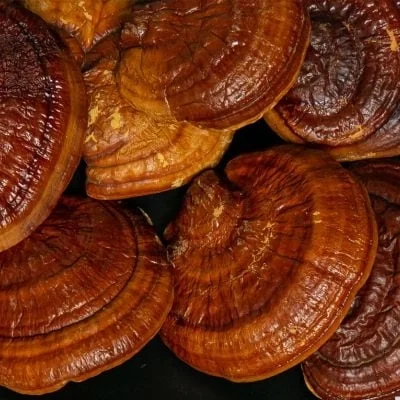




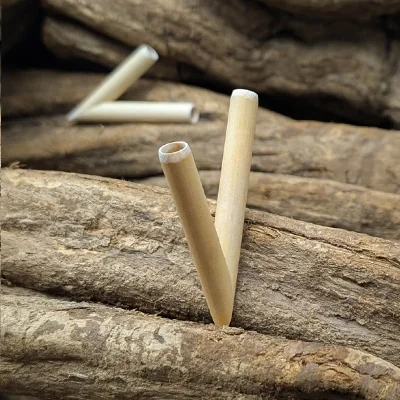
















Terence McKenna (1946-2000) was a true Renaissance man of the 20th century. With a foot in both science and the...

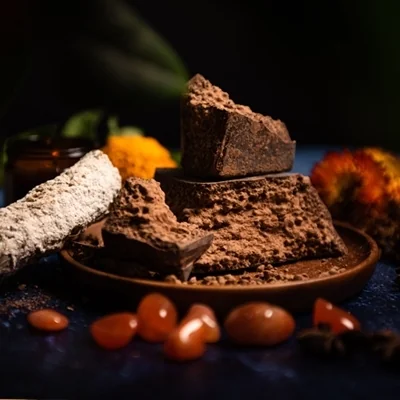
100% Raw Cacao Paste - Peru • Native Criollo 500 gr | Premium Ceremonial Grade
Cacao Paste
€35.55




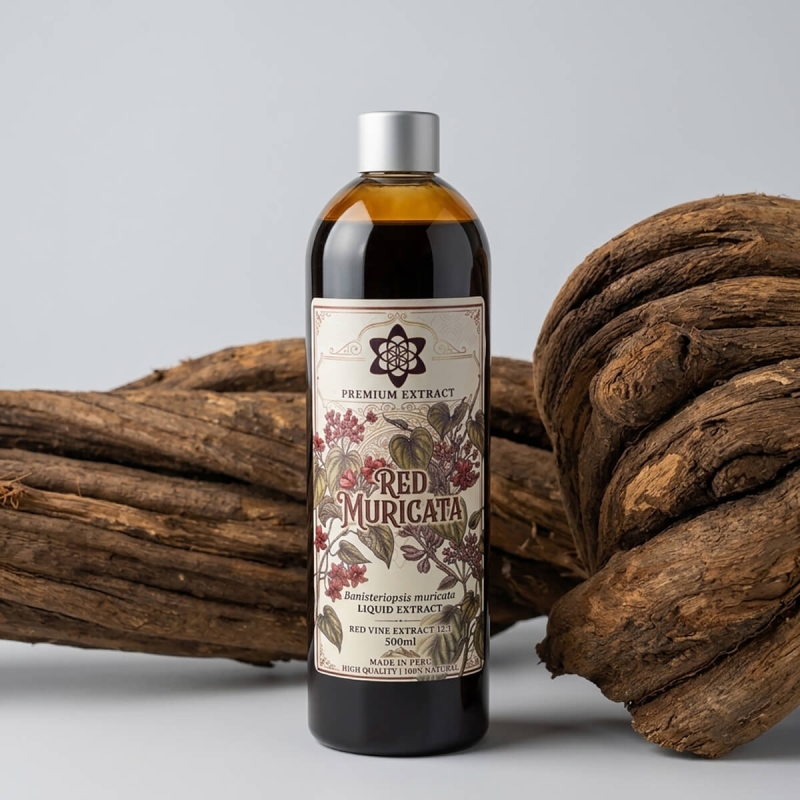
Thick paste of red Banisteriopsis caapi (Muricata variety), reduced from fresh vine at a 12:1 ratio. Sourced in the Peruvian Amazon near the Rio Ucayali and supplied as a concentrated full-spectrum resin. The dense, syrupy texture preserves the plant's natural β-carboline alkaloids — including harmine, harmaline and tetrahydroharmine — from bark and stem. Available in a 100 ml or 500 ml jar.
This product is a dense paste made from the bark and stem of Banisteriopsis caapi, the red Muricata variety that grows along the Rio Ucayali in the Peruvian Amazon. The extraction runs at a 12:1 ratio: twelve kilograms of fresh vine reduce down to one litre of finished paste. The result is a dark, syrupy resin that carries the full alkaloid profile of the plant.
Compared to yellow caapi, the red variety generally shows a higher concentration of β-carboline alkaloids — including harmine, harmaline and tetrahydroharmine. These compounds occur naturally in the plant and give the paste its characteristic profile as an MAO inhibitor. A 100 ml jar matches in concentration roughly 1.2 kg of fresh vine.
Authentic red caapi paste is recognisable by its deep caramel-to-mahogany colour, a dense syrupy texture that does not separate, and an earthy, faintly tannic aroma. This 12:1 paste is traditionally prepared in small batches by local producers working alongside the Achuar community — a method that differs from industrial extraction and preserves a notably larger share of the plant's natural β-carboline profile.
Key features: 12:1 full-spectrum paste; red Banisteriopsis caapi (Muricata); sourced in the Peruvian Amazon along the Rio Ucayali; available in 500 ml; natural MAO-inhibiting β-carboline alkaloids (harmine, harmaline, tetrahydroharmine).
This product is offered strictly for ethnobotanical research, plant study and collection purposes — not intended for consumption. Keep the jar cool, dark and tightly sealed, out of reach of children.
Red caapi (Muricata) tends to carry a higher concentration of β-carboline alkaloids than the yellow Cielo variety. Peruvian curanderos describe the red vine as heavier and more intense in character. Researchers focused on alkaloid content typically prefer red; for a lighter profile, the yellow variety is the alternative.
The ratio shows how much fresh vine is reduced to one part of the finished product. At 12:1, the paste stays closer to the vine's original aroma and alkaloid profile; 30:1 yields a firmer, darker resin with more compact storage. Researchers documenting the full spectrum often regard 12:1 as the more natural reference material.
The three principal alkaloids are harmine, harmaline and tetrahydroharmine — reversible MAO-A inhibitors whose mutual ratio varies by cultivar. Smaller fractions of harmol and harmalol are also present. Red Muricata typically carries a higher total β-carboline content than the yellow Cielo variety, which makes the plant attractive for phytochemical research.
Keep the jar tightly sealed in a cool, dark place. For long-term storage, the fridge works well — direct sunlight and heat slowly degrade the alkaloid profile. Stored correctly, a caapi paste stays stable for years.
A 12:1 ratio means twelve parts fresh vine have been reduced to one part paste. A 100 ml jar therefore concentrates the active fraction of roughly 1.2 kg of plant material. For research and analysis you work with far smaller volumes than with raw, unprocessed vine pieces.
Banisteriopsis caapi contains β-carboline alkaloids that temporarily inhibit the enzyme monoamine oxidase. This is a natural pharmacological property of the plant itself, and the reason caapi is treated as a specialised material within ethnobotany. Combining the plant with certain medications, supplements or foods can pose serious risks — consult specialist literature or a physician before taking any action.
You might also like
Terence McKenna (1946-2000) was a true Renaissance man of the 20th century. With a foot in both science and the...
LSA seeds like Baby Hawaiian Woodrose are known for their consciousness-expanding effects and their role in ancient...
Have you ever wondered where your rapé comes from, who makes it and what the story behind it is? Each tribe that...
The NLNaturals line includes two remarkable seeds: Cebil and Yopo, from the Anadenanthera tree. Little seeds, big...