Blog navigation

Latest posts

Party Pills Comparison: Happy Caps vs DNX Pills

Twenty party pills in the shop and no idea which to pick? This comparison puts Happy Caps, DNX and the new Party-E...

Read More
Liquid Spore Cultures vs Spore Prints: Which Should You Choose?

Liquid spore cultures and spore prints are the two main ways to start a mushroom cultivation project. This guide...

Read More
Incense Guide: Which Type of Incense Is Right for You?

With over 60 types of incense in our collection, choosing the right one takes a bit of knowledge. This guide compares...

Read More
Kuripe vs Tepi: Which Rapé Applicator Suits You?

Kuripe or tepi? These are the two tools used to administer rapé, and choosing between them changes the experience...

Read More

Copelandia Cyanescens: The Strongest Magic Mushroom in the World


Copelandia Cyanescens strongest psychedelic mushroom

Last updated: March 2026
This guide is regularly updated with the latest scientific insights on Copelandia Cyanescens.

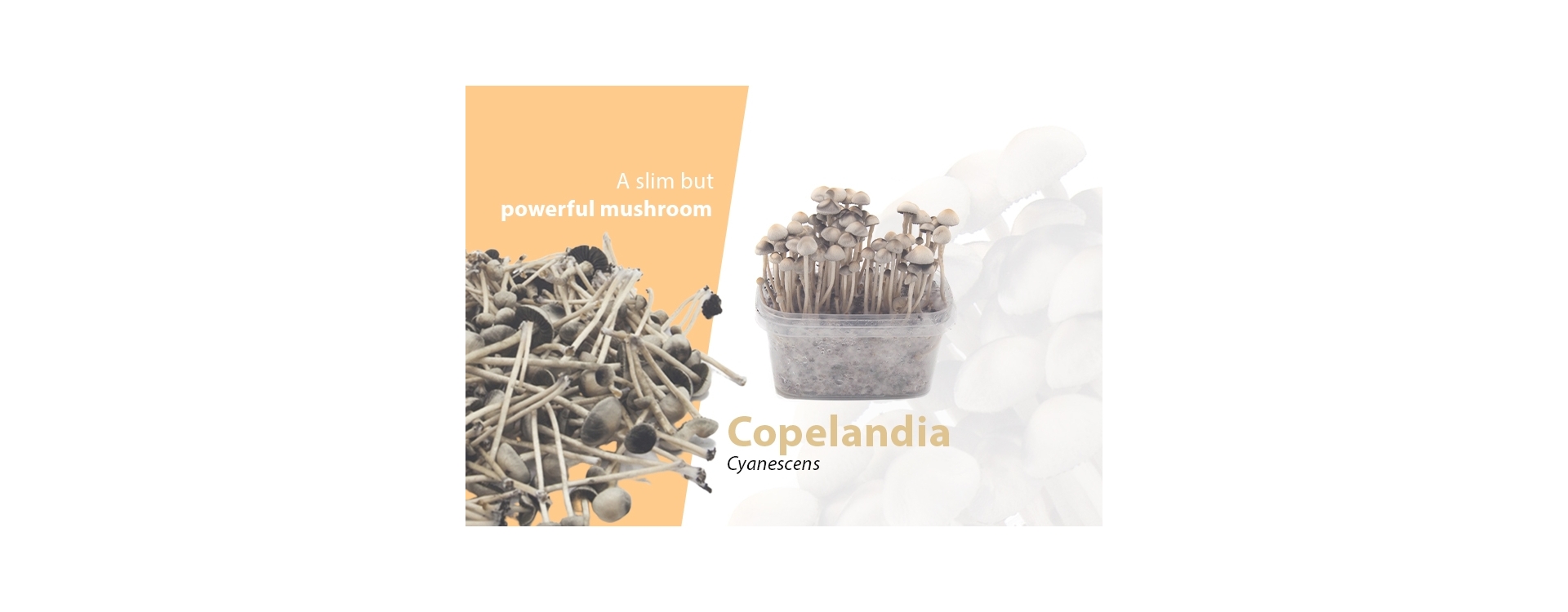
Copelandia Cyanescens, scientifically classified as Panaeolus cyanescens, is widely recognised as the most potent psilocybin-producing mushroom in the world. While most growers are familiar with various Psilocybe Cubensis strains, the Copelandia is an entirely different species. Thanks to a unique ratio between psilocybin and psilocin, this mushroom offers both a remarkable mycological challenge and a fascinating subject for researchers.

Origin and Natural Habitat

The first scientific description of Panaeolus cyanescens dates back to the early nineteenth century. The mushroom appeared on the Hawaiian islands, where it earned its popular nickname 'Hawaiian Copelandia'. Originally native to tropical Asia, the species has since spread across every continent with a warm climate.

In the wild, Copelandia Cyanescens thrives on fertile grasslands, manure-rich pastures and occasionally on decomposing grass or moss. It is a coprophilous species, meaning it prefers substrates containing animal dung. Today it can be found across Australia, Southeast Asia, Central America, parts of Africa and even southern Europe.

Did you know? Chemical analyses show that Copelandia Cyanescens contains an average of 2.5% psilocybin and psilocin per dry weight, while most Cubensis strains remain around 0.6%.

What Makes Copelandia Cyanescens So Special?

strongest psychedelic mushroom

Among the more than 180 known species of psilocybin-containing mushrooms, Copelandia Cyanescens consistently ranks highest in total alkaloid concentration. This is not simply a matter of more psilocybin. The key difference lies in the ratio between psilocybin and psilocin.

Psilocybin is a prodrug: the body must first convert it into psilocin before it becomes active. In Psilocybe Cubensis, the mushroom contains predominantly psilocybin with relatively little psilocin. In Copelandia, this ratio is essentially reversed. The high psilocin content means that effects onset more rapidly and follow a smoother course, without the typical waves associated with Cubensis.

Chemical analyses have demonstrated that the psilocin-to-psilocybin ratio in Panaeolus cyanescens can reach 3:1, compared to 1:5 in the average Cubensis strain. This makes Copelandia an exceptionally valuable subject for pharmacological and mycological research.

Potency Comparison: Copelandia vs. Other Species

Below is an overview of average alkaloid concentrations per species, based on laboratory analyses from recent mycological research:

Species Total Alkaloids (dry) Psilocybin Psilocin Relative Potency
Copelandia Cyanescens 2.0 - 2.95% 0.5 - 0.8% 1.2 - 2.0% 4-5x Cubensis
Psilocybe Cubensis 0.5 - 0.9% 0.4 - 0.7% 0.05 - 0.2% 1x (reference)
Psilocybe Azurescens 1.7 - 2.0% 1.1 - 1.8% 0.3 - 0.5% 3-4x Cubensis
Psilocybe Semilanceata 0.9 - 1.3% 0.8 - 1.0% 0.02 - 0.1% 2x Cubensis
Psilocybe Tampanensis (truffle) 0.3 - 0.7% 0.2 - 0.5% 0.01 - 0.05% 0.5x Cubensis

Source: based on published chemical analyses of psilocybin content across various Psilocybe and Panaeolus species.

Growing Your Own Copelandia Cyanescens

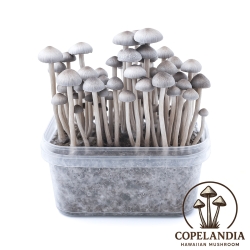
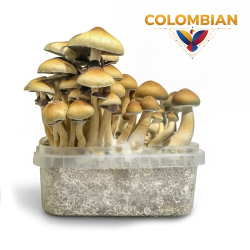
Copelandia Cyanescens mushroom grow kit

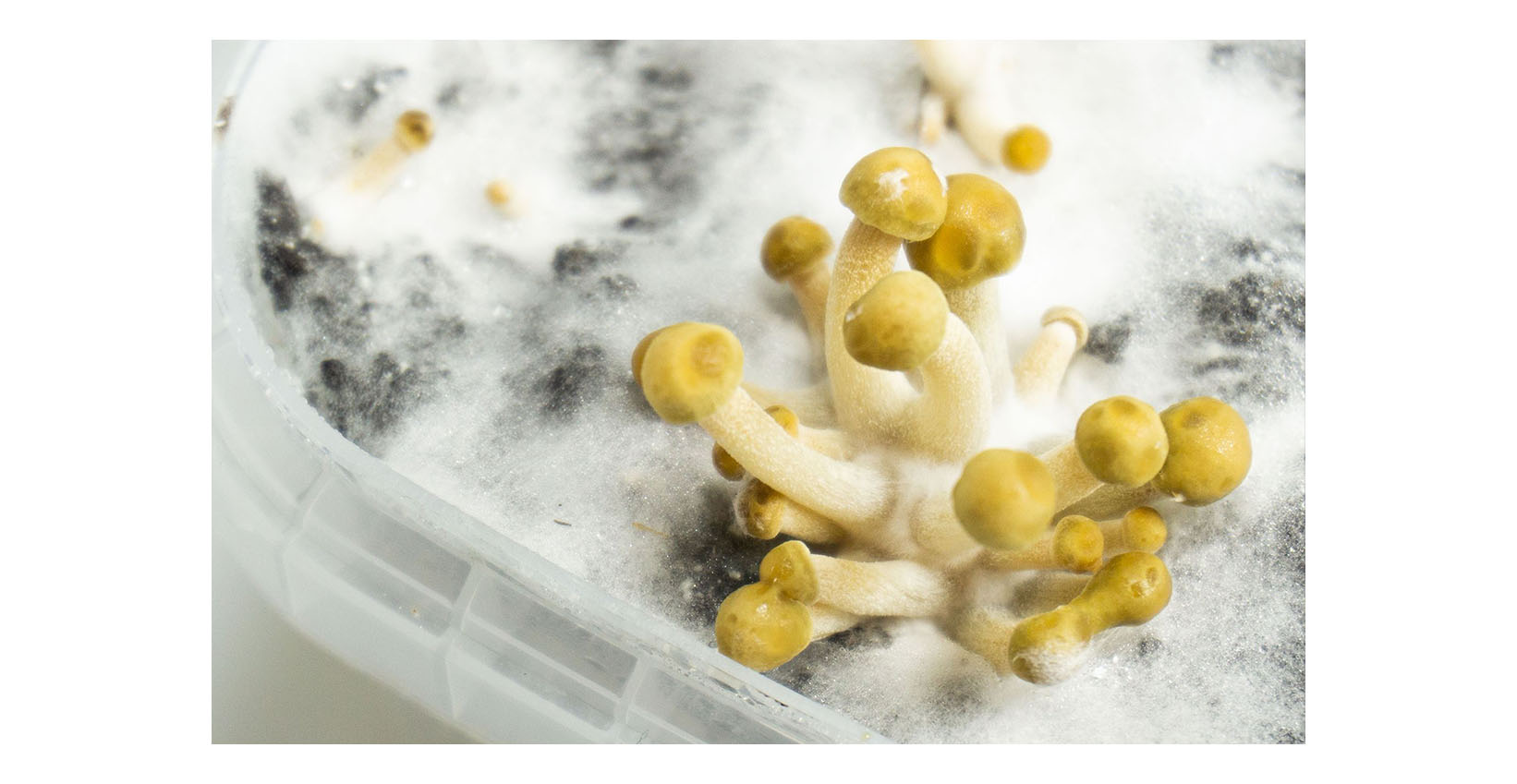
Copelandia Cyanescens grow kits were unavailable for a long time until mycologist John W. Allen and later Jimmy Kroonenburg succeeded in isolating the species and developing a stable cultivation strain. Today, with a Copelandia grow kit, you can cultivate this remarkable mushroom at home.

Growing Copelandia does require more attention than a standard Cubensis grow kit. The species is more susceptible to contamination by moulds and bacteria, and environmental conditions need to be more precisely controlled. But the results are well worth the extra effort.

Growing Copelandia differs significantly from Cubensis cultivation. The species requires a dung-based substrate, higher humidity levels and more precise temperature control (24-26°C). Contamination poses a greater risk, making strict hygiene essential. The yield is smaller by weight, but the potency per gram more than compensates.

Tip: Check out our comprehensive Copelandia growing guide for detailed instructions with photographs for each step.

Copelandia vs. Cubensis: Which Grow Kit to Choose?

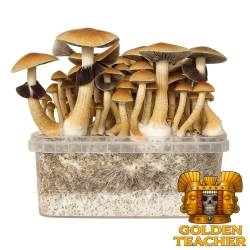
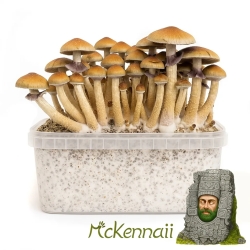
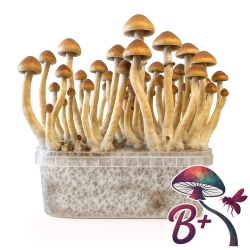
New to mushroom cultivation? A Cubensis grow kit is a sensible starting point. Cubensis strains such as Golden Teacher and B+ are more forgiving, produce larger yields and require less precise conditions.

Already experienced with growing mushrooms and looking for a challenge? The Copelandia grow kit is the natural next step. The yield is smaller by weight, but the potency per gram is considerably higher.

The Science Behind Psilocybin and Psilocin

Psilocybin and psilocin are tryptamine alkaloids that are structurally similar to serotonin. When psilocybin is ingested, the liver removes the phosphate group and converts it into psilocin, the truly active compound. Psilocin then binds to 5-HT2A receptors in the brain.

Neuroimaging studies from Imperial College London (Carhart-Harris et al., 2021) and Johns Hopkins University have demonstrated that psilocin temporarily disrupts the brain's default mode network. This leads to increased connectivity between brain regions that do not normally communicate with each other, an effect researchers describe as 'neural plasticity'.

For those keen to explore the science behind psychedelics further, our blog on the history of psilocybin provides a comprehensive overview.

Mushrooms vs. Truffles: Understanding the Difference

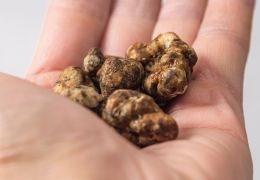
A frequently asked question is what the difference is between mushrooms and truffles. In brief: truffles (sclerotia) are underground masses of hardened mycelium, whilst mushrooms are the above-ground fruiting bodies. Both contain psilocybin, but in different concentrations.

In the Netherlands, magic truffles are legally available, whilst fresh mushrooms are not. Growing mushrooms with a grow kit for research purposes is, however, permitted. Read more in our comparison of mushrooms vs. truffles.

Safety and Responsible Research

Disclaimer: Psilocybin-containing mushrooms are sold for mycological research and cultivation purposes. Next Level Smart Shop does not encourage consumption. Always check the local legislation in your country or region. Be aware of the risks and seek professional guidance if you have questions about responsible use.

Safety is our top priority. Whether you are conducting research or trying a grow kit for the first time, make sure you are well informed. Our guide to a safe trip offers valuable guidelines.

Considering microdosing as an alternative? Mushroom spores are also available for microscopic research and strain identification.

Growers experienced with Copelandia Cyanescens emphasise that patience and precise temperature control are key to a successful harvest. Yields are typically smaller than with Cubensis species, but the potency per gram is considerably higher.

Did you know that nature invented psilocybin independently twice? Read the remarkable story in our article Nature invented psilocybin twice. Also explore the developments around psilocybin therapy in the Czech Republic.

Why Next Level Smart?

  • Copelandia grow kits with detailed instructions — step by step to a successful grow
  • 100% mycelium substrate without fillers, for maximum yield
  • Temperature and humidity guidance specific to Copelandia Cyanescens
  • 15+ years of experience with mushroom grow kits and mycology

Frequently Asked Questions About Copelandia Cyanescens

Is Copelandia Cyanescens really the strongest mushroom?

Yes, Copelandia Cyanescens (Panaeolus cyanescens) is consistently regarded as the most potent psilocybin mushroom. Laboratory analyses show a total alkaloid content of 2.0 to 2.95% per dry weight, which is four to five times higher than Psilocybe Cubensis.

What is the difference between Copelandia and Cubensis in terms of potency?

The key difference lies in the psilocybin/psilocin ratio. Copelandia contains more psilocin (the directly active compound), whilst Cubensis contains more psilocybin which must first be converted by the body. This makes Copelandia four to five times more potent than standard Cubensis strains.

Is it difficult to grow Copelandia Cyanescens?

Copelandia is more susceptible to contamination than Cubensis and requires more precise temperature control (23-26 degrees Celsius). With a quality Copelandia grow kit and strict hygiene, it is perfectly manageable for growers with some experience.

How much yield does a Copelandia grow kit produce?

A standard Copelandia grow kit typically yields 150 to 300 grams of fresh mushrooms across multiple flushes. After drying, this amounts to approximately 15 to 30 grams, but due to the high potency, this represents a substantial quantity.

Where does Copelandia Cyanescens grow in the wild?

Copelandia Cyanescens grows naturally in tropical and subtropical regions across the globe. The mushroom prefers fertile grasslands, manure-rich pastures and decomposing organic material. It has been documented in Hawaii, Australia, Southeast Asia, Central America and parts of Africa.

Are Copelandia mushrooms legal in the Netherlands?

In the Netherlands, fresh psychoactive mushrooms have been prohibited since 2008. Growing with grow kits for research purposes exists in a legal grey area. Magic truffles, however, are legally available. Always check current legislation.

What is the difference between mushrooms and truffles?

Mushrooms are the above-ground fruiting bodies of a fungus, whilst truffles (sclerotia) are underground masses of hardened mycelium. Both contain psilocybin but in different concentrations. Read our comprehensive comparison of mushrooms vs. truffles for all the details.

Can I buy Copelandia Cyanescens spores for research?

Whilst Copelandia spores are harder to source than Cubensis varieties, Next Level Smart Shop offers a range of mushroom spores for microscopic research and strain identification. Contact our customer service for availability of specific species.

Last updated: March 2026 | Next Level Smart

 
Loading...