Last updated: March 2026
This guide is regularly updated with the latest insights on mushroom spore research and cultivation methods.
Browse any magic mushroom spore collection and you will notice two distinct product types: liquid spore cultures (sold as culture ampoules) and spore prints. Both carry the genetic material needed to grow psilocybin mushrooms. Beyond that, they are very different products. How they are made, how you store them, how easy they are to use, and the results they produce all vary significantly.
This guide puts both formats side by side. After 15+ years of supplying spore products to growers across the Netherlands and Europe, we know exactly where beginners stumble and where experienced cultivators get the most value. Read on to find out which format fits your project.
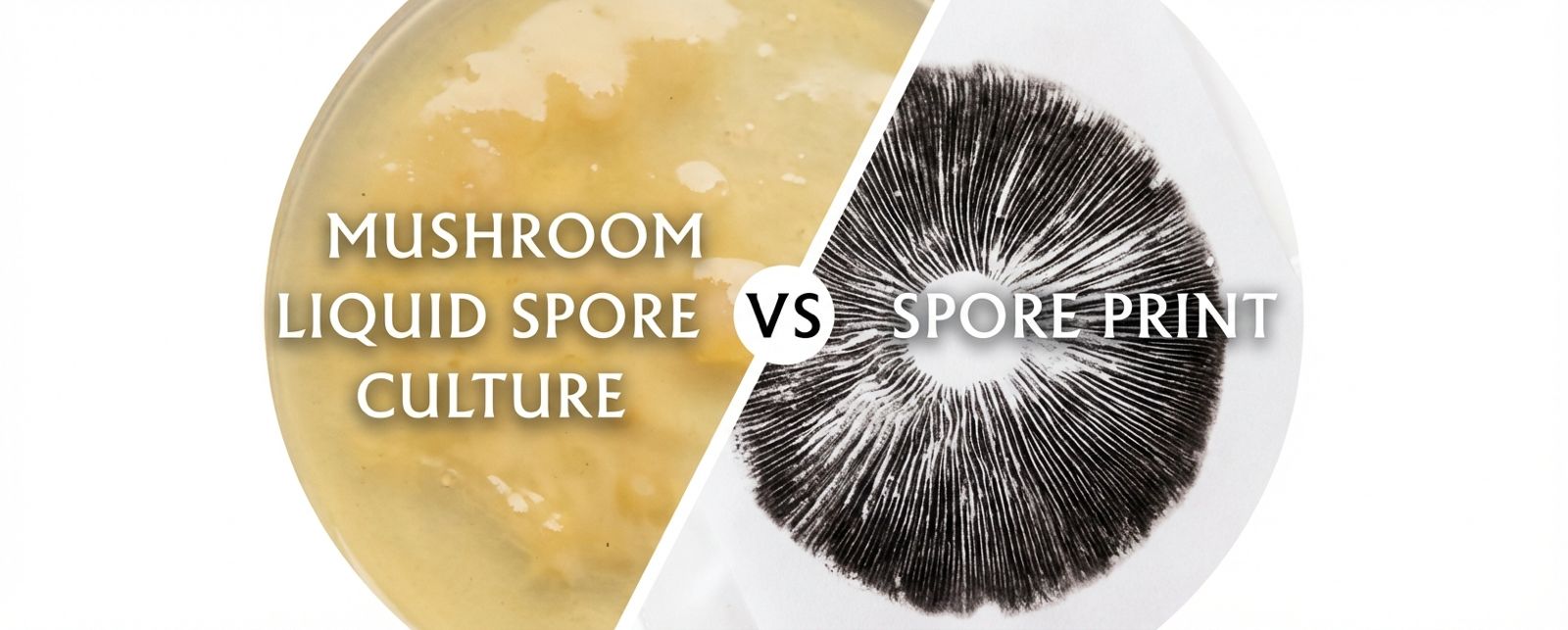
What Are Liquid Spore Cultures?
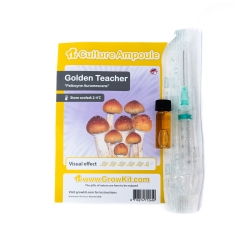
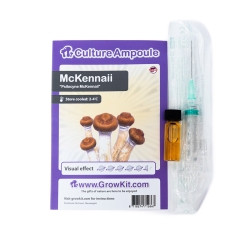
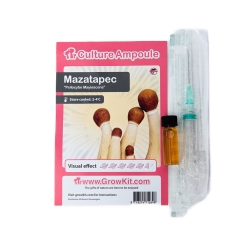
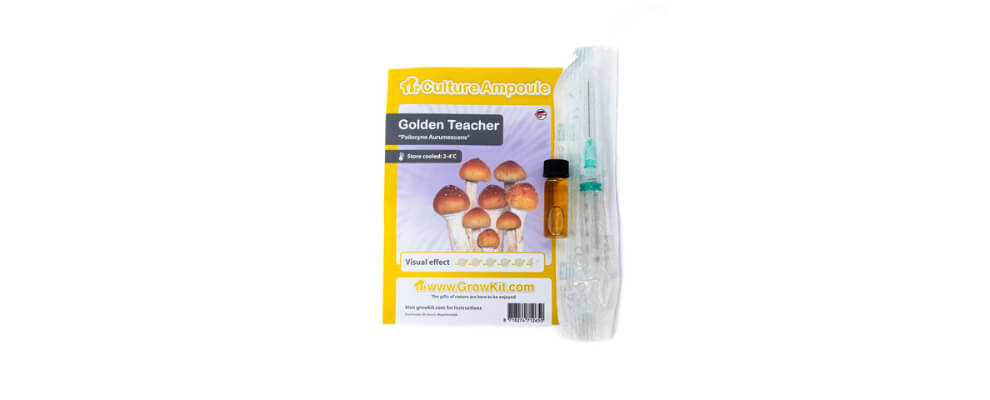
A liquid spore culture is a suspension of live mycelium (or mushroom spores) in a sterile nutrient solution. At Next Level Smart Shop, our culture ampoules like the Golden Teacher Culture Ampoule contain actively growing mycelium rather than loose spores. That distinction matters: the mycelium has already germinated, so colonisation of your substrate starts faster once injected.
How they are produced
A verified spore sample is germinated on agar in a sterile laboratory. Once healthy mycelium develops, small fragments are transferred into a sterilised nutrient solution. The culture multiplies over several days, is drawn into sterile ampoules, sealed, and shipped. Because production happens in a controlled environment, contamination rates are low.
Key characteristics
- Ready to use - inject directly into substrate or grain bags
- Faster colonisation - live mycelium gives a head start over ungerminated spores
- Lower contamination risk - established mycelium outcompetes contaminants
- Shorter shelf life - typically 2 to 6 months refrigerated at 2-4°C
- Less suited for long-term storage or genetic archiving
What Are Spore Prints?
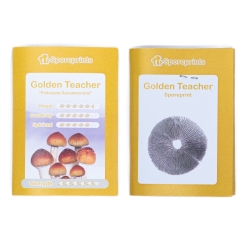
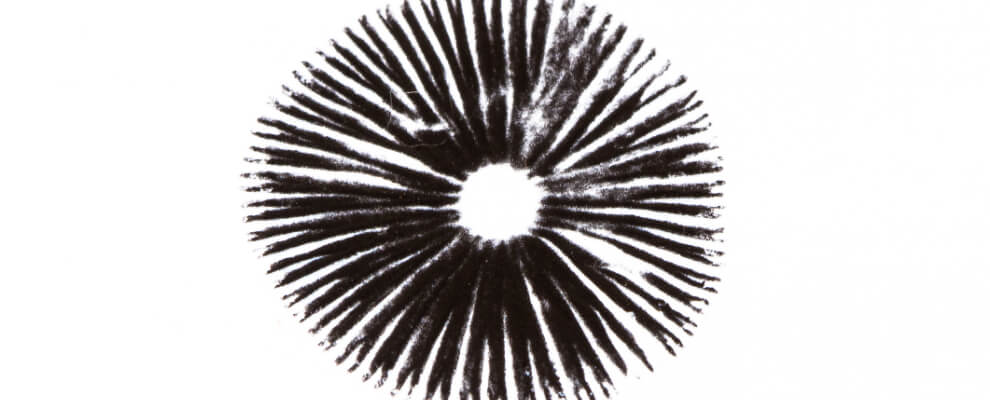
A spore print is a collection of mushroom spores deposited directly from a mature mushroom cap onto a sterile surface, usually aluminium foil. The cap is placed gill-side-down in a still, sterile environment. After 12 to 24 hours, it drops millions of spores in a pattern that mirrors the gill structure. The result is a detailed, often beautiful imprint.
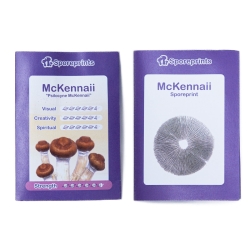
Spore prints have been the standard method for preserving mushroom genetics for decades. Our Golden Teacher Spore Print and McKennaii Spore Print are classic examples: authentic genetics in a format that can last for years.
Key characteristics
- Long shelf life - properly sealed prints can remain viable for 2 to 10+ years at room temperature
- Genetic archive - ideal for cataloguing and storing strains over time
- Requires extra steps - spores must be scraped off and hydrated, or transferred to agar before use
- Slower start - spores need to germinate first, adding days to weeks to the timeline
- Higher genetic variation (multispore), which can be an advantage or drawback
Side-by-Side Comparison
How do both formats stack up across the factors that matter most to growers?
| Factor |
Liquid Culture |
Spore Print |
| Ease of use |
High: inject and go |
Moderate: scraping, hydration or agar transfer |
| Colonisation speed |
Fast (live mycelium) |
Slower (spores must germinate first) |
| Contamination risk |
Lower |
Higher during germination phase |
| Shelf life |
2-6 months (refrigerated) |
2-10+ years (room temperature) |
| Genetic consistency |
Higher (often isolated) |
Variable (multispore) |
| Best for |
Direct inoculation, beginners, speed |
Agar work, microscopy, long-term storage |
| Price |
Slightly higher |
Generally lower |
When to Choose Liquid Cultures
You are a beginner. The fewer steps between you and a colonised substrate, the better. A culture ampoule like the McKennaii Culture Ampoule lets you skip germination entirely. Inject, incubate, wait for results.
Speed matters. Live mycelium is already present, so colonisation can begin within days rather than weeks. Research from the Westerdijk Fungal Biodiversity Institute (2024) showed that liquid mycelium cultures colonise substrate roughly 40% faster than ungerminated multispore inoculations.
You want consistent genetics. Many liquid cultures are derived from isolated strains, which means each injection delivers roughly the same genetic profile. This translates to more uniform fruiting bodies in terms of size and growth pattern.
Tip: Store culture ampoules upright in the fridge at 2-4°C. Use them within 2-3 months for best results. Never freeze them: ice crystals destroy the mycelium.
When to Choose Spore Prints
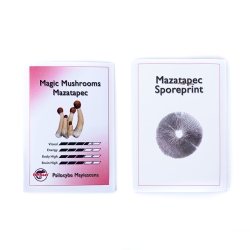
You want to archive genetics. A well-made spore print stored in cool, dry conditions can remain viable for years. Research from the Fungal Genetics Stock Center (2023) confirmed that properly stored spore prints of various Psilocybe species retained viability above 85% after five years of room-temperature storage. The Mazatapec Spore Print is a solid choice for long-term archiving.
You work with agar. Spore prints are ideal for agar isolation. Transfer spores to an agar plate, observe germination, select the strongest mycelium sectors, and develop your own isolated cultures over multiple transfers. This is a core technique in advanced mycology.
Microscopy interests you. Studying spore morphology under a microscope requires individual spores, not living mycelium. Prints give you a dense, clean sample to work with.
Budget is a factor. Spore prints are generally more affordable than liquid cultures. If you have the skills and equipment to work with them, they offer excellent value.
Storage: The Biggest Practical Difference
This is where the two formats diverge most in daily practice.
Liquid cultures contain living organisms. The mycelium needs to stay cool (2-4°C) and be used within a few months. Leave an ampoule at room temperature too long and the risk of bacterial contamination increases rapidly. According to mycological research from the University of Vermont (Plant & Soil Science department, 2024), liquid cultures stored above 10°C showed significantly increased contamination rates after just 30 days.
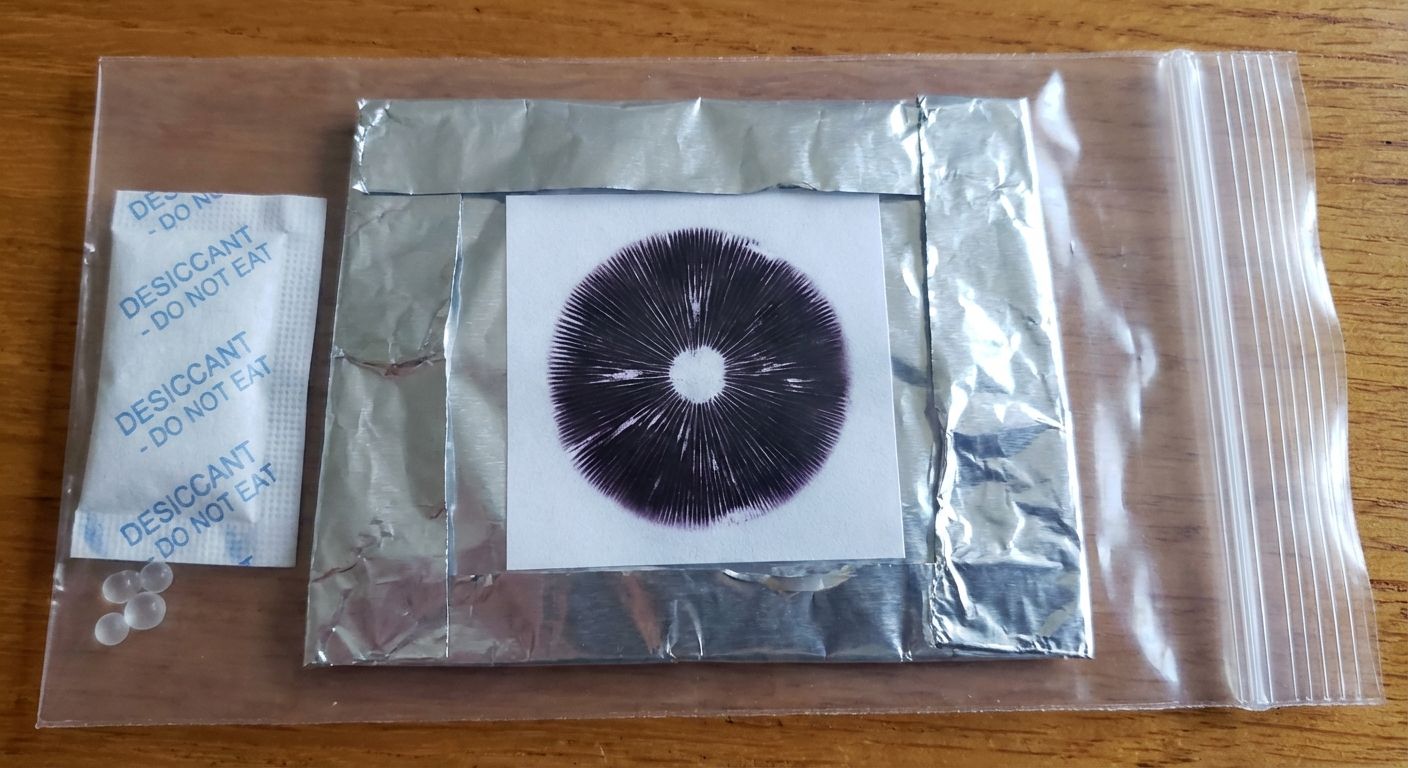
Spore prints are essentially dormant. The spores are dehydrated and metabolically inactive. Sealed properly in foil and kept away from moisture and direct sunlight, they will last for years.
Warning: Do not store spore prints in plastic bags long-term. Trapped moisture can cause premature germination or mould growth. Use aluminium foil sealed inside a zip-lock bag with a small desiccant packet.
Combining Both Methods
Many experienced growers use both formats in parallel. That is also exactly what we recommend if you are serious about mycology.
-
Start with a spore print
Keep the original spore print as a long-term genetic backup. This way you always have the original genetics on hand, even if other steps fail.
-
Transfer spores to agar
Working inside a still-air box, carefully scrape spores from the print onto a sterilised agar plate using a flame-sterilised scalpel or inoculation loop. Seal the plate and incubate at room temperature.
-
Select and isolate
After 5 to 14 days, mycelium will appear. Select the fastest-growing, cleanest sector and transfer it to a fresh agar plate. Repeat this 2-3 times for a clean isolation.
-
Create your own liquid culture
Transfer a clean agar isolate into sterilised nutrient broth. Within 5 to 10 days you will have a ready-to-use liquid culture that you can multiply and inject directly into substrate.
Not ready for agar work yet? A Golden Teacher Grow Kit gives you a fully colonised substrate ready to fruit, no spores or cultures needed. A solid way to learn the basics before moving on to spore-based methods. Our complete grow kit FAQ answers the most common questions.
Which Strains Come in Both Formats?
Not every strain is available as both a liquid culture and a spore print. Here is what we currently stock:
Having the same strain in both formats means you can use the liquid culture for current projects and keep the spore print as a long-term genetic backup.
Common Mistakes to Avoid
Regardless of which format you choose, sterile technique is everything. These are the mistakes growers make most often:
- Skipping sterilisation: always flame-sterilise needles and work near a flame or inside a still-air box
- Storing liquid cultures at room temperature: they need refrigeration. Full stop.
- Using expired cultures: older than 6 months or looking cloudy/discoloured? Do not use them.
- Opening spore prints in open air: airborne contaminants settle on the print within seconds
- Rushing the process: colonisation takes time. Opening jars or bags too early invites contamination
For more on cultivation troubleshooting, read our guide on mushroom aborts.
The Role of Genetics
Something newer growers often overlook: the format of your starting material directly affects the genetic outcome of your grow.
A multispore print contains genetic material from potentially millions of individual spores. When those germinate, each spore pair creates a unique genetic combination. The result is a genetically diverse population: some aggressive colonisers, some slow growers, some producing large fruits, others small. Research published in Mycological Progress (2024) found that multispore Psilocybe cubensis cultures showed up to 40% variation in fruiting body weight within a single flush.
A liquid culture from an isolated strain carries a much narrower genetic profile. The mycelium is clonal: every cell shares the same DNA. This produces more uniform results in terms of growth speed, fruit size, and overall characteristics.
Neither approach is inherently better. Genetic diversity from prints can be valuable for selecting strong phenotypes. Genetic consistency from cultures is preferable when you want predictable, repeatable results.
From the community: "I use spore prints as my archive and make my own liquid cultures from them. That way I always have the original genetics as backup, and in daily practice I work with the speed of an LC. Best of both worlds." - Mark, 34, Groningen (January 2026)
Frequently Asked Questions
Are liquid spore cultures legal in the Netherlands?
Yes. Mushroom spores and mycelium cultures do not contain psilocybin and are legal to buy, sell, and possess in the Netherlands. Psilocybin is only produced in the fruiting bodies (mushrooms) themselves.
How long does a liquid culture ampoule last?
When stored upright in a fridge at 2-4°C, a liquid culture ampoule typically remains viable for 2 to 6 months. For best results, use it within 2-3 months of purchase. Never freeze liquid cultures.
How long does a spore print last?
A properly stored spore print can remain viable for 2 to 10 years or more. Keep it sealed in foil inside a zip-lock bag with a desiccant packet, stored in a cool, dry place away from direct sunlight.
Which is easier for a first-time grower: culture ampoule or spore print?
A culture ampoule is the easier option. Fewer steps, faster colonisation, and lower contamination risk. For the absolute simplest start, consider a
ready-to-grow kit instead.
Can I make my own liquid culture from a spore print?
Yes. Transfer spores to a sterilised agar plate, let mycelium develop, then transfer a clean sector into sterilised nutrient broth. This requires agar skills and a clean workspace, but it gives you a renewable source of liquid culture.
What is the difference between a spore syringe and a culture ampoule?
A spore syringe contains loose spores in sterile water that still need to germinate. A culture ampoule contains live, actively growing mycelium in nutrient solution, which colonises substrate faster. Culture ampoules are the more advanced product.
Do I need a laminar flow hood?
A laminar flow hood is ideal but not strictly required. A still-air box (a large plastic tub with arm holes) combined with careful flame sterilisation works for most hobbyist applications. The key is minimising airborne contaminants.
Can a contaminated liquid culture be saved?
Rarely. If a liquid culture shows signs of contamination (unusual colour, foul smell, visible bacterial colonies), discard it. Passing contamination on to your substrate only makes the problem worse. Start fresh with a new ampoule.
Want to learn more about mushroom cultivation and the science behind it? Read our article on how nature invented psilocybin twice or explore our comparison of 10 magic mushroom types.