Blog navigation

Latest posts

Set & Setting: The Complete Guide to a Safe Psychedelic Experience (2026)

Set and setting are the two pillars of every psychedelic experience. Your mindset and environment matter at least as...

Read More
Microdosing Magic Truffles: Protocols, Dosage & What the Science Says (2026)

Microdosing psilocybin truffles has grown from a Silicon Valley experiment into a global phenomenon. In this guide we...

Read More
Party Pills Comparison: Happy Caps vs DNX Pills

Twenty party pills in the shop and no idea which to pick? This comparison puts Happy Caps, DNX and the new Party-E...

Read More
Liquid Spore Cultures vs Spore Prints: Which Should You Choose?

Liquid spore cultures and spore prints are the two main ways to start a mushroom cultivation project. This guide...

Read More

Understanding and Managing Mushroom Aborts: A Guide for Cultivators


Mushroom Cultivation: A Rewarding Challenge

Mushroom cultivation is an engaging and rewarding pursuit, offering both novices and experienced growers the joy of nurturing life from spore to fruit. However, this journey is not without its hurdles. A common challenge faced by cultivators is the phenomenon of mushroom aborts - instances where mushrooms halt their growth prematurely, failing to reach full maturity. This blog post aims to explore the underlying causes of mushroom aborts and offers practical advice on how to mitigate these occurrences, ensuring a bountiful and healthy harvest.

What Are Mushroom Aborts?

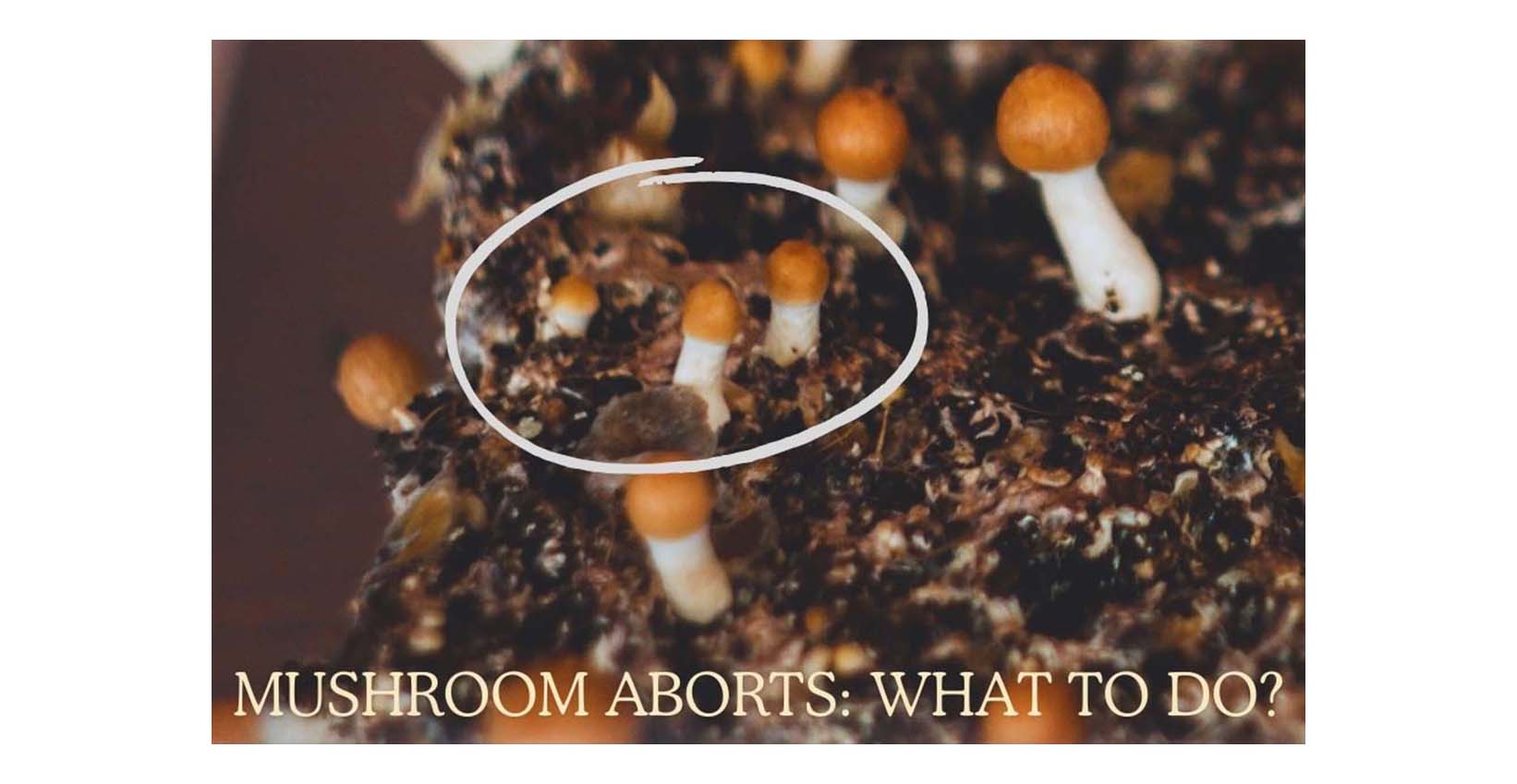
Mushroom aborts are essentially undeveloped or stunted mushrooms that cease growing at an early stage. Characteristically smaller than their fully-grown counterparts, these aborts often exhibit darker or discolored caps, distinguishing them from healthy mushrooms. Understanding the factors that lead to the formation of aborts is crucial for any cultivator looking to maximize their yield and maintain the health of their mushroom colony.

Magic mushroom aborts in a grow kit

Common Causes of Mushroom Aborts:

  • Environmental Stress: Mushrooms are sensitive organisms that thrive under specific environmental conditions. Any deviation from their ideal temperature range (20-25⁰C), humidity levels, or CO2 concentration can induce stress, leading to the stunted growth observed in aborts. Maintaining a consistent environment tailored to your mushrooms' needs is paramount.
  • Contamination: The introduction of pathogens or competing fungi into your grow kit can be detrimental. Contaminants can outcompete your mushrooms for resources or directly harm them, resulting in aborted growth. Ensuring a sterile setup and handling process minimizes this risk.
  • Inadequate Ventilation: Proper air exchange is vital for mushroom health, facilitating the removal of CO2 produced by the mushrooms and supplying fresh oxygen. Inadequate ventilation can lead to CO2 buildup, hindering mushroom development and contributing to the occurrence of aborts.

Managing and Preventing Mushroom Aborts:

  • Remove aborts as soon as possible: mushrooms decay quickly, so removing them as soon as it's evident that pins are not developing is essential to not contaminate the kit and prevent further flushes.
  • Monitor Environmental Conditions: Keep a close eye on temperature, humidity, and CO2 levels. Use tools like hygrometers and thermometers to maintain optimal conditions. The recommended temperature for growing mushrooms is between 20-25⁰C.
  • Check for Contamination: Ensure your kit is free of contaminants. Proper sterilization is crucial.
  • Ensure Adequate Ventilation: Good air exchange is key. Make sure your growing area is well-ventilated to maintain appropriate CO2 levels.

Dealing with Mushroom Aborts:

If you do encounter aborts, it's important to remove them promptly. This helps prevent potential contamination and allows the remaining mushrooms to access more resources. While aborts may be small in size, they are often perfectly usable and potentially contain even more psilocybin than mature mushrooms.

Since each grow kit can yield multiple harvests, it can be possible (with the right conditions) to get another flush out of your mushroom grow kit. However, it’s important to follow the right steps and know the most commonly made mistakes so you can avoid them:

Conclusion:

While the presence of mushroom aborts can be discouraging, it presents an opportunity for learning and growth in the art of mushroom cultivation. By understanding the causes of aborts and implementing strategies to prevent them, cultivators can improve their yields and enjoy the rewards of their labor. Remember, each challenge faced is a step towards becoming a more skilled and knowledgeable mycologist.

 
Annie Verkade is a writer at Next Level Smartshop with a background in philology. She writes about natural alternatives to pharmaceuticals, sleep support, and plant-based products. Her work also explores altered states of consciousness - both with and without psychedelics - as well as topics like astrology and lunar cycles, translating insights into clear, accessible content. She’s especially interested in how simple rituals and environment can shift how we feel (sometimes more than we expect). Outside of work, she enjoys photography, reading, bouldering, and travelling. Favourite products: Sagrada Madre incense, Mulungu, Sleep Tincture
Loading...