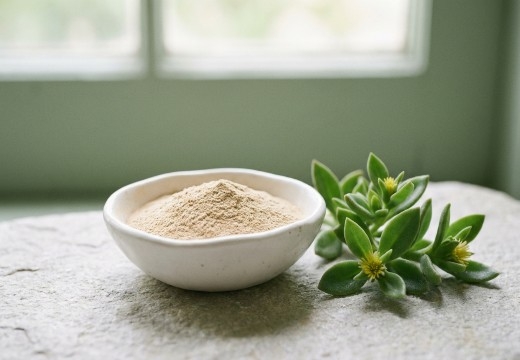
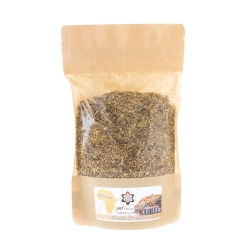
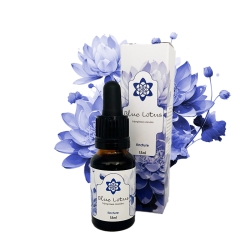
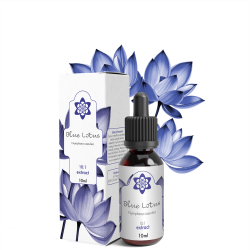
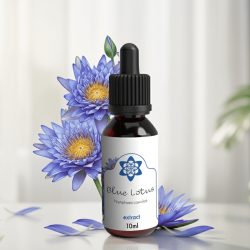
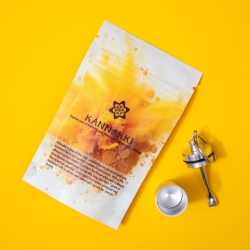
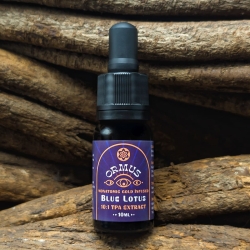
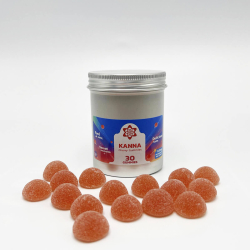
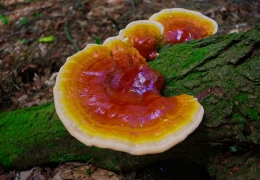
Two plants, two continents, two traditions. Blue Lotus comes from the Nile Delta — a water lily the pharaohs used in ceremonies and at banquets. Kanna grows in the dry Karoo of South Africa — a small succulent the Khoi-Khoi and San peoples chewed long before any European colonist arrived, against thirst, fatigue and as a mood lifter. Both are seeing renewed interest today, both have been properly examined by modern science for the first time, and we keep both reliably in stock.
And yet they do completely different things. Anyone choosing Blue Lotus is after rest, dreams, a gentle landing at the end of the day. Anyone choosing Kanna is after the opposite: a lift, less tension, more presence, a more open feeling. They act on different parts of the brain. In ritual they fit different moments of the day. In form and taste they also differ noticeably.
This guide walks through the difference category by category — chemistry, effect, form, moment, ritual — and helps you decide which one fits what you're looking for. And at the end: can the two be combined? Yes, with the right approach.
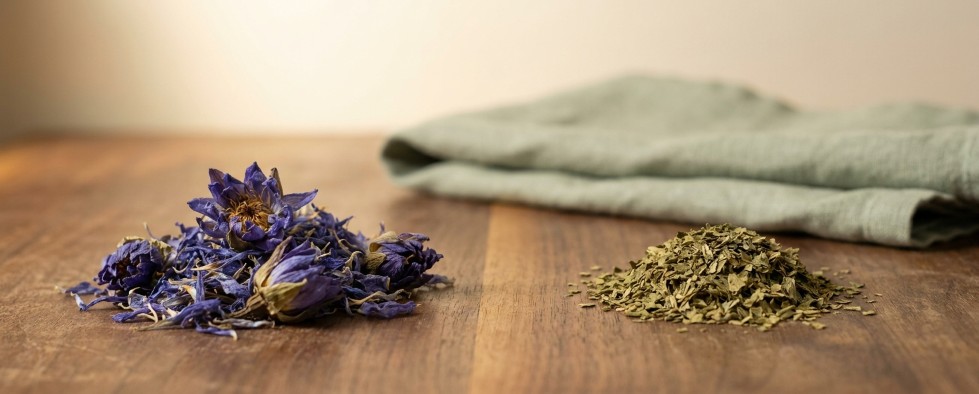
Quick decision
Blue Lotus is for you if you:
- want to build a calm evening ritual around tea or tincture;
- are looking for deeper relaxation and better sleep;
- want to dream more vividly or work consciously with your dream states;
- are drawn to a ceremonial, contemplative atmosphere.
Kanna is for you if you:
- want to feel less stressed and tense during the day;
- are looking for a social, open feeling without sedation;
- want a gentle mood lift without a heavy comedown;
- could use a subtle boost for focus or creativity.
The chemistry and the evidence behind each statement are laid out below. Read on for the details.
The plant — Blue Lotus (Nymphaea caerulea)
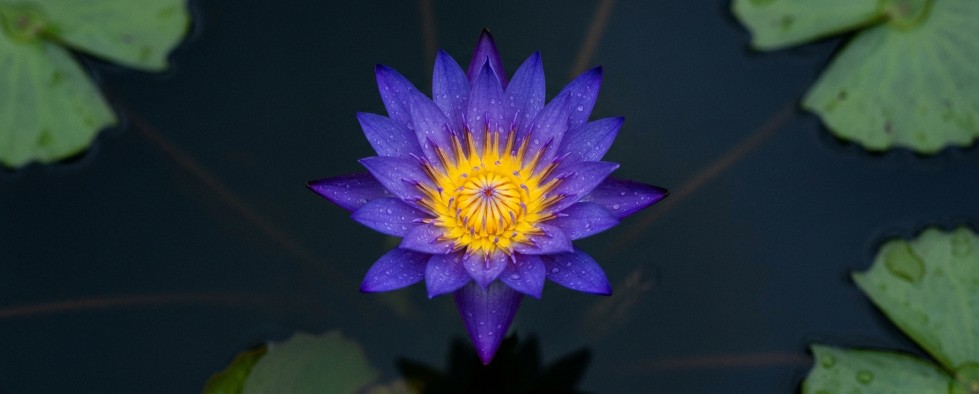
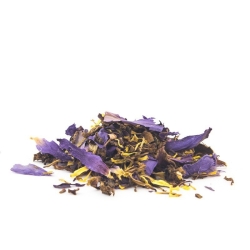
Blue Lotus is a water lily. Deep blue-purple petals around a yellow-white centre, floating on still water. The plant is native to the Nile Delta; today it is mostly cultivated in Thailand and India. The flower opens each morning at sunrise and closes again at sunset — a daily rhythm the Ancient Egyptians read as a symbol of rebirth.
The pharmacologically interesting compounds sit in the petals: chiefly apomorphine (a dopamine receptor agonist) and nuciferine (an aporphine alkaloid). The flower also contains flavonoids and anthocyanins — the latter responsible for the blue-purple colour. Together these compounds produce a mildly relaxing, slightly mood-lifting effect, with a notable side feature: more vivid dreams.
For the full botanical and historical background, see our Blue Lotus pillar guide. This article is about how Blue Lotus compares to Kanna — and when to choose which.
The plant — Kanna (Sceletium tortuosum)
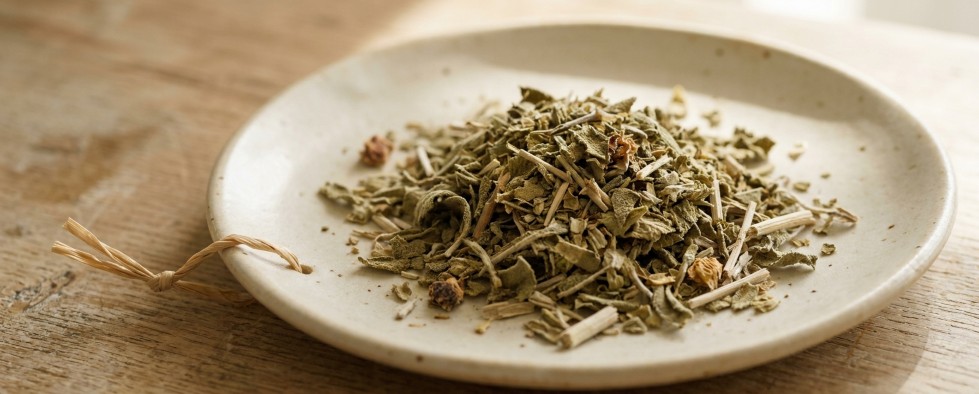
Kanna is a low-growing, succulent herb from the Aizoaceae family. It grows in the dry Karoo of South Africa, on sandy soils where little else gets by. The Khoi-Khoi and San peoples have chewed it for centuries — as a painkiller, a thirst quencher and a mood lifter on long desert journeys. Their traditional preparation is called kougoed: the plant is fermented in a sealed pouch, which shifts the ratios between the alkaloids.
The active compounds are aporphine alkaloids, chiefly mesembrine, mesembrenone and Δ7-mesembrenone. These act on a different part of the brain than Blue Lotus does: they inhibit serotonin reuptake (similar in mechanism — though much milder in strength — to an SSRI) and they block the enzyme phosphodiesterase-4 (PDE4). Together that adds up to less anxiety and tension, an open and present feeling and a mild mood lift — without the sedating side Blue Lotus carries.
For full depth on the plant itself — history, preparation, dosing — see our Kanna pillar guide.
Chemistry side by side: dopamine vs serotonin
At the molecular level Blue Lotus and Kanna are playing different games — and that is exactly what explains the difference in feel.
Blue Lotus — the dopaminergic route
Apomorphine in Blue Lotus is a dopamine receptor agonist. In high, isolated doses it has been used medically for Parkinson's symptoms for decades (Auffret et al., 2018). In the plant it occurs at low concentration, sitting alongside nuciferine and flavonoids in a natural whole. As a result the effect is mild and plant-based: calming and lightly euphoric, with a striking influence on the way you dream. A chemical analysis of Blue Lotus products (Poklis et al., 2017) confirmed the presence of both alkaloids in commercial extracts.
Kanna — the serotonergic route
Mesembrine and the related alkaloids inhibit serotonin reuptake and also block the enzyme phosphodiesterase-4 (PDE4) — an unusual dual action. A placebo-controlled fMRI study showed that a standardised Kanna extract (Zembrin) reduced amygdala reactivity to threatening stimuli — literally making the 'feeling less anxious' that users report visible on brain scans (Terburg et al., 2013). Phytochemical research (Patnala & Kanfer, 2009) showed that the traditional kougoed fermentation noticeably shifts the ratios between the alkaloids.
What this means in practice
Blue Lotus's dopaminergic action is about reward, motivation, dream intensity and mild euphoria. Kanna's serotonergic action is about mood balance, less anxiety and social openness. That is why they don't feel the same, and why each plant suits a different moment of the day.
Four moments — which fits?
1. Evening, after work — you want to wind down
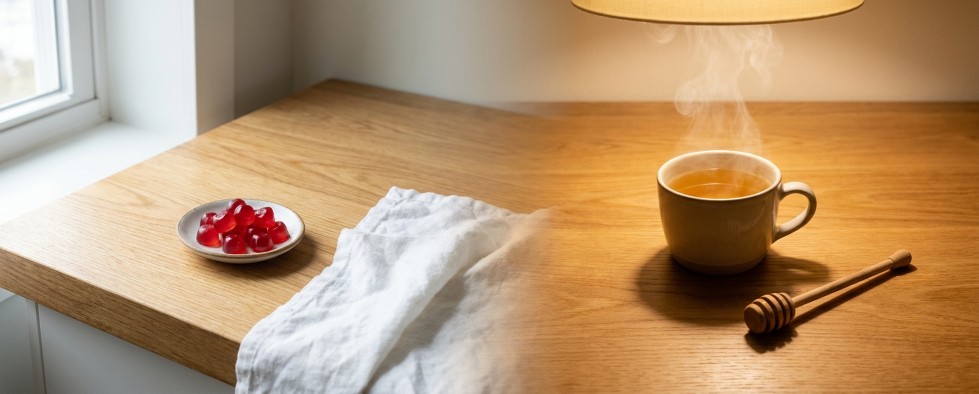
Blue Lotus is the better fit here. The tea (or a few drops of tincture) brings a soft, sedating glide downward without grogginess. The scent is floral, the taste lightly herbal. Combine with chamomile or lavender for extra calm. Kanna can also work here — especially the REST blend — but the base plant is slightly too activating to serve most people as a pure evening wind-down.
2. A social birthday or gathering — you want to stay present
Kanna wins clearly. A few Cherry Gummies or a pinch of Kannakki powder under the tongue takes the edge off social tension without leaving you sluggish or distracted. You stay sharp in conversation. Blue Lotus, by contrast, pulls you slightly inward — awkward in a busy room.
3. Mood during the day — you want to feel less weighed down
Kanna again. The serotonin-modulating action fits daytime use naturally. A low dose of Kannakki powder or a Cherry Gummy in the morning gives a noticeable but subtle lift. Blue Lotus would be the wrong call here — it pulls you toward rest, not action.
4. Dream work and sleep — you want vivid dreams
Blue Lotus, no contest. The dopaminergic action seems to line up with REM-sleep patterns, and users consistently report brighter dreams and better recall on evening use. Kanna has little to offer here — apart from the Kanna Dailies DREAM variant, which is blended with other herbs specifically for sleep (stock fluctuates; ask whether it's currently available if you're interested).
Comparison at a glance
| Aspect |
Blue Lotus |
Kanna |
| Plant |
Water lily (Nymphaea caerulea) |
Succulent (Sceletium tortuosum) |
| Origin |
Nile Delta; today Thailand/India |
Karoo, South Africa |
| Oldest traditions |
Egyptian (3,000+ years) |
Khoi-Khoi and San (centuries) |
| Primary alkaloids |
Apomorphine, nuciferine |
Mesembrine, Δ7-mesembrenone |
| Brain system |
Dopaminergic |
Serotonergic + PDE4 inhibition |
| Core feeling |
Rest, mild euphoria, sedation |
Open, less tension, gentle lift |
| Best moment |
Evening, contemplation, sleep |
Daytime, social, mood |
| Effect on dreams |
More vivid, better recall |
Marginal, except DREAM blend |
| Common forms |
Dried flowers, tincture, 10:1 extract |
Shredded, powder extract, gummies, capsules |
| Onset (oral) |
30-60 min |
15-45 min |
| Duration |
2-4 hours |
2-3 hours |
| Legal in NL/EU |
Yes, freely sold |
Yes, freely sold |
Which form for which plant — and what fits you
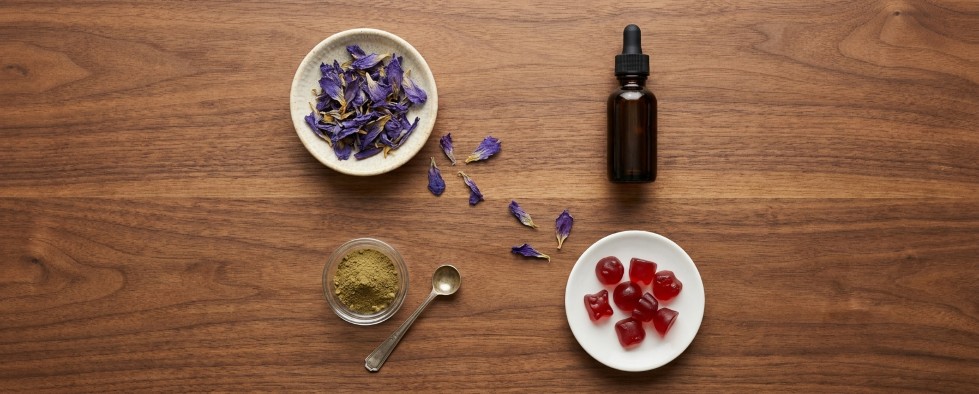
Both plants come in multiple forms. Your choice depends on how you want to use them — as ritual, fast, social, or for microdosing.
Blue Lotus — three main forms
- Dried flowers — For traditional use. Brew tea, or steep in wine for the Egyptian recipe. Mild, ritualistic, historically authentic.
- Tincture 15ml — Liquid in alcohol base, drop-by-drop dosing. Faster than tea (15-30 min), portable, easy to microdose.
- 10:1 TPA extract — Stronger concentrated form for those who know the effect. Also available as alcohol-free extract for those who want to avoid alcohol.
Premium tip: the Ormus-infused 10:1 extract is a ceremonial variant for those wanting a more ritual angle.
Kanna — four main forms
- Shredded Kanna — The base product. For traditional use: chewing, brewing tea, or combining with other herbs. Mild, beginner-friendly.
- Kannakki Super Intense powder — Highly concentrated extract in powder form. Sublingual use, fast onset (5-15 min). For experienced users.
- KANNA Cherry Gummies — Sweets with natural Kanna and cherry flavour. The social option: easy to dose, no preparation, no taste of the raw herb.
- Liquid Extract 10ml — Drops in a glycerin base. Quick onset, easy to microdose.
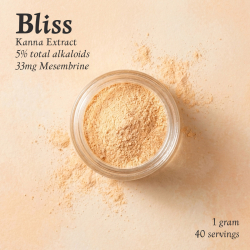
We also stock a concentrated line with specific profiles — BLISS (uplift), REST (relaxation) — and the Kanna Dailies capsule range with variants for focus, social, relax, and dream (stock fluctuates; check the product page if you want a specific blend).
Which type are you?
Choosing between Blue Lotus and Kanna is not only a functional comparison. It's also about the atmosphere you want. A few archetypes:
The evening type — Your day winds down quietly. A book, a candle, no more screens. For you: Blue Lotus tea 30 to 45 minutes before sleep, optionally with chamomile.
The social connector — You enjoy being round at friends', sitting on a terrace, heading to a festival. For you: Kanna Cherry Gummies or a pinch of Kannakki under the tongue before you head out.
The dream explorer — You keep a dream journal, you work consciously with dreams, you wonder what you can do with your REM sleep. For you: Blue Lotus tincture or flowers before bed, optionally with intention work.
The mood stabiliser — You notice some weeks feel heavier than others. You're not looking for a band-aid, just a steady, natural support. For you: Kanna at a low, regular dose — shredded or liquid extract.
The ceremony seeker — You build rituals around plants. For you: Blue Lotus carries the oldest ceremonial tradition and fits naturally into a ritual with cacao, palo santo or intention work. Kanna can play this role too, but the Egyptian ceremonial weight Blue Lotus brings is unique.
Can they be combined?
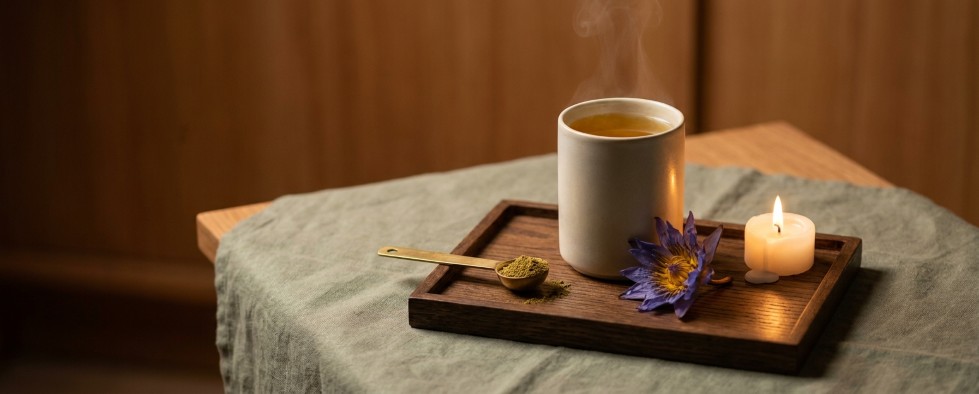
Yes — carefully, and only if you understand what you're doing. The two plants act on different routes in the brain, so in theory they complement each other rather than competing. But neither has been fully nailed down scientifically, and for any combination the rule is the same: get to know each plant on its own first, start low and build up slowly.
When a combination makes sense
- Social-into-evening ritual — a low Kanna dose early in the evening (for social ease), followed by Blue Lotus tea an hour later (to ease into sleep). The Kanna fades around bedtime; Blue Lotus takes over for the dream phase.
- Ceremonial opening — for longer ritual work, some practitioners start with Kanna for connection and openness in the group, then switch to Blue Lotus for the inward, contemplative phase.
- Daytime mood + evening dream work — during stretches of low mood, microdosing Kanna in the day pairs well with Blue Lotus in the evening for the dream-work side of things.
When not to combine
- If you've never used one of them — get to know each plant on its own first.
- When using SSRIs, MAO inhibitors or Parkinson's medication — consult your doctor; the possible interactions are not to be underestimated.
- During pregnancy or breastfeeding — avoid both as a precaution.
- At high doses — combining mostly amplifies overlapping action; only do this if you know each plant on its own really well.
Which product for which goal
| Goal |
Blue Lotus option |
Kanna option |
| First encounter |
Dried flowers for tea |
Shredded Kanna or Cherry Gummies |
| Fast and portable |
Tincture 15ml |
Liquid Extract 10ml |
| Concentrated, strong |
10:1 TPA extract |
Kannakki Super Intense or BLISS |
| Evening, sleep |
Flowers + tincture combined |
REST extract (low dose) |
| Social, festive |
Not the first choice here |
Cherry Gummies or Kannakki |
| Dream work |
Tincture 30-45 min before bed |
DREAM blend (check stock) |
Safe use — for both plants
Both plants are mild and well tolerated by healthy adults at traditional doses. A few things to keep in mind:
- Medication interactions — Blue Lotus (dopaminergic) and Kanna (serotonergic + PDE4) may in theory interact with SSRIs, MAO inhibitors, antidepressants and Parkinson's medication. When in doubt: consult your doctor or pharmacist.
- Pregnancy and breastfeeding — avoid both as a precaution. There isn't enough safety research for these groups.
- Driving or operating machinery — Blue Lotus has a mild sedative effect; avoid driving or working with machinery afterwards. Kanna is less of an issue here, but be careful at higher doses.
- Alcohol — strengthens the sedative effect of Blue Lotus. With Kanna the interaction is usually limited, but drink in moderation either way.
- Allergy — as with any new plant: test with a small dose before building up.
Why Next Level Smart?
- More than 10 years of experience with ethnobotanical products and their use
- Both plants in complete form-ranges — flowers, tinctures, extracts, gummies, capsules
- Lab-tested quality for heavy metals and pesticides
- Discreet shipping across the Netherlands and throughout Europe
- Two pillar guides that go deep on each plant — not just selling products
Frequently asked — Blue Lotus vs Kanna
What is the biggest difference between Blue Lotus and Kanna?
Blue Lotus works mainly on the dopaminergic system — apomorphine and nuciferine produce a calm, contemplative, lightly euphoric effect with a striking influence on dreams. Kanna works on the serotonergic system — mesembrine inhibits serotonin reuptake and produces an open, less tense, socially connected feeling. Blue Lotus is more of an evening plant, Kanna more of a daytime one.
Which works faster?
Kanna under the tongue (powder taken sublingually, not swallowed) works within 5 to 15 minutes, especially with concentrated extracts like Kannakki. Blue Lotus tincture works within 15 to 30 minutes. With tea both are slower — Kanna 20-30 minutes, Blue Lotus 30-60 minutes.
Which is stronger?
Concentrated Kanna extracts (Kannakki, BLISS, REST — all at 5% total alkaloids) produce a more sharply felt acute effect than the same dose of Blue Lotus. But 'stronger' is misleading here: each produces a different kind of feeling. People who find Kanna too pronounced may find Blue Lotus exactly right, and the other way round.
Which is better for sleep?
Blue Lotus, in most cases. A cup of tea 30 to 45 minutes before bed brings soft sedation without the morning grogginess some synthetic sleep aids cause. Kanna is slightly too activating for most people as a pure sleep aid — though the REST variant can work if you'd rather stay with Kanna.
Which is better for social situations?
Kanna, clearly. The serotonergic action takes the edge off social tension without leaving you sluggish. Cherry Gummies are the most social form — no preparation, no taste of the raw herb, and easy to share. Blue Lotus pulls you slightly inward, which is awkward in a crowded room.
Which gives more vivid dreams?
Blue Lotus. The dopaminergic action seems to line up with REM-sleep architecture, and users consistently report brighter dreams and better recall on evening use. Kanna has little to offer here — except for the Kanna Dailies DREAM blend, which is specifically formulated with other herbs for sleep.
Can you combine Blue Lotus and Kanna?
Yes — carefully, and only if you already know each plant on its own. The two work on different routes in the brain, so in theory they complement each other. A pattern some users follow: Kanna early in the evening for social ease, Blue Lotus closer to bedtime for sleep and dreams. Don't combine if you're on SSRIs, MAO inhibitors or Parkinson's medication without talking to your doctor first.
Which is legal in the Netherlands?
Both. Nymphaea caerulea and Sceletium tortuosum are not listed under the Dutch Opium Act and are sold freely throughout the Netherlands as herbal tea, tincture, extract or capsule. Both are also legal in most other European countries.
Which has fewer side effects?
Both have a mild profile at traditional doses, with no notable side effects in healthy adults. Blue Lotus at higher doses may produce light drowsiness or dizziness. Kanna may cause headache or nausea in some people, especially when dosed above recommendation. For both: start low, build up slowly, and don't use daily without breaks.
Which works better against anxiety or stress?
Kanna, both for acute tension and for chronic mild anxiety symptoms. The combined serotonin-reuptake-inhibiting and PDE4-inhibiting action specifically influences the amygdala (Terburg et al., 2013). Blue Lotus also helps with general stress, but through a different mechanism and feels more like a 'cool-down' than active tension relief.
Disclaimer: This blog is purely educational and discusses traditional and contemporary use of Blue Lotus (Nymphaea caerulea) and Kanna (Sceletium tortuosum). The information is not medical or health advice. Consult a doctor or pharmacist before starting a new plant or supplement, especially during pregnancy, when using medication, or with existing health concerns.
Last update: June 2026 | Next Level Smart