A trip sitter is someone who stays sober and present while another person goes through a psychedelic experience. It sounds simple. In practice it asks for more than most people assume — and for the person tripping, a good sitter is often the difference between a calm, well-handled session and an unnecessarily hard one.
This guide walks through what the role actually involves, when you need one, how to pick someone, and — for anyone taking on the role themselves — how to be a good sitter without doing too much or too little.
What a trip sitter actually does
A sitter is not a guide, not a therapist, and certainly not a director. They are someone who stays sober, stays close, and makes sure the tripper feels safe throughout the whole session — physically and emotionally.
In practice the role comes down to four things: being present without intruding, offering reassurance when it's needed, watching for physical safety, and — if the tripper wants it — handling the practical side, like passing water, fetching a blanket, or changing the music.
What a sitter does not do: take anything themselves, fill in the tripper's experience for them, judge what comes up, or push for conversation when the tripper wants to stay inside their own head.
When is one actually needed?
A sitter is useful for any psychedelic session, and in some situations close to mandatory:
- First time with a new substance, or a clearly higher dose than before
- For anyone living alone who couldn't easily call someone in if things go sideways
- For longer-acting substances (LSD, mescaline) where physical fatigue starts to matter
- For people with anxiety tendencies or a previous difficult trip on record
- For sessions in a setting that isn't fully your own home
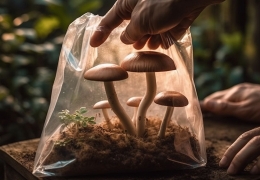
For mild substances like Blue Lotus, a sitter is rarely necessary. For DMT — short but overwhelming — a sitter is almost always the sensible choice. For magic truffles it depends on dose and prior experience; from around four grams of fresh truffle upwards, a sitter is strongly recommended. For magic mushrooms the rule is straightforward: the higher the dose, the more value a sitter brings.
How to pick the right person
Trust is the foundation. A sitter is the kind of person you'd call in the worst moments of your life — not necessarily the most fun friend you go to gigs with. The two can overlap, but that overlap isn't a given.
Four qualities to look for:
- Genuinely sober for the whole session. Not "I'll just take a little to keep it relaxed." A sitter who takes anything themselves is no longer a sitter.
- Non-judgemental. On a trip, tears, laughter, unrelated outbursts and long silences can all show up. A sitter accepts whatever comes without commenting on it.
- Ideally some experience of their own — though not strictly required. Someone who has tripped themselves understands what's happening and worries less about things that are entirely normal.
- Calm under pressure. If the tripper hits anxiety, a tense sitter amplifies it; a calm sitter is an anchor.
A sitter without these four does the tripper no favours — and isn't doing themselves any either.
Preparation
A good session starts days to hours in advance, not the moment the substance is taken.
The conversation before
A few days ahead, or well in advance at least: talk through what the tripper expects, what they're nervous about, what music they want, and whether there are themes they specifically do or don't want to touch. Ask explicitly: "What do you need from me if it gets hard?" Some people value a hand to hold; others just need to know you're there.
Setting up the space
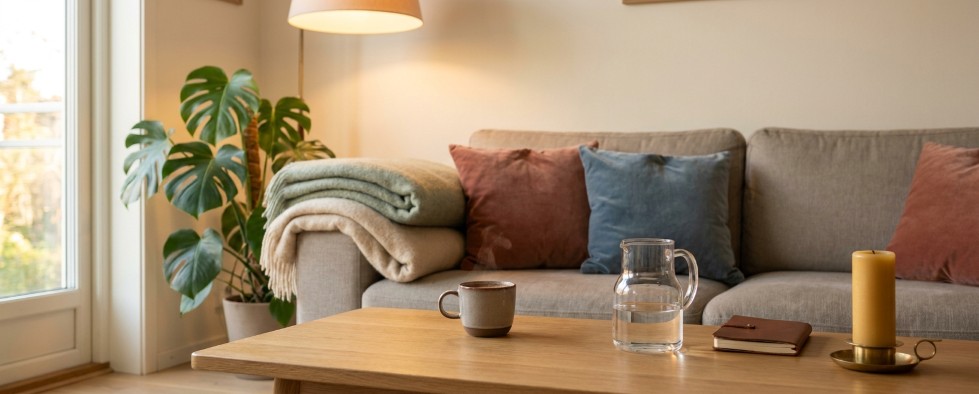
Low-effort comfort, screens off, phones on silent or aeroplane mode. Dimmable light is good, no overhead strip lighting. Soft blankets and cushions within easy reach. A music setup the tripper doesn't have to operate themselves.
What to have ready
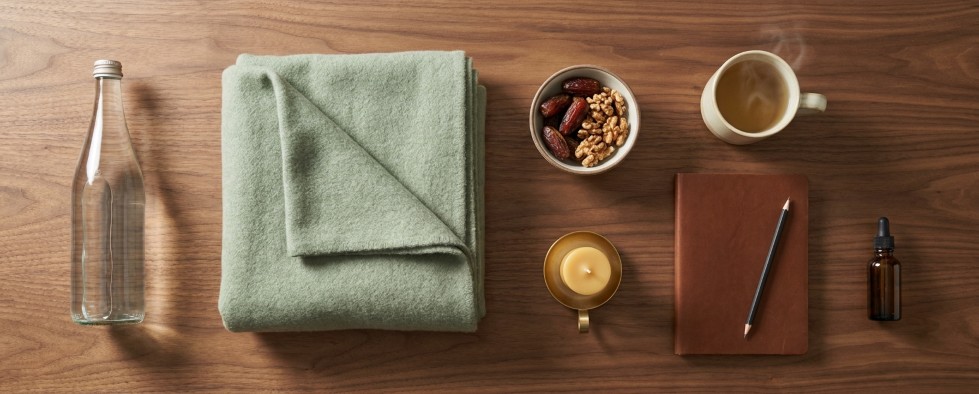
- Plenty of water (people dehydrate quickly)
- Something light to eat — fruit, nuts, dates, nothing heavy
- Blankets (body temperature fluctuates)
- Cushions to lean against or curl into
- A four-to-six-hour playlist, ready to start
- Optionally a mug of ceremonial cacao or a light herbal tea, kept ready for difficult moments
Your own schedule
Block the whole session plus a few hours after. No "I just need to pick something up at three." The sitter is there and has nowhere else to be.
During the session — the balance between present and invisible
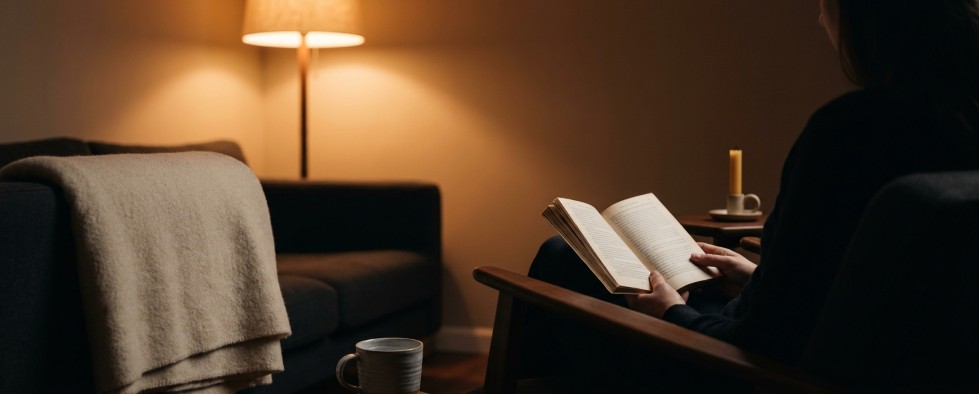
The role is almost paradoxical: visibly present and yet out of the centre of attention. The tripper should always know you're there — but should never have to manage you.
In practice:
- Sit in view but don't stare. A book in hand or a quiet task — not your phone — keeps the tripper from feeling watched.
- Don't initiate conversation, except to confirm you're around or to check something practical: water, blanket, opening a window.
- Respond when asked. Briefly, calmly, without analysing.
- Never push for sharing. What's happening internally belongs to the tripper. Asking during the session can disturb something fragile.
- Don't downplay anything. If the tripper is afraid, "oh, it'll be fine" doesn't help. What does help: "I'm here, you're safe, this is the substance and it'll pass."
If the tripper wants to talk — listen. If they want silence — stay silent. Follow, don't lead.
The hard moments
Not every session unfolds calmly. When a tripper slips into anxiety or paranoia, here is a simple sequence to work through:
- Verbal grounding first. Calm voice, short sentences, reminding them where they are and who's with them. "You're here. You're safe. This is the substance, this is not a reality that stays."
- A change of room helps. Moving to a different part of the house, or stepping into a quiet garden, often breaks the loop of the anxiety with a fresh set of impressions.
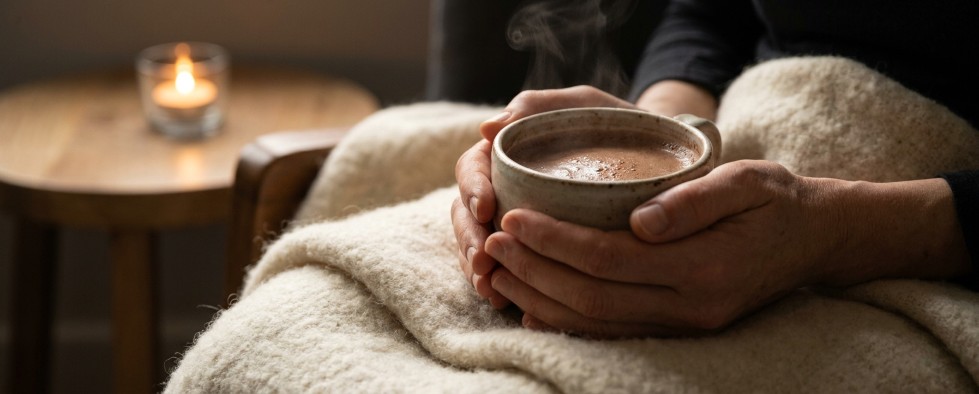
- Something concrete in the mouth. A warm mug of ceremonial cacao often works well. The combination of warmth, taste and the small ritual of slow sipping pulls attention out of the panic and back into the body.
- Body sensation back. Rubbing hands, a blanket around the shoulders, a hand on the back. Touch only if it helps the tripper and was agreed beforehand.
- Wait. Most hard moments ease within twenty to forty minutes. Patience is a tool.
When to bring in medical help: serious physical symptoms (heart racing that won't settle, breathing trouble), behaviour that endangers the tripper or others, or what looks like a psychotic break. When in doubt: emergency services. You're not a doctor; making medical calls is not your responsibility.
When you shouldn't be the sitter
As important as knowing when you can do it: knowing when you shouldn't.
- Your own unresolved stuff. If you're in a hard period yourself — grief, separation, serious stress — sitting is a weight you shouldn't carry.
- Tension with the tripper. Unspoken conflict can surface during a trip, and you're the wrong presence to absorb it.
- Tiredness or a bad day. A sitter needs to be fully present for eight to ten hours. Half-present is not a sitter.
- Anything in your own system. Alcohol, sleep medication, a joint beforehand. All no.
- No time. Anyone who knows they have to be somewhere at four can't sit a session that starts at eleven.
Sitting for someone close to you is a gift given from strength, not from obligation. Anyone without the capacity in the moment does better to say so honestly.
Aftercare

The session doesn't end the moment the effects fade. The first hours after are their own phase: warm, vulnerable, often very open.
What helps:
- Eat something — soup, fruit, a simple meal. No feast.
- Keep drinking water.
- Company without pressure. Silence is fine, conversation too — whatever the tripper wants.
- Don't analyse. The urge to immediately work out "what did that mean?" — resist it. The integration of a trip can take days to weeks; meaningful conversation comes later.
- Sleep, once the tripper is ready. A good close.
For the sitter: you've also had a long day at a stress level you may only feel hours later. Eat, drink, do something ordinary (a series, tidying up) to return to your own rhythm.
For what produces the most growth in the days and weeks after a trip, see our guide on psychedelic integration.
Different substances, different demands
Not every trip asks the same kind of presence from the sitter. A brief comparison:
| Substance |
Duration |
Character |
Sitter need |
| Magic truffles |
4-6 hours |
Open, sometimes anxious |
Strongly recommended for first time or higher dose |
| Magic mushrooms |
4-6 hours |
Similar but more potent |
Same |
| Mescaline (San Pedro, Peyote) |
8-12 hours |
Meditative, physically tiring |
Almost always; long duration suggests two sitters rotating |
| LSD |
8-12 hours |
Cognitively intense, long peak |
Almost always |
| DMT |
5-15 minutes |
Overwhelming in a short window |
Effectively mandatory |
| Blue Lotus |
2-4 hours |
Mild, calming |
Rarely needed |
The longer-acting substances — mescaline and LSD — ask for a sitter who takes breaks themselves. Staying fully present for ten hours straight is practically demanding. For sessions of that length, some groups split the role between two sitters who rotate so that one of them is always fully on.
Why Next Level Smart?
- More than 10 years of experience with the wider side of psychedelic practice — not just which substances, but how a session is built around them
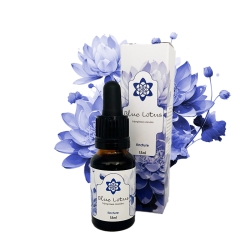
- Ceremonial cacao and calming herbs in stock for the hard moments — our cacao range and products like Kanna liquid extract or Blue Lotus tincture work well as grounding aids
- A broader blog library on set and setting, avoiding bad trips, and integration — for anyone preparing seriously
- Discreet shipping across the Netherlands and Europe
Further reading
A trip sitter is one part of a well-prepared session. The natural companion is the wider preparation. For the broader picture of what a safe psychedelic experience asks for: our set and setting guide. For what you can do specifically to avoid a difficult trip: how to avoid a bad mushroom trip. For step-by-step preparation for a first mushroom session: how to prepare for a safe magic mushroom trip. For what comes after — often just as important as the session itself — our guide to psychedelic integration.
Does every psychedelic session need a sitter?
Not every one, but many do. With mild substances and low doses you can manage alone or with a trusted partner. With more intense substances or higher doses — and certainly with DMT or LSD — a sitter is strongly recommended. For any first session with any substance: almost always a good idea.
Does a trip sitter need experience of their own?
Helpful, not required. Someone who has tripped themselves understands what's happening and worries less about things that are normal. But a calm, non-judgemental, reliable person with no prior experience is a better sitter than someone with experience who panics easily.
What do you do when the tripper gets paranoid?
Calm voice, short sentences, remind them where they are. "You're safe. This is the substance, it will pass." A change of room often helps. A mug of warm cacao can pull the attention back into the body. Patience above all — most peaks ease within half an hour.
Can the sitter touch the tripper?
Only if agreed in advance. Some people appreciate a hand on the back or a hug as grounding; others find any touch during a trip invasive. Ask beforehand — not in the middle of the session.
How do you handle physical discomfort like nausea or feeling cold?
Vomiting can happen, especially with mushrooms and mescaline — keep a bowl or bucket close. Feeling cold is usually a result of the body-temperature fluctuations the substance causes; a blanket is enough. For heart palpitations or breathing trouble that doesn't pass: medical help.
When do you call medical help?
Serious physical symptoms (heart racing that won't settle, breathing trouble), behaviour that endangers the tripper or others, or what looks like a psychotic break. When in doubt, always. You're not a doctor; medical calls are not your responsibility.
Can a sitter be remote — over phone or app?
For light sessions where the tripper wants to be alone but wants someone they can call, an agreed remote sitter can work. For heavy sessions: no. Physical presence offers something a phone doesn't.
What does the sitter do afterwards?
First hours: company, water, food, no immediate analysis. Beyond that: be available for conversation over the following days, but don't take responsibility for the integration. That belongs to the tripper.
What if the tripper wants to do something dangerous — leave the house, open a window?
Hold the line with words, not body, unless absolutely necessary. "Let's sit down first" works more often than a flat "no". Prepare in advance: make sure windows can't open fully, doors don't open straight into a busy street, no sharp objects in view.
Can the sitter take a microdose along?
No. A sitter is fully sober. A microdose is technically sub-perceptual, but in a context where you may need to act on the spot, it isn't a risk worth taking. Save it for your own session.
Disclaimer: This guide is educational only and covers the role of a trip sitter during psychedelic experiences. It is not medical or psychological advice. Several psychedelic substances are illegal under the Dutch Opium Act; this guide does not encourage use, but supports responsible preparation for those making their own choices. For existing health conditions, medication, or pregnancy: consult a doctor. In case of serious problems during a session: emergency services.
Last updated: June 2026 | Next Level Smart