Buying cannabis seeds sounds straightforward, until you stand in front of the rack. Feminized or autoflower? Indica, sativa or hybrid? CBD-dominant or full-on THC? Each fork in the road changes the outcome — in harvest time, plant height, terpene profile, and how forgiving the plant is when you make a mistake.
This guide answers the questions buyers actually have. How to pick cannabis seeds that fit your situation, what separates quality genetics from mediocre genetics, and which strains work best for beginners versus more experienced growers. We base it on the Inner Earth Seeds assortment plus a decade of smart-shop feedback.
One practical note up front. In the Netherlands buying and possessing cannabis seeds is legal. Growing plants falls under the Opium Act and the tolerance policy, with additional risks for tenants which we cover further down. This guide focuses on the buying decision; for the grow process itself see our complete indoor growing guide from seed to harvest and outdoor growing guide for the Dutch climate.
The fundamental decision: feminized, autoflower or regular
The most important fork when buying cannabis seeds is which type of plant grows from the seed. Three main categories — and this choice largely determines your grow cycle, your yield and how much experience you need.
Feminized (photoperiod) — the standard for most home growers. Breeders manipulate the seed to produce only female plants. Females deliver the harvestable buds; males produce pollen and are unwanted in consumption grows. Flowering is triggered by the light schedule: 12 hours of light / 12 hours of darkness indoors, or shortening daylight in August outdoors.
Autoflower — feminized AND flowering based on age rather than light. An autoflower begins flowering roughly three to four weeks after germination regardless of whether it receives 18 or 12 hours of light. This is thanks to a dose of Cannabis ruderalis genetics in the lineage: a wild, cold-tolerant variant from Central Asia that doesn't respond to photoperiod. Advantage: no light schedule management, fast cycle (8-10 weeks seed to harvest), compact size. Trade-off: smaller yield per plant, no way to extend the vegetative stage, and any growing mistakes can't be fixed by letting the plant stay longer — it flowers on the ruderalis clock.
Regular (non-feminized) — the traditional starting material. Produces roughly 50% males and 50% females. Our retail assortment for home growers is mostly feminized because most growers aren't breeding. For anyone wanting to cross strains or pheno-hunt, regular seeds offer the genetic variation needed for selection work.
| Aspect |
Feminized (photoperiod) |
Autoflower |
Regular |
| Flowering trigger |
Light schedule 12/12 |
Age (~3-4 weeks) |
Light schedule 12/12 |
| Sex |
100% female |
100% female |
~50/50 m/f |
| Total cycle |
12-16 weeks |
8-10 weeks |
12-16 weeks |
| Yield per plant |
High |
Low to medium |
High (per female) |
| Height |
100-200+ cm |
60-100 cm |
Variable |
| Best for |
Standard home growers |
Beginners, stealth, quick harvest |
Breeders, pheno-hunters |
Indica, sativa and hybrid — more than a marketing label
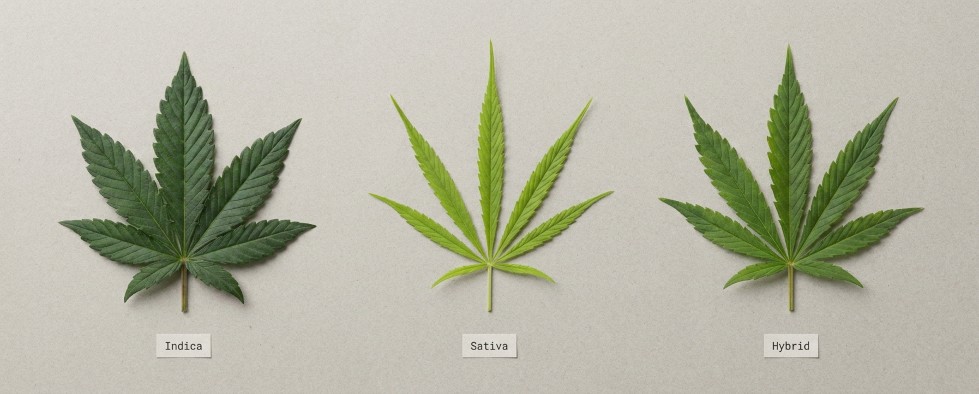
The classic indica/sativa/hybrid division originates from botanical literature and has been adopted commercially. Botanists have been debating its validity for years: in practice, nearly all modern consumer cannabis is genetically intertwined and pure "indica" or pure "sativa" is barely present in retail anymore. For the grower the terms remain useful — they predict morphology (how the plant grows) and roughly the effect profile.
Indica-dominant — short and compact (60-150 cm), broad dark-green leaves, dense buds. Short flowering (6-8 weeks). Terpene profile leans on myrcene (the "stoned/cake"-feeling terpenes) and linalool. Effect more physical than cerebral, often associated with relaxation. Good choice for indoor growing because of the limited height. Classic examples in our range: Critical Feminized, Lavender Feminized, Granddaddy Purple Feminized, Sensi Star Feminized and Zkittlez Feminized.
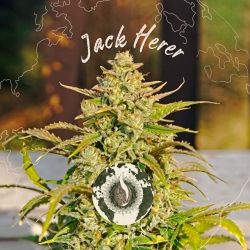
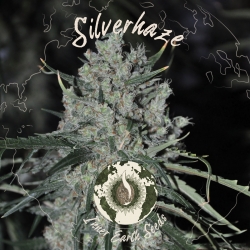
Sativa-dominant — tall and slim (150-300+ cm), narrow light-green leaves, airier buds that sit more loosely. Longer flowering (9-12 weeks) — patience required. Terpene profile leans on limonene (citrus), pinene and terpinolene, with a cerebral, energetic effect. Better suited to outdoor growing or tall indoor spaces. Examples: Silver Haze Feminized, Jack Herer Feminized, Power Plant Feminized.
Hybrid — a cross between indica and sativa, typically with a percentage indication (e.g. 60% indica / 40% sativa). Most modern strains fall into this category. Properties vary with the specific cross and the phenotype you get from your seed. Often the best of both worlds: reasonable flowering time, manageable height, balanced effect. Examples: Gelato Feminized, Chemdawg Feminized, Gorilla Glue Feminized, Girl Scout Cookies Feminized, Wedding Cake Feminized.
Important nuance: the old "indica = body high, sativa = head high" rule is a heuristic with many exceptions. The effect profile is determined by the specific terpene and cannabinoid profile of the individual plant — and that varies between phenotypes within the same strain. Two seeds from the same Gelato Feminized can smell measurably different and work differently.
Landrace, F1, F2 and what that tells you about yield
Terms that pop up in seed descriptions but are rarely explained. For anyone who wants to dive a level deeper into genetics:
Landrace — a variety that has adapted to a specific geographic region over many generations. Pure landraces are rare in modern retail — well-known examples include Afghan Kush (indica landrace), Acapulco Gold (sativa landrace) and Durban Poison. Landraces are genetically very stable: all seeds produce comparable plants with region-typical traits.
F1 hybrid — the first generation of offspring from a cross between two stabilised parent lines. F1 plants show what's known in plant breeding as "hybrid vigour": growth and uniformity that exceeds both parents. F1 seeds from a quality breeder therefore produce predictable plants — a key selling point.
F2 and beyond — when you cross two F1 plants with each other you get an F2. Here uniformity drops dramatically: a single seed pack will produce four main phenotypes, with differing growth patterns, flavour and potency. For breeders F2 is the starting point for pheno-hunting — for the average grower it's more unpredictable material.
Stabilisation — typically achieved from F4 to F8 onward, after multiple generations of inbreeding and selective breeding. A reputable breeder won't sell F2 material as a consumer product; what's on shelves is generally stabilised or F1 hybrid. Short version: the further from the original crossing point, and the more selection work has been done, the more consistent your harvest.
How feminisation actually works
For anyone wondering how a breeder produces only female seeds from a female plant: it comes down to a hormonal trick.
Cannabis plants have two chromosomes that determine sex: female plants are XX, male plants XY. Under stress, female plants can develop hermaphrodite traits — flowers with male pollen sacs — as a survival mechanism. Those pollen grains are XX and fertilise other female flowers, resulting in 100% XX offspring: feminized seeds.
Breeders force this hermaphrodite process under controlled conditions. The two common methods are treatment with colloidal silver (silver thiosulfate, STS) or ethylene (ethephon). Both compounds suppress the ethylene response in the plant during flowering, triggering male pollen production. Those pollen grains carry only X chromosomes. When they land on a normal female plant, you get 100% feminized offspring.
Quality varies by breeder. Poorly executed feminisation produces plants with an elevated risk of spontaneous hermaphroditism under stress — which can introduce pollen into your grow and ruin the entire harvest. At Inner Earth feminisation is carried out under controlled conditions, and every batch is tested for stability before release.
Beginner-friendly strains
For first-time growers, forgivingness matters more than maximum yield. A strain that tolerates small mistakes — overwatering, mild nutrient stress, temperature swings — gives beginners the best chance of a successful first harvest.
Our top picks for beginners:
- Critical Feminized (indica-dominant) — short, robust, forgives a lot. Fast flowering (~7 weeks). Solid yield. The workhorse of the feminized assortment.
- Power Plant Auto Feminized — autoflower, no light-schedule fuss. Power Plant is a Dutch classic, known for consistent growth and few surprises. Very suitable for balconies or small indoor spaces.
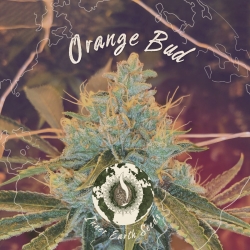
- Orange Bud Auto Feminized — also autoflower with a pronounced orange-citrus profile. Manageable height (~70-100 cm), good for stealth growing.
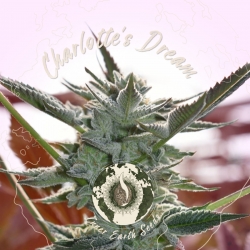
- Charlotte's Dream Auto (CBD) — for growers wanting therapeutic CBD-rich plants without light management. Combines high CBD with an autoflower cycle.
Strains for the experienced grower
Once past the first cycle, the assortment opens to strains with more character — strains that demand more attention but reward proper care with significantly higher-quality buds.
- Silver Haze Feminized — sativa, long flowering (~10 weeks), tall plants (up to 200 cm indoors). A classic from the Haze family with a clear cerebral effect and pinene-rich terpene profile. Bending techniques like LST (low stress training) help keep the height manageable.
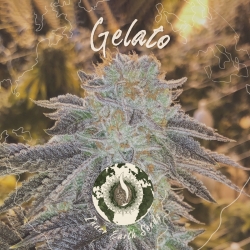
- Gelato Feminized — modern popular hybrid. Dessert-like flavour profile with sweet and creamy notes, dense resin-coated buds. Has a stricter nutrient balance — sensitive to overfeeding.
- Gorilla Glue Feminized — hybrid known for sticky resin and high potency. Trimmers literally stick to their scissors. Requires careful drying and cure management to preserve the terpene profile.
- Jack Herer Feminized — sativa with a spicy, earthy aroma and legendary status. Named after the cannabis activist and author of The Emperor Wears No Clothes. Long flowering but worth the wait.
- Wedding Cake Feminized — hybrid with a sweet, vanilla-like profile from the Cookies family. Indica-leaning phenotype, averaging 23-25% THC with proper cultivation.
CBD seeds: the therapeutic spectrum
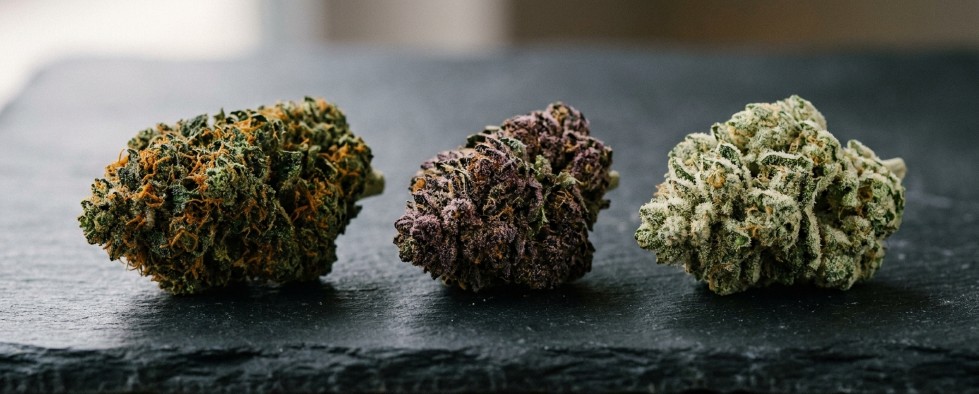
CBD seeds produce plants with a high cannabidiol-to-THC ratio. Cannabidiol does not bind to the same receptors as THC and has no noticeable psychoactive effect — useful for anyone seeking the physical benefits of cannabis without the cognitive effects. The European Drugs Agency (EUDA) notes that high-CBD chemovars have steadily grown in availability over the past decade.
Three CBD options in our range:
- Charlotte's Dream (CBD) — feminized photoperiod. Named in reference to the Charlotte Figi case that brought CBD to global attention in 2013. A cross of Charlotte's Web and Blue Dream CBD: CBD-dominant with 12-16% CBD and only 0.3-0.6% THC. No noticeable psychoactive effects. Indica-leaning hybrid (60/40), 8-9 weeks flowering, high mould resistance — a strong outdoor choice.
- Charlotte's Dream Auto (CBD) — autoflower variant with even higher CBD percentages (18-22%) at the same 0.3-0.6% THC. CBD:THC ratio approximately 30:1. More compact (80-100 cm), 10 weeks seed-to-harvest.
- Swiss Chocolate CBD — from Switzerland, characterised by a chocolate-coffee terpene profile. 8-15% CBD with 0.3-0.4% THC: no psychoactive effect. Intended for anyone wanting to explore the therapeutic side of cannabis without the cognitive effects of a THC-rich strain. Compact structure, dense resin-bearing buds.
The CBD category is growing fast. Our CBD selection is regularly expanded based on market demand and available genetics.
Germination: three reliable methods
Once seeds are bought, the real work starts with germination. Three common methods, each with trade-offs:
Glass of water method — seed in a glass of lukewarm water at room temperature for 12-24 hours. Sinking seeds are usually viable. After 24 hours transfer to soil or a damp paper towel. Quick and simple check, but the transition from water to soil can introduce minor stress.
Paper towel method — seed placed between two damp (not soaking) paper towels in a closed container, in a dark, warm spot (21-24 °C). Within 1-5 days a white taproot appears. When that root is about 5 mm long, transplant — taproot down — into the growing medium. High success rate, but the transplant moment is critical.
Direct in soil method — seed placed about 5-10 mm deep in pre-moistened soil, lightly pressed in. The seedling appears within 3-7 days. Least stress, but no visual confirmation of successful germination until the seedling shows.
For beginners the paper towel method is usually the most reassuring — you see exactly when the root appears. For expensive or limited-availability seeds (like rare F1 crosses), direct-in-soil is often preferred because of the lower attrition at the transplant moment.
What to check before you buy
Not every seed germinates. A reliable seed supplier plus a few basic quality checks prevents you from losing your investment before the grow even starts.
Germination rate — good breeders aim for 90-95% germination. Inner Earth Seeds tests every batch before release. A lower rate isn't a deal-breaker but is reason to ask your supplier some hard questions.
Genetic stability — seeds from a stabilised line produce plants that consistently resemble the mother. F2 or recent crosses can vary considerably between seeds — fun for pheno-hunters, less predictable for yield.
Breeder reputation — work with breeders who cultivate from direct parent plants, not from clone lines that have been cut from cut mothers for many generations. Each clone generation can subtly erode the genetics through viral pressure, tissue-accumulated nutrient imbalances, and epigenetic drift. The Inner Earth catalogue works with stabilised parent lines that are periodically refreshed from seed.
Storage — cannabis seeds stay viable in a cool, dry environment (5-10 °C, dark). Poorly stored seeds lose viability quickly. Ask your supplier how they store and how recent the batch is. For long-term storage (years) vacuum-sealed in the fridge with a silica gel packet to absorb moisture is the gold standard.
Price — per seed ranges from roughly €3 to €8 for quality genetics. Premium or limited-release crosses can go higher. The standard sale unit is a 3-5 seed pack. Cheap seeds under €2 are almost always old material or poorly executed feminisation — economise on lighting, not on seeds.
Discreet shipping — we ship discreetly within the Netherlands and across Europe, in plain outer packaging without product names or identifying labels. Privacy is non-negotiable for most seed buyers.

The legal framework in the Netherlands (and your tenancy contract)
For legal clarity:
- Buying cannabis seeds — legal. Seeds are not on the Opium Act schedule as long as they remain non-germinated.
- Possessing seeds — legal.
- Growing plants — tolerated up to 5 plants for personal use under the Aanwijzingsbesluit Opiumwet. Growing more than 5 plants carries a serious risk of prosecution (Dutch government cannabis policy page).
- Selling or distributing harvest — not legal, even as a favour to friends.
- Cross-border shipping — depends on the destination country. We ship to EU countries where this is permitted.
An important addition that most online guides miss: tenants can run into problems with five or fewer plants too. Many rental contracts explicitly prohibit cannabis cultivation regardless of plant count. Landlords can rely on such a clause to terminate the lease. Fire and contents insurance policies often exclude damage related to home cultivation — even when the grow falls under the tolerance policy. If you live in rented accommodation it's smart to check the tenancy agreement and policy conditions in advance, and to weigh the risks when choosing between indoor and outdoor.
For the practical details of growing itself see our complete indoor growing guide and outdoor growing guide for the Dutch climate.
Cannabis seeds in the rest of Europe
The Dutch situation is relatively liberal. A quick comparison with other major EU markets:
- Belgium — buying and possessing seeds is legal. One cannabis plant per adult is tolerated for personal use; more is criminal.
- Germany — since April 2024 adults may grow up to three plants at home for personal use under the Cannabisgesetz. Possession of up to 25 grams in private is permitted. Seeds are freely available.
- France — cultivation remains illegal. Seeds occupy a legal grey area; some seed banks won't ship to France.
- United Kingdom — under the Psychoactive Substances Act 2016 commercial trade in cannabis is prohibited. Seeds themselves can be possessed and sold but growing them is illegal.
- Spain — private use is tolerated; cannabis social clubs sit in a grey zone. Growing for personal use in private space is generally accepted.
- Italy — private home cultivation of small quantities for personal use has not been criminalised since a 2019 Supreme Court ruling.
Important note: regulations change. When in doubt it's worth consulting current national legislation before you order.
Why Next Level Smart?
- More than 10 years of experience in cannabis genetics and grow knowledge
- Inner Earth Seeds assortment with tested germination rates per batch
- Lab-stable feminisation with low risk of spontaneous hermaphroditism
- Discreet shipping within the Netherlands and across Europe
- Comprehensive grow guides backing every purchase, from germination to harvest
Frequently asked questions about buying cannabis seeds
What is the difference between feminized and autoflower seeds?
Feminized seeds produce female plants but still flower based on the light schedule (12/12 indoors, or shortening days outdoors). Autoflower seeds are also feminized but flower based on plant age — typically 3-4 weeks after germination — regardless of light. Autoflowers complete a full cycle faster (8-10 weeks) but yield less per plant.
Which cannabis seeds are best for beginners?
Forgiving strains with shorter flowering times. Critical Feminized (indica, ~7 weeks), Power Plant Auto, Orange Bud Auto, and Charlotte's Dream Auto (CBD) all tolerate the small mistakes a first-time grower will make. Autoflowers in general remove the light-schedule complication — a much easier learning curve.
How long do cannabis seeds stay viable?
Properly stored seeds (cool, dry, dark, 5-10 °C) stay viable for 3-5 years with only a small drop in germination rate per year. Poorly stored seeds (warm, humid, light-exposed) can lose viability within months. A vacuum-sealed bag in the fridge with a silica gel packet is the best long-term storage.
How many seeds should I buy for one plant?
Plan for one or two extras. Even with a 90-95% germination rate, occasional seeds don't sprout or the seedling dies in the first week. Three seeds per plant is a safe ratio for beginners; experienced growers often buy in 5-packs to cover the majority of a grow.
What does a good cannabis seed cost?
Per seed roughly €3 to €8 for quality genetics. Premium or limited-release crosses can go higher. The standard sale unit is a 3-5 seed pack. Cheap seeds under €2 are almost always old material or weak feminisation — not the place to save money.
Do you ship discreetly?
Yes. All seed orders ship in plain outer packaging without product names or identifying labels, both within the Netherlands and across most of Europe.
Is buying cannabis seeds legal in the Netherlands?
Yes. Buying and possessing cannabis seeds is legal under Dutch law. Seeds are not on the Opium Act schedule as long as they have not germinated. Growing more than 5 plants at home triggers enforcement. Tenants face additional contractual restrictions — see the legal framework section.
What is the difference between indica and sativa seeds?
Indica plants grow short and dense (60-150 cm) with shorter flowering times (6-8 weeks) and broader leaves; effect leans relaxing and body-focused. Sativa plants grow tall (up to 300 cm), with longer flowering (9-12 weeks), narrower leaves, and a more cerebral, energetic effect. Hybrids combine traits in varying ratios — by far the most common type in modern retail.
What are CBD cannabis seeds and how much THC do they contain?
CBD seeds produce plants with a high cannabidiol-to-THC ratio. Charlotte's Dream and Swiss Chocolate CBD typically contain 12-22% CBD and only 0.3-0.6% THC — a ratio of around 20:1 to 40:1. At those THC percentages there is no noticeable psychoactive effect. CBD seeds are popular for anyone interested in the physical side of cannabis without the cognitive effects.
How do I know if a seed will still germinate?
Look at colour and feel: viable seeds are dark brown to almost black, sometimes with tiger-stripe pattern, and feel firm. Pale, green, or crushable seeds are usually immature or no longer viable. The glass-of-water test (viable seeds usually sink within 24 hours) is a common pre-germination check, though not 100% reliable — some fresh seeds float initially and only sink after several hours of soaking.
What is the difference between F1 and F2 seeds?
F1 is the first generation from a cross between two stabilised parent lines — uniform plants with hybrid vigour. F2 results from crossing two F1s, giving much more variation between individual seeds. For consistent results, F1 is preferable; for pheno-hunting, F2 or later generations are what you want.
Can cannabis seeds be shipped to other countries?
We ship to EU countries where local regulations permit it. Belgium, Germany, Spain and Italy are generally accessible; France and some Eastern European countries are more restrictive. When in doubt, consult current national regulations for the destination country.
Last update: May 2026 | Next Level Smart