Blog navigation

Latest posts

Party Pills Comparison: Happy Caps vs DNX Pills

Twenty party pills in the shop and no idea which to pick? This comparison puts Happy Caps, DNX and the new Party-E...

Read More
Liquid Spore Cultures vs Spore Prints: Which Should You Choose?

Liquid spore cultures and spore prints are the two main ways to start a mushroom cultivation project. This guide...

Read More
Incense Guide: Which Type of Incense Is Right for You?

With over 60 types of incense in our collection, choosing the right one takes a bit of knowledge. This guide compares...

Read More
Kuripe vs Tepi: Which Rapé Applicator Suits You?

Kuripe or tepi? These are the two tools used to administer rapé, and choosing between them changes the experience...

Read More

Psilocybin and Longevity: What the 2025 Research Actually Showed


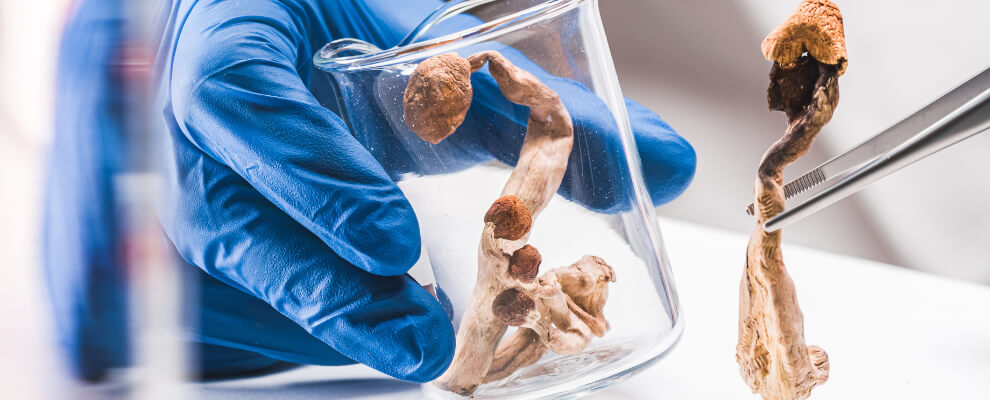
Scientific research on psilocybin effects on cellular aging

A Study That Caught Attention

On July 8, 2025, a study appeared in npj Aging that sparked considerable debate in scientific circles. Researchers at Emory University and Baylor College of Medicine, led by Dr. Louise Hecker and Dr. Kosuke Kato, had investigated something that hadn't received much attention until then: what does psilocybin – the active compound in magic mushrooms – actually do to aging at the cellular level?

The results? Cells lived up to 57% longer. Aging mice had 30% better survival odds. And while the study was immediately picked up by media worldwide, the scientific community was more cautious. Yes, the numbers were impressive. But they also raise questions.

We're now in early 2026, and there's been time to digest these findings. To look at what they do and don't mean. And to examine the methodology critically. Because that's what science is about – enthusiasm combined with healthy skepticism.

What Did They Actually Study?

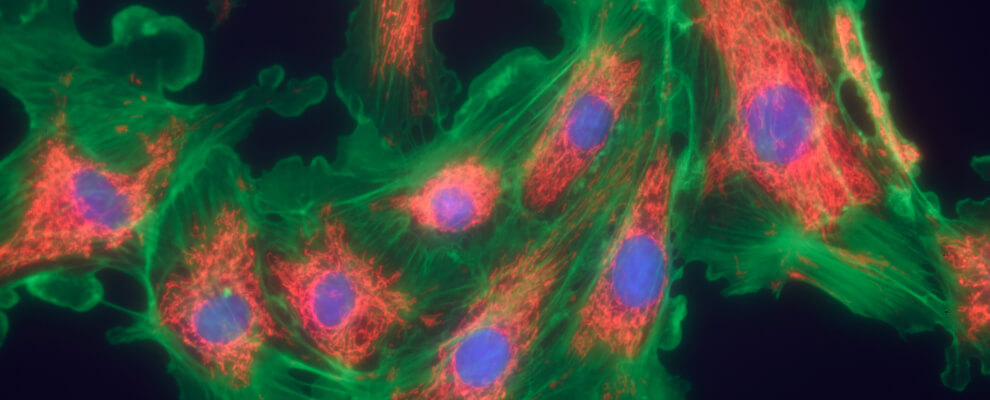
The research team approached it in two phases. First, they looked at human fibroblasts – cells from lungs and skin – in a laboratory setting. They treated these cells with psilocin (the active metabolite of psilocybin) and tracked how long the cells kept dividing before becoming senescent. Senescent means cells stop dividing and enter a kind of resting state, often releasing inflammatory compounds that accelerate the aging process.

Cellular effects of psilocin on human fibroblasts

At a dosage of 10 micromolar psilocin, cells lived 29% longer. At higher dosages, that jumped to 57%. The treated cells showed fewer signs of cellular aging, had better-protected telomeres (the protective caps at the ends of DNA strands), and produced more SIRT1 – a protein that sits at the center of longevity research.

Telomeres and aging: Telomeres are protective caps at the ends of chromosomes that get shorter with each cell division. Once they're too short, a cell can no longer divide. Psilocin-treated cells maintained their telomere length, while untreated cells showed clear shortening.

From Cell to Organism

Cellular studies are one thing, but does it work in living beings? That's why the researchers used female mice that were 19 months old – roughly comparable to humans aged 60-65. The mice received psilocybin once a month: 5 mg/kg the first time, then 15 mg/kg nine more times. Ten months of treatment in total.

The results: after ten months, 80% of the psilocybin group was still alive, compared to 50% of the control group. That's a 60% improvement in survival rate. What's more, the researchers saw visual improvements: better coat quality, fewer gray hairs, even hair regrowth in areas where it had previously disappeared.

The Mechanisms: What's Happening?

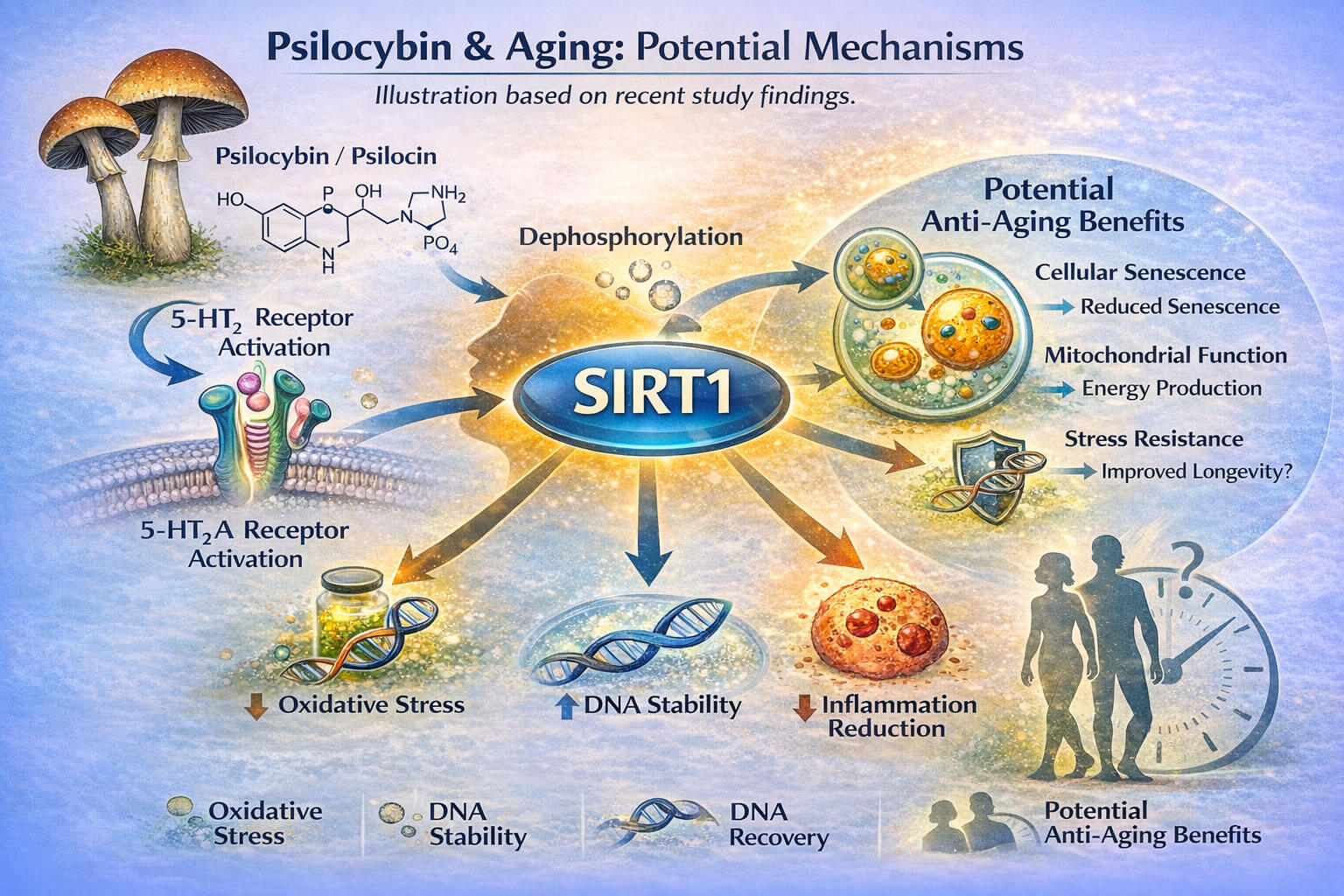
The researchers proposed that psilocybin triggers a cascade of cellular effects through serotonin receptors (specifically 5-HT2A). One of the central players is SIRT1, a protein involved in DNA repair, mitochondrial function, and stress response. SIRT1 activation has already been linked to lifespan extension in various organisms.

Oxidative Stress Reduction

Psilocin increased the production of antioxidant enzymes, which reduced oxidative stress – a major driver of cellular damage and aging. Markers like Nox4 (pro-oxidant) went down, while Nrf2 (antioxidant pathway) went up.

DNA Stability

Treated cells showed increased expression of GADD45a, a gene involved in DNA repair and stress response. This suggests psilocin helps cells repair DNA damage more effectively, contributing to healthier cell division.

SIRT1 pathway and anti-aging mechanisms of psilocybin

October 2025: The Critical View

Not everyone was equally enthusiastic. In October 2025, Dr. Peter Attia – a well-known longevity physician and scientist – published a detailed analysis pointing out methodological weaknesses. His main points? The study used a forced endpoint. As soon as 50% of the control mice had died, they stopped the experiment.

That means we don't know what the true median lifespan of the psilocybin group was. We also don't know whether psilocybin extended maximum lifespan – how old the longest-lived mice got. All we know is that more psilocybin mice made it to the endpoint. That's interesting, but it's not the same as proven lifespan extension.

Attia also pointed to the telomere hypothesis. While the study showed that psilocin protects telomeres, there's actually little evidence that telomere length reliably correlates with lifespan across species. Mice, for example, have much longer telomeres than humans but live only a fraction as long. Telomere length mainly reflects how many times a cell has divided, not necessarily biological age.

Attia: "Psilocybin remains an exciting molecule with therapeutic promise—but not yet a proven player in the longevity space. The question now is whether these early, suggestive findings will hold up under the weight of more careful experiments."

Nuance Matters

That doesn't take away from the fact that the findings are interesting. Because even if the telomere mechanism doesn't hold up, the study did see that more animals survived the experiment. And the cellular effects – reduced inflammation, better SIRT1 activation, lower oxidative stress – are all processes genuinely linked to healthy aging.

The researchers themselves were also cautious in their conclusions. Dr. Kato emphasized in interviews that much more research is needed: "We need to find optimal dosing protocols, understand at what age it's best to start, and especially figure out if there are long-term risks before this is ready for widespread use."

Early 2026: Where Do We Stand Now?

The study has at least created momentum. Multiple research groups have announced follow-up studies. They're looking at male mice (the original study used only females), different dosing protocols, and combinations with other longevity interventions like calorie restriction or certain supplements.

There's also interest from the pharmaceutical sector. Because if the effects hold up, we're not just talking about mushrooms as a recreational substance or even as a therapeutic for depression. We're talking about a compound that influences fundamental aging processes. That has health and economic value, and that attracts investment.

At the same time, big questions remain. The legal status of psilocybin in many countries makes research complicated and expensive. Long-term safety of regular use is unknown. And of course: what works in mice doesn't automatically work in humans. Human longevity studies by definition take decades, so we probably won't get quick answers.

What We Do Know

Psilocybin consistently influences multiple markers associated with healthy aging: anti-inflammatory effects, stress response, mitochondrial function, neuroplasticity. Whether that translates into extra years of life is uncertain, but that it contributes to better health in later years seems plausible.

What We Don't Know Yet

Optimal dosage, frequency, starting age, long-term safety, effects in males, translation to humans, interactions with other interventions, and whether it actually extends maximum lifespan or mainly improves quality.

Practical Consideration

For anyone thinking: should I start using psilocybin for anti-aging? The answer is: probably not, not yet. The data are promising but preliminary. We don't know enough about long-term effects, especially not in the context of regular use over multiple years.

What you can do is stay aware of this development. The longevity field is moving fast, and psychedelics are being assigned a new role beyond their traditional therapeutic use. The Netherlands, with its pragmatic policy around truffles, has an interesting position – there's room for responsible experimentation within legal frameworks.

But as with all longevity interventions: it's not a magic solution. The mice that responded best weren't just those with psilocybin, but probably also those with otherwise optimal living conditions. Exercise, nutrition, sleep, stress – those remain the foundations. Psilocybin might be a potential addition to that, but not a replacement.

Holistic approach to healthy aging with various factors

The Bigger Picture

This study fits into a broader pattern. We're starting to see psychedelics differently. Not just as consciousness-altering substances or even just as medicines for mental health conditions, but as compounds that influence fundamental biological processes in ways that reach further than we thought.

Is psilocybin really the key to longer life? We'll only know in years, maybe decades. But what this study shows at minimum is that the question is worth asking. And that alone is interesting enough to keep following developments.

Sources

 
Lex Johnson is a self-taught herbalist, language freak, musician and one of the writers behind the Next Level blog. His curiosity runs wide — from the differences between Criollo and Trinitario cacao to the latest psilocybin research. That same curiosity shows in the range of his writing. Lex covers everything from ceremonial cacao and kanna to magic mushrooms, salvia divinorum, kambo, party pills, healing herbs and product deep dives. In addition to a journalism foundation certificate, he holds a Bachelor of Fine Arts.
Loading...