Blog navigation

Latest posts

Party Pills Comparison: Happy Caps vs DNX Pills

Twenty party pills in the shop and no idea which to pick? This comparison puts Happy Caps, DNX and the new Party-E...

Read More
Liquid Spore Cultures vs Spore Prints: Which Should You Choose?

Liquid spore cultures and spore prints are the two main ways to start a mushroom cultivation project. This guide...

Read More
Incense Guide: Which Type of Incense Is Right for You?

With over 60 types of incense in our collection, choosing the right one takes a bit of knowledge. This guide compares...

Read More
Kuripe vs Tepi: Which Rapé Applicator Suits You?

Kuripe or tepi? These are the two tools used to administer rapé, and choosing between them changes the experience...

Read More

Raw Cacao Keeps You Younger: What New Research Reveals


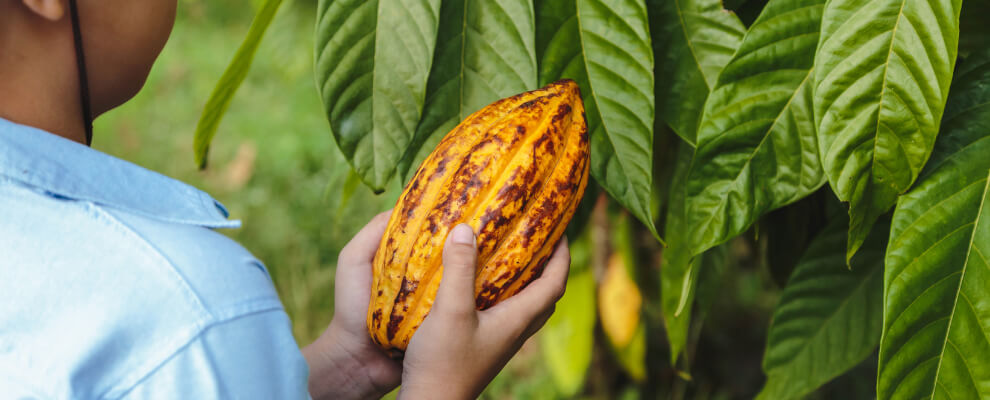
Raw cacao pod

A compound in cacao that has scientists intrigued

Those evenings when you let a piece of dark chocolate melt on your tongue, that quiet moment with a cup of raw cacao – something remarkable might be happening in your body. Recent research from King's College London suggests that a specific compound in cacao connects to how your cells age. We're talking about theobromine, a naturally occurring substance found primarily in cacao beans.

Scientists examined the blood of nearly 1,700 people. What they discovered was surprising: people with higher theobromine levels in their blood showed signs of slower biological aging. Their DNA appeared, well, younger than you'd expect based on their calendar age.

Dr. Ramy Saad, geneticist and lead researcher, didn't just measure age as it appears in your passport. He looked at epigenetic clocks – calculations based on how your DNA changes over the years. And here's where it gets interesting: theobromine seems to slow down this aging process.

What exactly is theobromine?

Theobromine belongs to the alkaloids, a large group of plant compounds. The name comes from Theobroma cacao – literally "food of the gods" in Greek. Cacao naturally contains abundant theobromine, while coffee has relatively little. Interestingly enough, theobromine is caffeine's cousin, but it works differently in your body.

Caffeine gives you a kickstart. Theobromine does something subtler – it lingers longer, works more gently on your nervous system, affects your blood vessels in a completely different way. Normal amounts are perfectly safe for humans. (Dogs can't break it down properly – which is why chocolate is dangerous for them.)

Pure cacao powder and raw cacao paste contain the highest concentration of theobromine. Milk chocolate has far less due to dilution with sugar and milk powder. That explains why the research focuses mainly on pure cacao consumption.

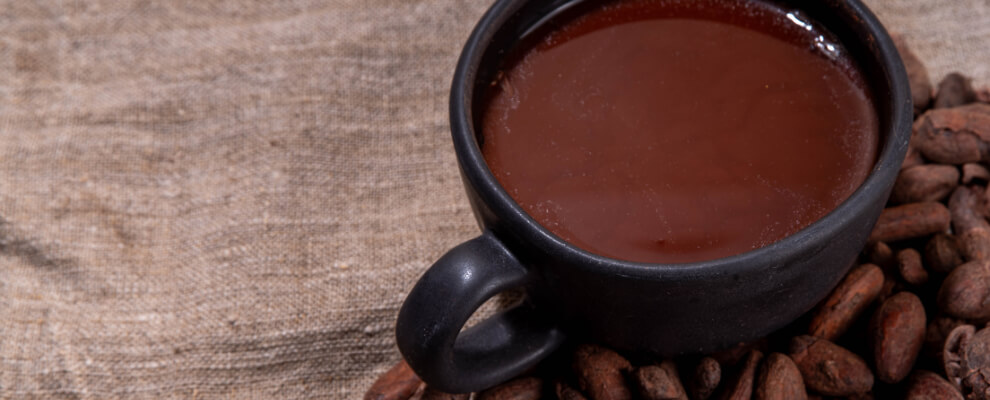
Ceremonial cacao

How researchers made this discovery

The study used two groups: 509 women from the United Kingdom and 1,160 people from Germany. All healthy adults. The researchers measured theobromine in their blood using metabolomics – a technique that maps hundreds of small molecules simultaneously.

They then compared those values with DNA methylation patterns. Methylation is a process where small molecules attach to your DNA and influence gene activity. These patterns change predictably over the years, allowing you to calculate a kind of biological age.

Two specific markers stood out. GrimAge – a clock that predicts how many years you have left to live – showed that higher theobromine correlated with a younger biological age. DNAmTL, a measure of telomere length through DNA methylation, also showed a positive correlation.

Telomeres and your biological age

Telomeres are protective caps at the ends of your chromosomes. Each time your cells divide, they get shorter. When they become too short, cells stop dividing or die. Shorter telomeres are associated with higher risk of cardiovascular disease and cancer.

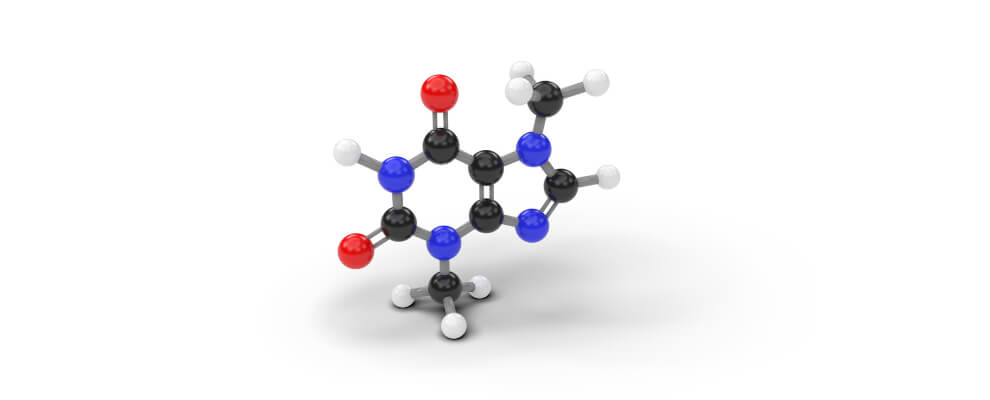
Theobromine molecule

In the research, people with more theobromine in their blood had longer telomeres. Or actually: their DNAmTL score suggested that. The researchers see it as an indication that theobromine might offer protection to your genetic material.

Interestingly, the effects were stronger in people who'd previously smoked. Nicotine stimulates theobromine breakdown by activating enzymes. That could mean ex-smokers benefit even more from theobromine because their system processes it differently.

Not just theobromine

Pure cacao also contains polyphenols – plant compounds that help your blood vessels and reduce inflammation. Earlier studies already showed that cacao flavanols can lower blood pressure and improve vascular function.

The bigger picture

Theobromine probably doesn't work alone. It potentially amplifies the effects of other cacao components. Together they form a complex whole that influences your body in various ways.

What this means for you

Should you eat chocolate every day now? Not necessarily. The research looks at people who already consume cacao and measures what's in their blood. It doesn't definitively prove that extra chocolate will make you live longer. That requires randomized studies where people receive theobromine supplements and researchers track their health over extended periods. But the initial findings from current research are, at minimum, promising.

What we know for certain: dark chocolate with high cacao content contains substantial amounts of theobromine. A piece of dark chocolate with 70% cacao or higher gives you more of this compound than milk chocolate. And raw or minimally processed cacao, cacao extract, or pure cacao powder naturally contains even more theobromine.

Further research and open questions

The scientists emphasize this is observational research. They see a pattern but can't yet explain how theobromine works precisely. Does it directly influence DNA methylation? Or does it work through other routes, like improving your blood vessels or reducing oxidative stress?

Research source: This study was published in the scientific journal Aging (December 2024). You can read the full article at aging-us.com/article/206344.

Practical perspective on cacao consumption

If you already enjoy dark chocolate, you don't need to change your habits. Enjoy it as you always have. Choose chocolate with at least 70% cacao when possible – that contains more theobromine than the sweeter varieties.

Unsweetened cacao powder in smoothies or hot drinks gives you a good dose without added sugars. Ceremonial cacao, as used in traditional rituals, consists of 100% pure cacao and contains the highest concentration of all natural compounds, including theobromine.

Other sources of theobromine are scarce. Coffee contains traces, but nowhere near as much as cacao. Tea has similar compounds but in different proportions. Cacao remains the richest natural source.

What makes this research special?

This is one of the first large studies to specifically examine theobromine in relation to biological aging in humans. Earlier research often focused on caffeine or the general effects of cacao consumption. Through the molecular approach with metabolomics, scientists get a much more precise picture.

Replicating the results in two independent groups strengthens it. The British group consisted only of women, the German group was mixed. That both showed the same trend also suggests the effect isn't specifically tied to one gender or population.

Professor Jordana Bell, one of the lead researchers, puts it this way: "We're finding connections between a key component of dark chocolate and staying younger longer." She also emphasizes that more research is needed to understand what's behind this correlation.

The broader context of nutrition and aging

This research fits into a larger field where scientists examine how nutrition influences your aging process. Other studies have looked at calorie restriction, vitamin intake, and Mediterranean dietary patterns. All find indications that what you eat impacts how your cells age.

Epigenetic clocks are becoming increasingly important in this research. They provide a more objective measure than just counting your age. Two 50-year-olds can differ by years biologically. One appears 45, the other 55 – and you can see that in their DNA methylation patterns.

Theobromine now joins the list of nutrients that might protect against aging. It stands alongside compounds like resveratrol from Japanese knotweed or red wine and curcumin from turmeric. All interesting puzzle pieces that could potentially contribute to healthy aging.

Final thoughts

The idea that pure cacao or a piece of dark chocolate might help with healthy aging sounds appealing. This research gives us a glimpse of what's possible, but no guarantees. Healthy aging depends on many factors: exercise, sleep, stress, social connections, and yes, nutrition too.

What's fascinating: a compound people have been consuming for thousands of years – the Maya already drank cacao – now appears connected to processes in our DNA. Maybe they already knew cacao was more than just a treat.

Coming years will show whether we can use theobromine for healthy aging. Until then: enjoy your cacao mindfully, choose pure varieties, and see it as part of a varied diet. And who knows, that cup of raw cacao or piece of dark chocolate might indeed do more than you thought.

 
Lex Johnson is a self-taught herbalist, language freak, musician and one of the writers behind the Next Level blog. His curiosity runs wide — from the differences between Criollo and Trinitario cacao to the latest psilocybin research. That same curiosity shows in the range of his writing. Lex covers everything from ceremonial cacao and kanna to magic mushrooms, salvia divinorum, kambo, party pills, healing herbs and product deep dives. In addition to a journalism foundation certificate, he holds a Bachelor of Fine Arts.
Loading...