Blog navigation

Latest posts

Party Pills Comparison: Happy Caps vs DNX Pills

Twenty party pills in the shop and no idea which to pick? This comparison puts Happy Caps, DNX and the new Party-E...

Read More
Liquid Spore Cultures vs Spore Prints: Which Should You Choose?

Liquid spore cultures and spore prints are the two main ways to start a mushroom cultivation project. This guide...

Read More
Incense Guide: Which Type of Incense Is Right for You?

With over 60 types of incense in our collection, choosing the right one takes a bit of knowledge. This guide compares...

Read More
Kuripe vs Tepi: Which Rapé Applicator Suits You?

Kuripe or tepi? These are the two tools used to administer rapé, and choosing between them changes the experience...

Read More

From Mapacho To Medicina: How Rapé Is Made


How Is Rapé Actually Made?

Most people who use rapé know it comes from the Amazon. That indigenous tribes make it. That it's been part of ceremonial practices for centuries. But how the creation process actually looks remains a mystery for many.

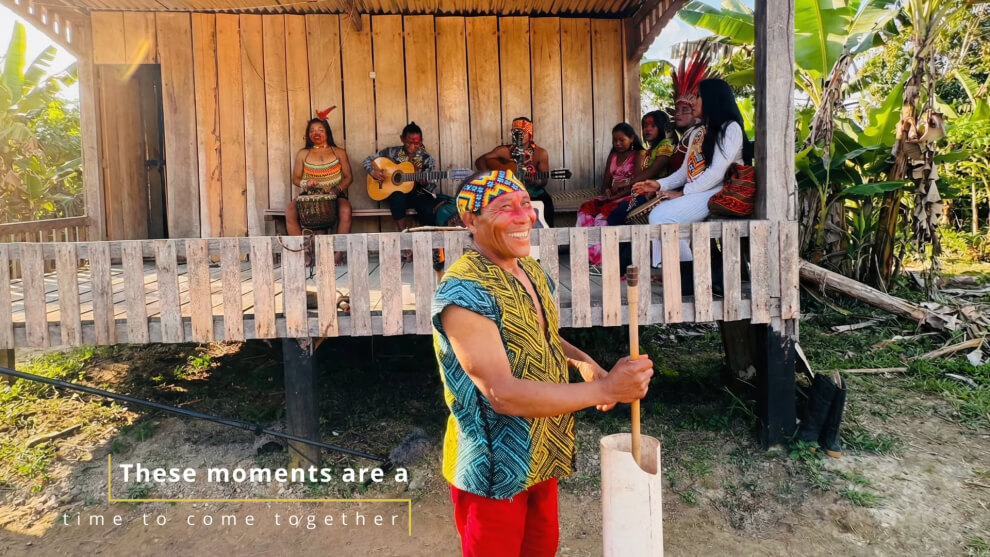
The video above shows the Huni Kuin tribe, deep in the heart of the Amazon, making rapé the way their ancestors have for generations: with traditional techniques, patience, and respect for the plants they work with.

In this post, I'll walk you through the process you see in the video—from the sacred plants to the final medicina.

Step 1: Preparing the Mapacho

Everything starts with mapacho (Nicotiana rustica), the sacred plant that forms the base of every rapé. This isn't just any plant—mapacho has been used by Amazon tribes for ceremonial purposes for centuries and carries a powerful, grounding energy.

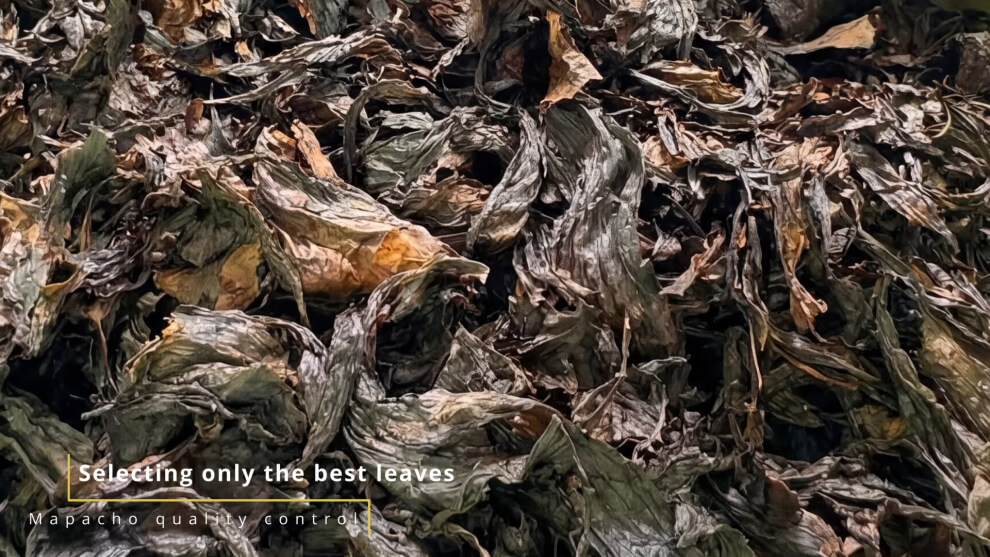
Dried mapacho leaves for rapé preparation

What you see in the video is the beginning of the process: the mapacho is carefully dried. This often happens in the sun or sometimes over an open fire, depending on the tribe's method and weather conditions.

The drying matters—mapacho that's too moist can't be processed properly and loses quality. Too dry and the plant loses important properties. The tribe members know exactly when the moment is right. That's knowledge passed down through generations.

Why mapacho? This Amazon plant contains specific alkaloids that provide much of rapé's effects: focus, grounding, and ceremonial power.

Step 2: The Pounding

This is where the real work begins. The dried mapacho needs to be transformed into an ultra-fine powder—and it's done entirely by hand.

In the video, you'll see how the Huni Kuin pound the mapacho in traditional mortars. This isn't a matter of a few minutes. A single batch of rapé can take hours of pounding, with the plant becoming increasingly fine until it reaches the perfect consistency.

Mapacho pounding for Huni Kuin Rapeh

Why pound instead of using faster methods? There are several reasons. First, traditional pounding preserves the integrity of the plant fibers in a way that industrial methods simply can't match. It creates a specific texture that's essential for how the rapé works and how quickly your body absorbs it.

But there's something else at play here. For the Huni Kuin and other Amazon tribes, making rapé isn't production—it's ceremony. The entire process carries intention. Every hour invested strengthens the medicina. Traditional wisdom says: how you make something determines what it does.

The Result of Patience

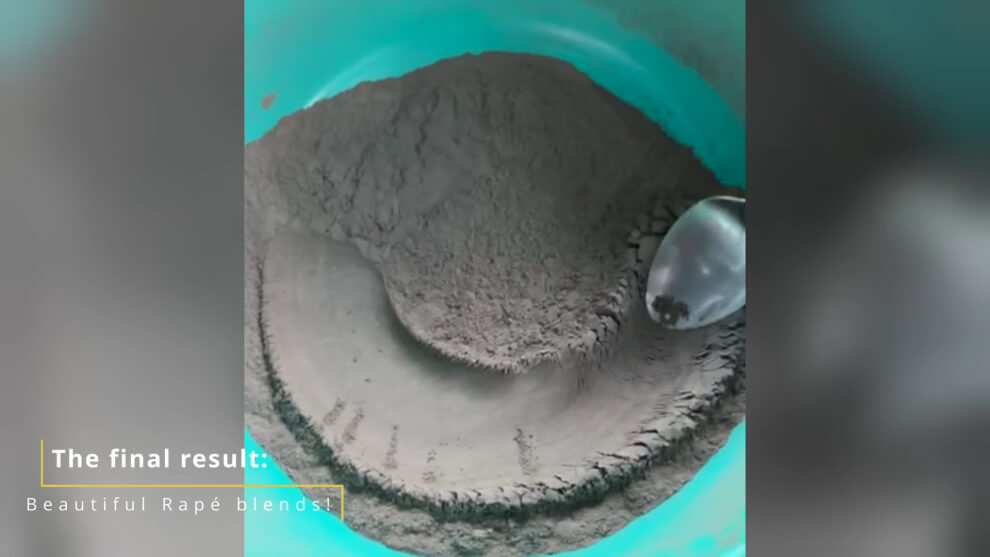
After hours of pounding, you have a powder so fine it feels almost surreal between your fingers. Soft, even, without coarse particles. This is the base to which other ingredients are added. And it's this foundation that makes the difference between rapé from the Huni Kuin and lesser quality you might find elsewhere.

Step 3: Adding the Ash

Rapé never consists of mapacho alone. The second essential element is ash from specific plants, each carrying its own properties and meaning within the tribe.

Plant ashes for rapé blends

Every rapé blend is unique because of which plants are chosen for the ash. The Huni Kuin often use tsunu, cumaru, or cacao. The Yawanawa have their own traditional plants. The Nukini use others, and the same goes for the Katukina, Shanenawa, and Apurinã. This variation is what gives each blend its own character and effect.

Making the ash is a process in itself. The chosen plants are ceremonially burned—not carelessly, but with respect and intention. The remaining ash is sifted to remove coarse particles. Only the finest ash goes into the rapé.

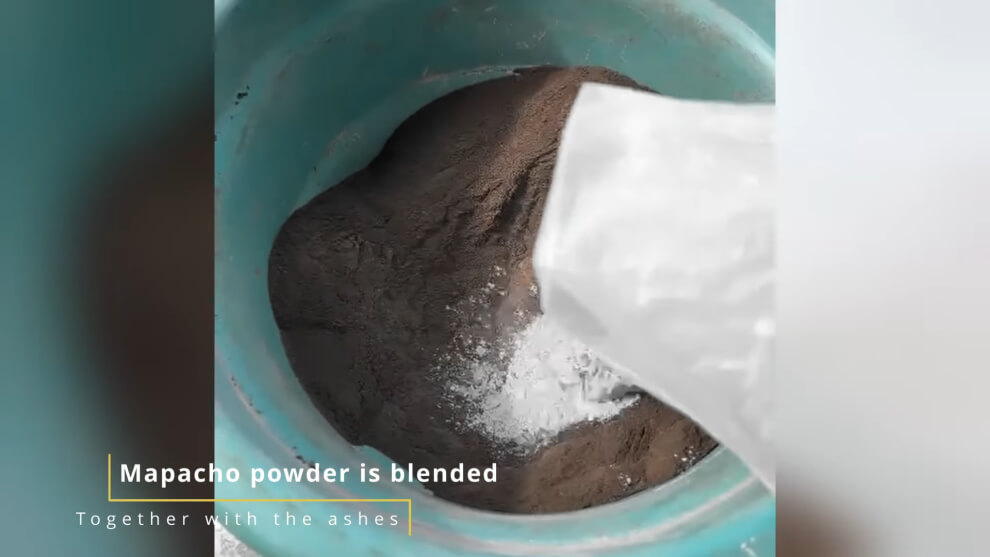
Then the ash is combined with the finely pounded mapacho powder. The ratio matters—too much ash and the rapé becomes too sharp, too little and you miss the full ceremonial effect. The tribe members know exactly how much of each ingredient is needed through their experience and intuition.

Why plant ash? In Amazon tradition, ash carries cleansing and transformative power. It connects earth (the plant) with fire (transformation) and transfers the plant's essence to the rapé in a concentrated way.

Step 4: The Sifting

The mix of pounded mapacho and plant ash is almost ready, but not quite. The final crucial step is sifting.

In the video, you'll see how the rapé is passed through fine sieves. This removes any remaining coarse particles and creates the homogeneous, velvety texture that authentic rapé is known for. Some tribes sift multiple times, with increasingly fine sieves, until the result is perfect.

This might seem like a detail, but it makes an enormous difference in the experience. Properly sifted rapé moves smoothly, doesn't irritate the nasal passages, and is absorbed effectively.

After sifting, the rapé often gets one final check. The color needs to be right and the scent should be rich and earthy, unique to that specific blend. And the consistency must feel perfect.

Why This Method Has Stood the Test of Time

Ceremonial rapé from the Huni Kuin tribe

With rapé, how it's made and with what intention matters deeply. This sacred shamanic medicina won't be rushed. The ceremonial dimension of pounding, mixing, and sifting is important. For the Huni Kuin and other tribes, this isn't a production process—it's a sacred act that helps determine the rapé's power.

And you feel it. Users of traditionally made rapé recognize the difference. The effect is deeper, purer, fully aligned with what rapé should be. It's hard to put into words exactly, but it's felt.

From the Amazon to Your Ceremony

At Next Level, we exclusively work with rapé made this way. No middlemen trying to "improve" or "streamline" the process. We buy directly from the tribes and pay fair prices. We know the creators, where the rapé comes from, and which plants are used for the ash.

Fair trade isn't a marketing term for us—it's how we operate. The tribes receive fair prices for their work, without exploitation, without pressure to produce faster or cheaper. They set the pace. They determine the quality. We respect their process and bring the result to you.

Recognizing Authentic Rapé

Texture:

Velvety soft and homogeneous, without coarse particles that irritate.

Scent:

Rich and earthy, with natural variation per blend. Real rapé smells like jungle, like plant, like ceremony.

Color:

Natural shades from light brown to darker tones. No artificial colors, no chemical additives.

Effect:

Grounding, focused, ceremonial. Traditional rapé connects you with something greater than yourself.

Origin:

From known tribes with names and stories. With us, you always know who made your rapé.

Every Time You Use Rapé

Next time you have a rapé ceremony, you'll know how it was made. That fine powder in your kuripe or tepi is the result of hours of work.

It's medicina made with intention, with respect, with knowledge that's centuries old. It's a sacred tool and a connection between you and the Amazon, between your ceremonies and the tribes' traditions.

That's why authenticity matters. Because what you use literally carries what was put into it. Every step of the process—from mapacho to medicina—shapes what you ultimately experience.

Discover our Huni Kuin collection or explore our full rapé selection. All traditionally made, all with respect for the ancient craft. From the jungle to your ceremony—exactly as it should be.

 
Posted in: All posts, Shamanism, Rapé
Lex Johnson is a self-taught herbalist, language freak, musician and one of the writers behind the Next Level blog. His curiosity runs wide — from the differences between Criollo and Trinitario cacao to the latest psilocybin research. That same curiosity shows in the range of his writing. Lex covers everything from ceremonial cacao and kanna to magic mushrooms, salvia divinorum, kambo, party pills, healing herbs and product deep dives. In addition to a journalism foundation certificate, he holds a Bachelor of Fine Arts.
Loading...