Understanding the origins of Kambo, a sacred and powerful tool made and used by the Amazonian Matsés Tribe.

Agua Sacral - Sacred Cleansing Water | Ritual Cleansing Water
Colognes
€16.49



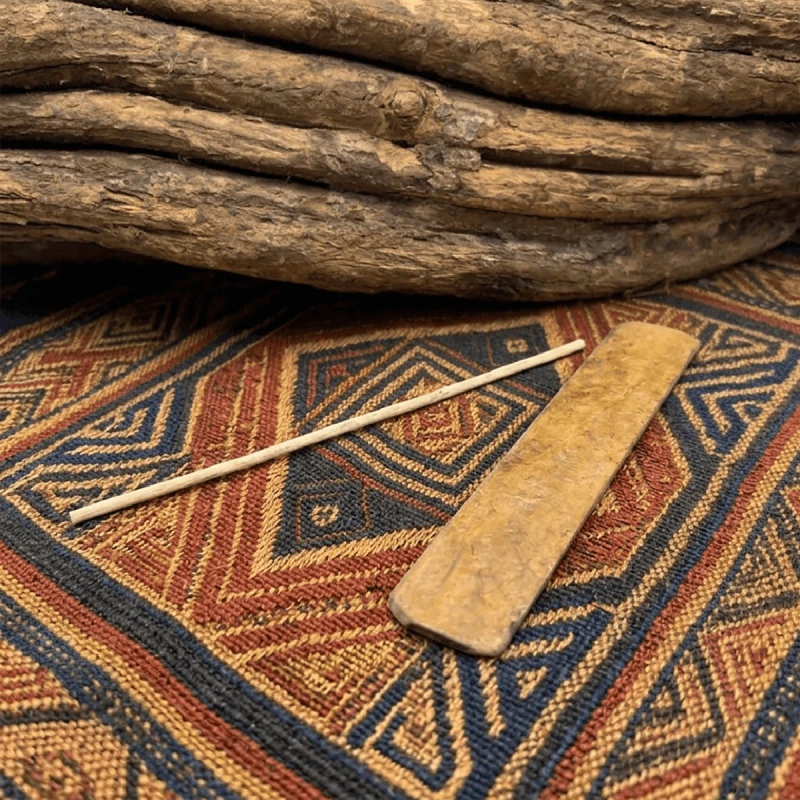
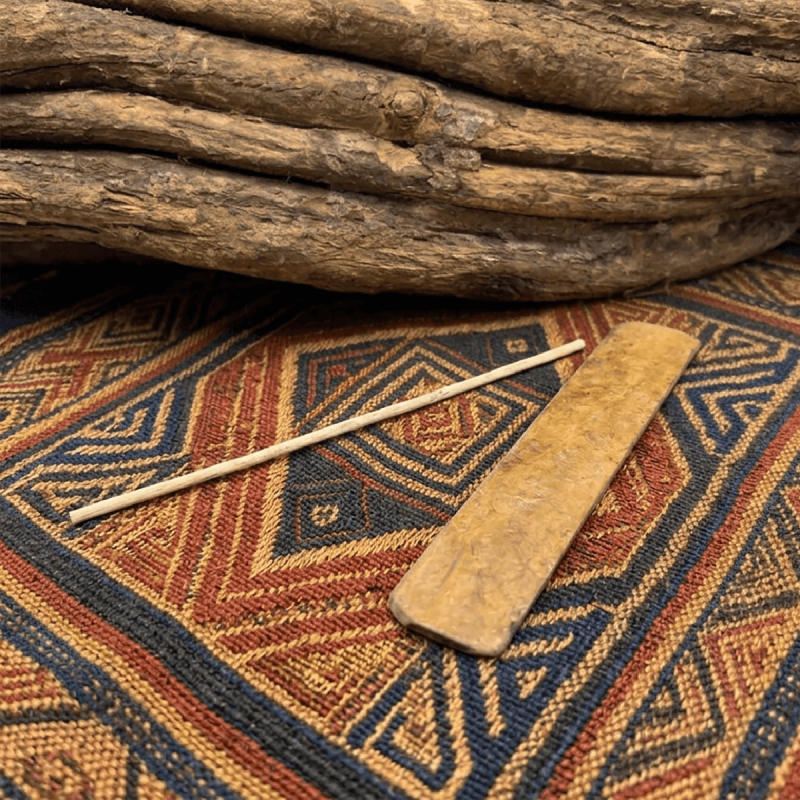
Kambo stick from the Ticuna tribe of the Oje Chico community on the Yavari River in Loreto, Peru. Each stick carries the secretion of 3 to 5 large Phyllomedusa bicolor frogs – enough for 60 to 100 dots. Two burn sticks included. Authentically prepared by the Ticuna community following their own tradition.
This Kambo stick comes from the Ticuna tribe of the Oje Chico community, located at the base of the Yavari River in Loreto, Peru – not far from the Brazilian border. The community takes its name from a useful tree of the Moraceae family that grows in the area. The Ticuna adopted the Kambo tradition from their neighbors, the Matsés, and are experienced in both collection and application.
The Ticuna community prepares every stick themselves, from collection to drying. Each stick carries the secretion of 3 to 5 large Phyllomedusa bicolor frogs, applied as a thick layer on one side. The sticks measure 14 by 2 cm. Two burn sticks are included.
Key Features: Kambo from the Ticuna tribe in Oje Chico, Loreto, Peru. Secretion from 3–5 large Phyllomedusa bicolor frogs per stick. Thick layer, enough for 60–100 dots. Stick size: 14 × 2 cm. Two burn sticks included. Authentically prepared by the Ticuna community. Ethically and sustainably harvested.
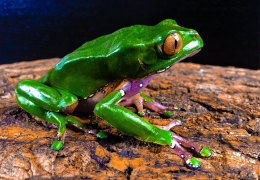
The community goes into the forest just before sunrise to look for Phyllomedusa bicolor. The Ticuna know their calls well. Once found, they pick up a few frogs and hold them by the feet. They gently scratch the back – more like tickling than scraping. Some frogs get mildly stressed while others stay remarkably relaxed.
All community members are involved in the process, though it’s usually the elders who collect the secretion. Young apprentices also participate as part of their training. After collection, the frogs are returned unharmed to their habitat.
The community that harvests the Phyllomedusa bicolor holds deep reverence for the animal. They believe that angering the spirit of the frog can bring serious consequences. We share this belief. The frog is treated with the utmost respect. That attitude isn’t a marketing story – it’s a conviction that shapes the entire collection process.
Note: This is an ethnobotanical product sold exclusively for legitimate research, academic analysis, cultural preservation, and spiritual study. It is not intended for human consumption or any medical or recreational use.
The Ticuna tribe lives as neighbors to the Matsés and adopted the Kambo tradition from them. The main difference is in the collection method: the Ticuna gently scratch the frog’s back (more tickling than scraping), while the Matsés attach soft cords to the legs. Both methods are ethical and leave the frog unharmed. The Ticuna sticks measure 14 cm long and 2 cm wide with a thick secretion layer on one side.
Each stick has a thick layer of secretion on one side, sourced from 3 to 5 large frogs. That’s enough for 60 to 100 dots, depending on the size of the dots applied. Two burn sticks are included with every order.
Every stick is prepared by the Ticuna community themselves – they collect the secretion, dry the material and roll the sticks following their own tradition. The Ticuna handle the Phyllomedusa bicolor with great care; the animals are returned unharmed to their habitat after collection. Read more about ethical Kambo practices in our article on the Kambo tradition in the Amazon.
Store the stick in a cool, dry place away from direct sunlight. The dried secretion is stable and maintains its properties for months when stored correctly. Avoid high humidity and extreme temperature swings. Keep it in the original packaging or a sealed container.
This is an ethnobotanical product sold for legitimate research, academic analysis, cultural preservation and spiritual study. It’s not intended for human consumption or any medical or recreational use. Those interested in the ceremonial context may consider contacting the International Association of Kambo Practitioners (IAKP), where certified practitioners work within a professional code of practice.
Understanding the origins of Kambo, a sacred and powerful tool made and used by the Amazonian Matsés Tribe.
Have you ever wondered where your rapé comes from, who makes it and what the story behind it is? Each tribe that...
Sananga Eyedrops; now also available in 5ml. Traditional Tribes from the Amazon use these powerful eye drops to see...