Since July 2025 the US Food and Drug Administration has been running an unusually targeted enforcement campaign. The target is not kratom itself, but one specific compound found inside it: 7-hydroxymitragynine, or 7-OH for short. At the same time advocacy groups like the American Kratom Association are pushing for 7-OH to be banned while traditional kratom leaf stays legal.
Watched from Europe this looks contradictory. How can one component of a plant be outlawed while the rest remains on shelves? And what does any of it mean for the Dutch situation, where kratom sits under the Warenwet (Commodities Act) and the EU Novel Food regulation?
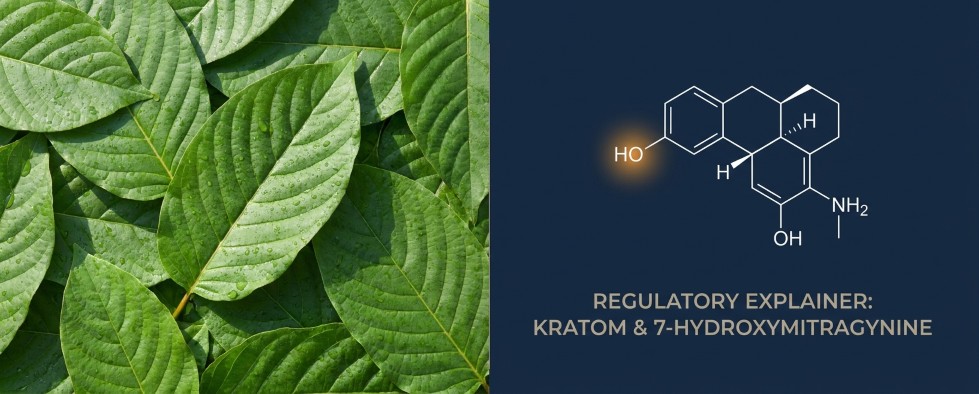
This guide lays out the facts: what 7-OH actually is, how it differs from natural kratom leaf, what US authorities have done since 2025, and what the regulatory shift could mean for Europe.
The difference in one sentence
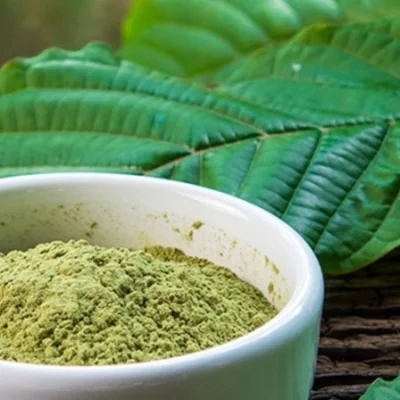
Natural kratom leaf contains more than forty alkaloids. Mitragynine is the dominant component, typically 60 to 70 percent of total alkaloid content. 7-hydroxymitragynine occurs in fresh leaf at concentrations below 0.02 percent.
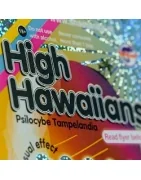
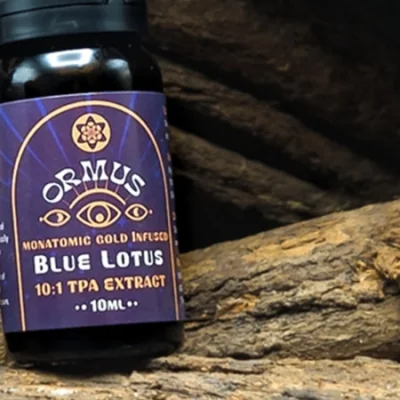
Concentrated 7-OH products such as tablets, shots and gummies that started appearing in US gas stations and convenience stores around 2024, contain 50 to over 4,000 times more 7-OH than ever occurs in natural leaf. In one Texas case lab tests measured 86 to 96 percent 7-OH content.
In other words: natural leaf and concentrated 7-OH products are pharmacologically distinct, even though they share a botanical origin.
| Aspect |
Natural kratom leaf |
Concentrated 7-OH products |
| Main alkaloid |
Mitragynine (60-70%) |
7-hydroxymitragynine |
| 7-OH content |
Less than 0.02% |
Up to 96% measured |
| Production method |
Drying and milling |
Semi-synthetic via hydroxylation |
| Receptor binding |
Partial μ-opioid, weak |
Partial μ-opioid, 14-22× stronger than morphine |
| FDA position (2026) |
Not a target of enforcement |
Recommended for Schedule I |
What is 7-hydroxymitragynine?
7-hydroxymitragynine is a naturally occurring alkaloid found in fresh Mitragyna speciosa leaf. It is structurally related to mitragynine, the dominant kratom alkaloid, but with one key difference: a hydroxyl group at the 7-position of the molecule.
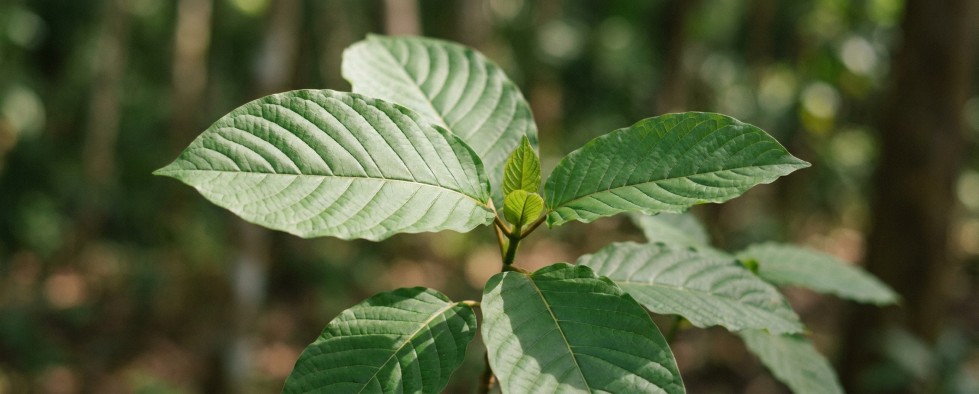
That one structural difference has large pharmacological consequences. Research from the CU Anschutz Medical Campus shows that 7-OH binds to the μ-opioid receptor with substantially higher affinity than mitragynine. The EC50 value for mitragynine sits around 339 nM; for 7-OH around 34.5 nM, roughly ten times more potent. In binding affinity 7-OH exceeds morphine by a factor of 14 to 22 (CU Anschutz, 2025).
In natural leaf the very low concentration largely neutralises this potency difference. A typical dried leaf contains less than 0.02 percent 7-OH; the overwhelming majority of alkaloid content is mitragynine itself. It is only when someone isolates 7-OH or enriches it semi-synthetically that the compound takes on the pharmacological profile regulators are now concerned about.
A 2025 review in Pharmaceutical Biology (Smith et al., PMC12671409) describes this as the evolution "from a natural remedy into a public-health threat", not because of the plant, but because of what is done with it.
How is concentrated 7-OH produced?
In practice concentrated 7-OH almost always comes from a semi-synthetic process rather than directly from leaf. The standard production method has three steps:
- Extraction of mitragynine from kratom leaf with organic solvents or acid-base separation. The crude extract is purified to nearly pure mitragynine powder.
- Chemical conversion of mitragynine to 7-OH via hydroxylation at the 7-position. This is typically done with oxidising reagents under controlled laboratory conditions.
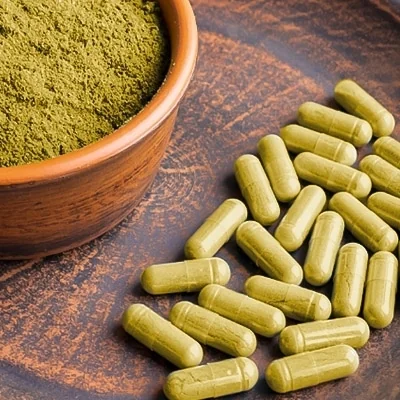
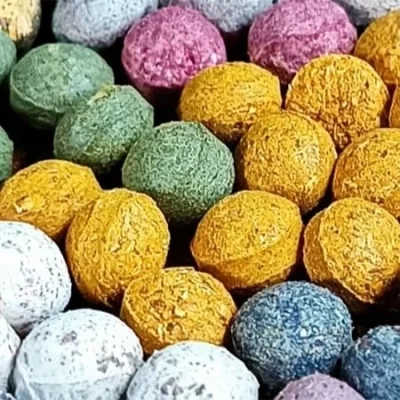
- Formulation into tablets, capsules, shots or gummies, often flavoured and coloured so the product resembles candy or an energy drink.
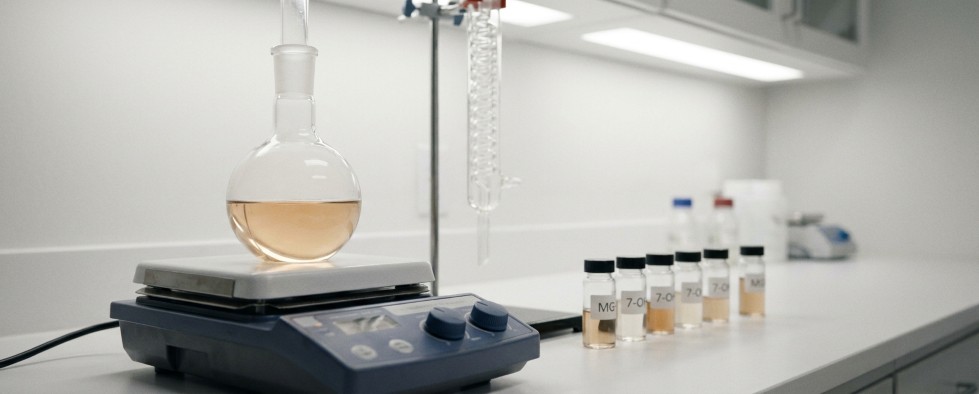
This semi-synthetic character is at the heart of the US regulatory debate. In a lawsuit against the Texas retailer Smokey's Paradise (February 2026) lab tests showed products containing 86 to 96 percent 7-OH, a concentration only achievable through this kind of process. Texas Attorney General Ken Paxton argued that such products were "misleadingly sold as kratom" while being pharmacologically a different substance entirely (TX AG, 2026).
A publication in Addiction (Smith et al., 2025, DOI: 10.1111/add.16728) explicitly classifies this product category as "semi-synthetic" and argues for regulation that treats it separately from natural leaf.
Beyond 7-OH, US enforcement has also surfaced products containing mitragynine pseudoindoxyl, a related semi-synthetic compound. The UNODC bundled both substances in its August 2025 international alert (UNODC, 2025).
The FDA action of 29 July 2025
On 29 July 2025 US Health Secretary Robert F. Kennedy Jr. and FDA Commissioner Martin Makary announced in a joint press conference that the FDA would recommend the DEA place 7-OH on Schedule I, the strictest classification under the Controlled Substances Act, alongside heroin and LSD.

The FDA simultaneously issued warning letters to seven companies marketing 7-OH-containing products as supplements. Crucially, in the same announcement Kennedy and Makary stated that FDA enforcement is "not focused on natural kratom leaf products" (FDA, 2025). This was the first explicit federal articulation of the dividing line between leaf and concentrate.
The American Kratom Association (AKA) responded the same day with a statement welcoming the announcement. According to the organisation a 7-OH ban would "protect the legitimate kratom market from products that bring the plant into disrepute".
For US consumers and retailers this moment marked a shift. Before July 2025 US regulators usually treated kratom as a single category. Since July 2025 they have increasingly distinguished two clearly different product types: natural leaf versus concentrated products, particularly 7-OH.
Timeline: July 2025 to May 2026
| Date |
Event |
| 29 July 2025 |
FDA + HHS announce Schedule I recommendation for 7-OH; seven warning letters issued |
| 1 August 2025 |
Louisiana kratom ban takes effect |
| August 2025 |
Florida issues emergency rule placing 7-OH concentrates on Schedule I in FL |
| 24 October 2025 |
California Department of Public Health declares kratom and 7-OH products illegal in CA |
| 2 December 2025 |
FDA + DOJ + US Marshals seize approximately 73,000 7-OH units in Missouri (around 1 million dollars) |
| January 2026 |
CDPH begins large-scale California seizures (over 5 million dollars in product removed) |
| 9 February 2026 |
Texas AG sues Smokey's Paradise. Lab tests: 86 to 96% 7-OH (legal limit 2%) |
| 3 March 2026 |
Newsom announces 95% retailer compliance in CA; 3,308 illicit products removed |
| March 2026 |
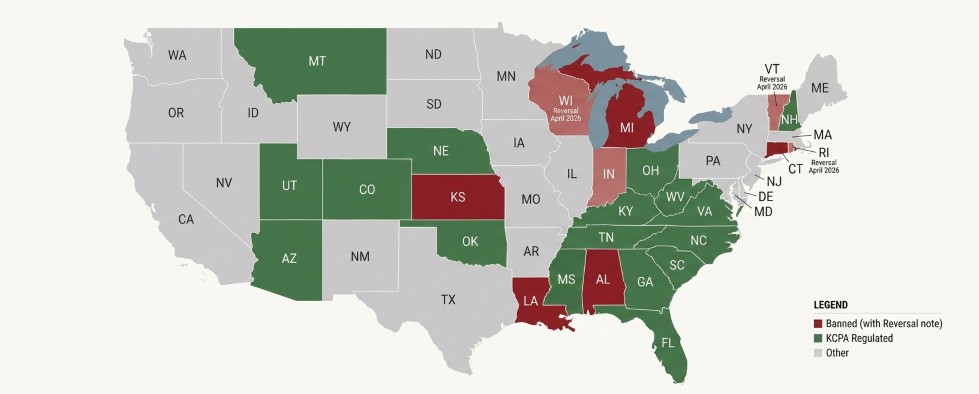
Bans take effect in Connecticut and Michigan; Kansas signs ban (effective 1 July 2026) |
| 27 March 2026 |
Rep. Rob Bresnahan urges DEA emergency scheduling of 7-OH |
| 1 April 2026 |
Rhode Island reverses kratom ban. First US state to do so; adopts KCPA-style regulation plus 7-OH ban |
| April 2026 |
Senators led by Pete Ricketts urge FDA to federally schedule kratom itself |
The Rhode Island reversal in April 2026 is notable. It is the first time a US state has rolled back an existing kratom ban. The chosen approach, regulating natural leaf under a 21-plus age limit and purity standards while imposing a hard ban on 7-OH concentrates, may signal a turning point in the broader regulatory mood.
The industry split: AKA versus 7-HOPE
Behind the regulatory movement sits an industry that has publicly split into two camps.
On one side: the American Kratom Association (AKA), the Global Kratom Coalition (GKC), and the American Herbal Products Association (AHPA). This bloc represents most of the traditional kratom industry and is actively lobbying for:
- Federal and state laws based on the Kratom Consumer Protection Act (KCPA), keeping kratom leaf legal under age limits and purity standards
- A hard ban on concentrated 7-OH products
- Tighter enforcement to protect consumers from products mis-sold as "kratom"
On the other side: the 7-HOPE Alliance and HART (Hydroxymitragynine Advocacy & Regulatory Team), representing 7-OH product brands. Their position: 7-OH is not a synthetic drug but "a natural technological evolution of the kratom alkaloid profile". The 7-HOPE Alliance has run a PR campaign under the slogan We are all kratom, aimed at preventing regulators from treating leaf and concentrate as separate categories.
The stakes are high. If the FDA and DEA hold the line between leaf and concentrate the natural kratom market in the US can continue to exist. If regulators instead bundle both categories under a single ban, as several US senators argued for in March and April 2026, that would mean the end of legal kratom sales in the United States.
For European context this matters. From a Dutch viewpoint it is an American political conflict, but the outcome will partly shape how European regulators (including EFSA) approach 7-OH in the future.
What does this mean for Europe?
In the Netherlands and the rest of the EU the regulatory situation is wholly different from the US. Kratom as a plant is not listed under the Dutch Opiumwet, but it does fall under the EU Novel Food Regulation (2015/2283): because there is no demonstrated history of substantial human consumption in Europe before May 1997, kratom cannot be sold as a food or food supplement.
7-OH itself has not yet been separately regulated in the EU. Concentrated 7-OH products of the kind that surfaced in the US are not generally available as consumer products here. If they did appear they would likely fall under two existing frameworks: the Novel Food Regulation (processed extracts of a Novel Food automatically follow the same rules) and possibly the Medicines Act, depending on how product potency is classified.
In the Netherlands the Trade and Industry Appeals Tribunal (CBb) delivered a ruling on 24 June 2025 (ECLI:NL:CBB:2025:340) that raises the regulatory bar: the court upheld the NVWA's right to detain a 1,100-kilo kratom shipment because its intended use was human consumption. The practical consequence: a Novel Food classification cannot be bypassed by labelling products as incense, dye or decorative material. What matters is the "objective expectation of human consumption". The ruling strengthens NVWA's hand for future enforcement and would also apply if concentrated 7-OH products ever reached the European market.
The UNODC published an international alert in August 2025 about "emerging potent kratom-related products containing 7-hydroxymitragynine and/or mitragynine pseudoindoxyl". That signals the 7-OH discussion is moving toward EU regulators, even if no concrete EU action has been announced.
Important notice: Kratom is not approved as a Novel Food in the Netherlands and is not sold for consumption. The content of this article is for informational and regulatory purposes only.
More background on kratom
For the complete botanical and quality background (colours, origin, alkaloid profile, drying processes) see our complete kratom guide, our earlier analysis of quality issues in the kratom industry, and the background to our drying facility in Indonesia.
Why Next Level Smart?
- More than 10 years of experience in ethnobotanical products and regulatory communication
- Our own drying facility in Putussibau (Indonesia). Direct supply-chain control from leaf to finished product
- Lab-tested alkaloid profiles per batch. Transparent quality control on every shipment
- Clear regulatory communication. We track Novel Food, NVWA and EU developments closely
Frequently asked questions about 7-OH and kratom
What is 7-OH?
7-OH is shorthand for 7-hydroxymitragynine, an alkaloid that occurs naturally in fresh kratom leaf, but at very low concentrations (typically below 0.02 percent). Structurally it is a hydroxyl derivative of mitragynine, and it binds substantially more strongly to the μ-opioid receptor.
Does kratom leaf contain 7-OH?
Yes, but only in tiny amounts. In freshly dried leaf 7-OH typically sits below 0.02 percent of total alkaloid content. Mitragynine accounts for the overwhelming majority (60 to 70 percent). The US regulatory concern is not about this natural presence, it is about isolated or semi-synthetically enriched products.
What is "gas station heroin"?
This is a nickname US media began using in 2025 for 7-OH products available in US gas stations and convenience stores. The phrase points to the combination of mass retail availability, high opioid-receptor activity, and the absence of pharmaceutical control. Industry advocates dispute the framing, but the label has become widespread in coverage.
Is 7-OH semi-synthetic?
The concentrated 7-OH targeted by US regulators is almost always produced semi-synthetically: mitragynine is first extracted from kratom leaf and then chemically converted to 7-OH via hydroxylation. Academic literature (Smith et al., Addiction 2025) explicitly classifies this category as semi-synthetic.
Will 7-OH be banned in Europe?
There is currently no EU-specific regulation addressing 7-OH as a separate substance. In the Netherlands 7-OH automatically falls under the Novel Food Regulation, because kratom extracts follow the same rules as natural leaf. The UNODC issued an international alert in August 2025 about potent kratom-related products, which makes European regulatory discussion more likely going forward.
What does the science say about 7-OH?
Recent publications in Addiction (Smith et al. 2025) and Pharmaceutical Biology (2025) classify concentrated 7-OH products as pharmacologically distinct from natural leaf. The difference lies in concentration, production method, and receptor activity. The scientific literature argues for regulation that separates the two categories.
Does 7-OH policy vary by US state?
Yes, considerably. Some states (Louisiana, Connecticut, Michigan, Kansas) have banned kratom outright. Others, now between 15 and 18, have adopted the Kratom Consumer Protection Act, regulating natural leaf while separately banning 7-OH. Rhode Island became the first US state to reverse a kratom ban in April 2026, opting for regulation plus a 7-OH ban.
What does this mean for the Dutch kratom market?
Directly, very little. Dutch regulation (Novel Food, Warenwet, NVWA enforcement) is materially different from the US framework. US developments may influence how European regulators view kratom extracts in the future, and how EFSA approaches any Novel Food applications, but no immediate Dutch market impact is expected.
Last update: May 2026 | Next Level Smart